
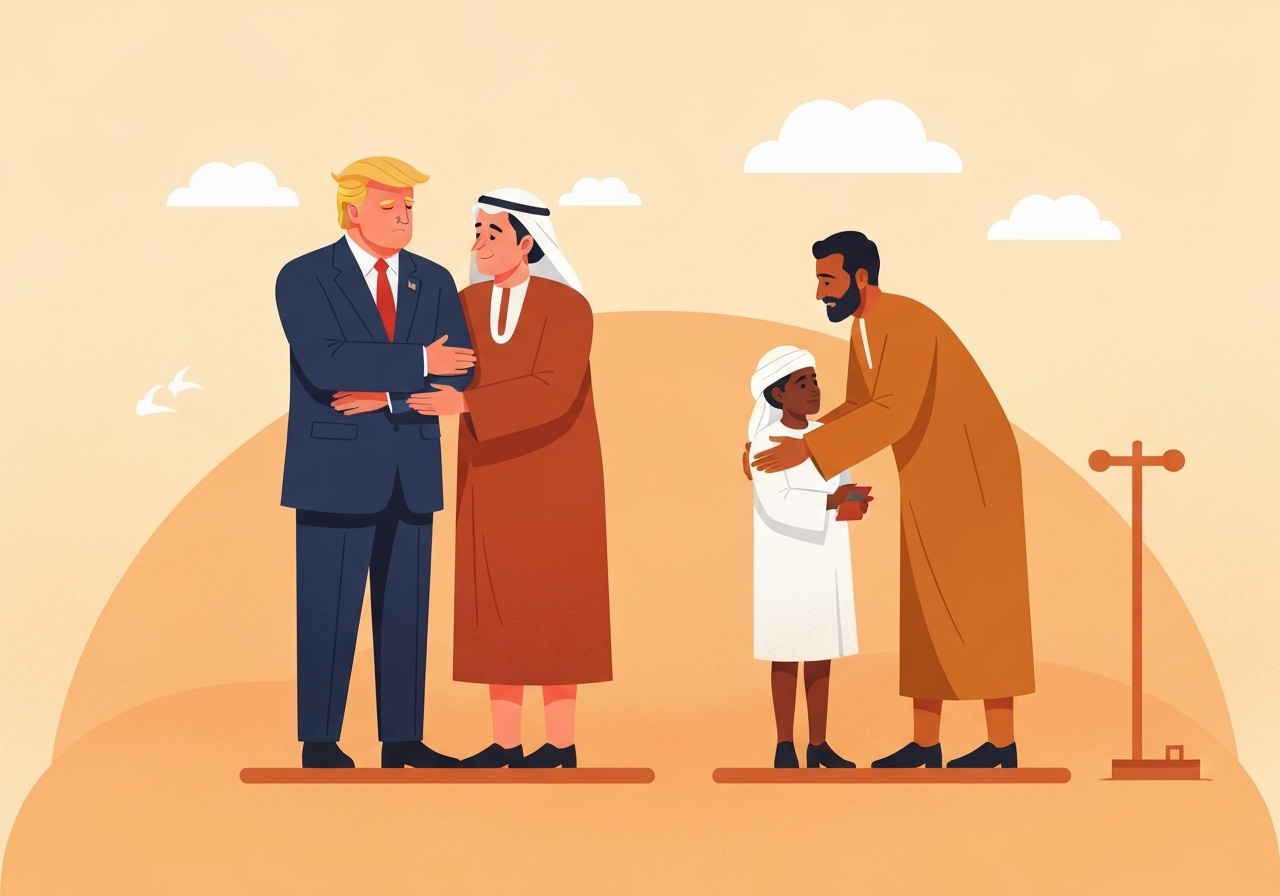
On Nov. 21, 2025, President Donald J. Trump and New York City mayor-elect Zohran Mamdani met in the Oval Office and held a joint news conference that many observers found unusually cordial. The encounter — coming after months of mutual criticism — featured smiles, laughter and an exchange in which Mr. Trump told Mr. Mamdani, when asked whether he considered the president a fascist, “You can just say yes; it’s easier.” The meeting immediately prompted debate in New York about whether the two leaders’ apparent warmth signals a thaw in relations or a tactical pause before renewed friction. City officials had already been preparing for potential federal measures against New York, a backdrop that made the encounter especially notable.
Key Takeaways
- Meeting date and place: Nov. 21, 2025, in the Oval Office, White House, Washington, D.C.
- Participants: President Donald J. Trump and Zohran Mamdani, New York City’s mayor-elect.
- Tone: The press appearance was unusually friendly, punctuated by laughter and public compliments.
- Notable line: Mr. Trump told reporters that Mr. Mamdani could simply answer “yes” to whether he considered Mr. Trump a fascist, a moment that drew attention.
- Context: City leaders had been preparing for possible federal intervention, including troop deployments, immigration-enforcement surges and funding cuts.
- Political friction: Mr. Trump previously worked to undermine Mr. Mamdani’s campaign, urging Republicans to back Andrew M. Cuomo over the party nominee.
- Local reaction: Responses ranged from surprise and amusement to guarded concern among elected officials and civic leaders.
Background
Zohran Mamdani won New York City’s mayoral election in 2025 as a candidate associated with democratic socialism, a result that immediately set expectations for a tense relationship with the Trump administration. For months prior to the Oval Office meeting, Mr. Trump and Mr. Mamdani exchanged public barbs and warnings, prompting municipal planning for worst-case federal responses. City hall, business groups and community organizations developed rapid-response teams to address possible federal deployments or funding reductions.
Those preparations reflected both precedent and political reality: federal-city clashes have occurred in recent years when administrations disagreed with municipal policies on immigration, public safety and funding priorities. The prospect of Mr. Trump using executive tools to pressure New York was a live concern for local leaders, who also feared rhetorical escalation during a politically charged period. At the same time, voters and commentators remained attentive to whether a personal rapport could lessen institutional tensions.
Main Event
The Oval Office meeting on Nov. 21 began as a private discussion and concluded with a joint news conference characterized by an unanticipated affability. Reporters noted several warm exchanges and mutual compliments during the appearance; Mr. Trump even placed his hand on Mr. Mamdani’s arm while urging a concise answer to a pointed question. That moment — Mr. Trump’s quip that it would be “easier” for Mr. Mamdani to say “yes” — became a focal point for coverage.
New Yorkers and political observers reacted quickly. Some, including Republican Representative Nicole Malliotakis, described the interaction in convivial terms and expressed surprise that Mr. Mamdani could win over the president. Others read the meeting as a temporary détente that did not erase the policy disagreements that had driven earlier confrontations and preparations.
Behind the cordial optics, city officials continued to emphasize their readiness for friction. Planning documents and rapid-response groups convened by municipal leaders remained in place after the meeting, reflecting ongoing uncertainty about whether the federal government would alter enforcement patterns or funding decisions. Business leaders who had been enlisted to help coordinate responses also said they were monitoring developments closely.
Analysis & Implications
First, the encounter illustrates how personal interactions between political leaders can momentarily reframe public narratives without immediately altering institutional incentives. A warm press conference can reduce immediate tensions and create space for negotiation, but it does not substitute for formal agreements on policy. City agencies and federal departments operate on mandates and budgets that a single meeting does not instantly change.
Second, the meeting complicates predictions about federal actions. Local officials had been planning for scenarios such as targeted immigration enforcement or the deployment of federal personnel to New York; those plans address administrative and logistical realities that will persist unless binding commitments are made. The optics of cooperation may buy time for diplomacy, but they do not eliminate instruments available to the administration.
Third, the political messaging matters for both constituencies. For Mr. Mamdani, a cordial exchange with the president could reassure moderate voters and business stakeholders concerned about governance and stability. For Mr. Trump, projecting a capacity to engage across ideological lines may serve national political narratives. Both leaders, however, risk criticism from supporters who expected clearer policy wins or firmer opposition.
Comparison & Data
| Date | Event |
|---|---|
| Nov. 21, 2025 | Oval Office meeting and joint news conference between President Trump and Mayor-elect Zohran Mamdani. |
| 2025 (months prior) | Public exchanges and campaign interventions, including Mr. Trump urging Republicans to back Andrew M. Cuomo over his party candidate. |
The table above summarizes the immediate timeline around the meeting; officials emphasize that preparatory work on potential federal-city disputes began well before Nov. 21 and remains relevant. Quantitative details about enforcement deployments or funding changes were not announced at the meeting.
Reactions & Quotes
“You can just say yes. It’s easier.”
President Donald J. Trump
This line, delivered while Mr. Trump placed a hand on Mr. Mamdani’s arm, became the most-cited moment from the joint appearance and framed much of the subsequent coverage.
“I mean, it did seem like a little bit of a bromance.”
Rep. Nicole Malliotakis
Representative Malliotakis, speaking from Staten Island, expressed surprise that Mr. Mamdani appeared to charm the president, reflecting reactions from some Republican officials who noted the shift in tone.
“City leaders continue to prepare for a range of outcomes despite the pleasant optics.”
New York City officials (paraphrase)
Municipal authorities stressed that operational readiness — for funding contingencies or enforcement shifts — remains a priority regardless of the day’s cordial rhetoric.
Unconfirmed
- Whether the meeting will produce any immediate, binding change in federal enforcement or funding toward New York City remains unconfirmed.
- There is no verified timeline for potential federal deployments to the city; reports of specific troop movements were not announced at the press conference.
- Any private agreements or understandings reached during the Oval Office meeting have not been publicly disclosed or independently confirmed.
Bottom Line
The Nov. 21, 2025 Oval Office encounter between President Trump and Mayor-elect Zohran Mamdani was striking for its warmth, but its practical consequences are unclear. The meeting reduced immediate rhetorical heat and offered a momentary narrative of bridge-building, yet it did not replace the formal levers of policy that sustain federal-city relations.
City leaders and federal officials will now confront a choice point: whether to convert the cordial optics into concrete negotiations over enforcement, funding and cooperation, or to revert to preparatory stances designed for confrontation. For New Yorkers and national observers alike, the critical question is whether the next steps will prioritize institutional agreements or episodic displays of personal rapport.
Sources
- The New York Times — news report and original coverage of the Nov. 21, 2025 meeting.