
Lead
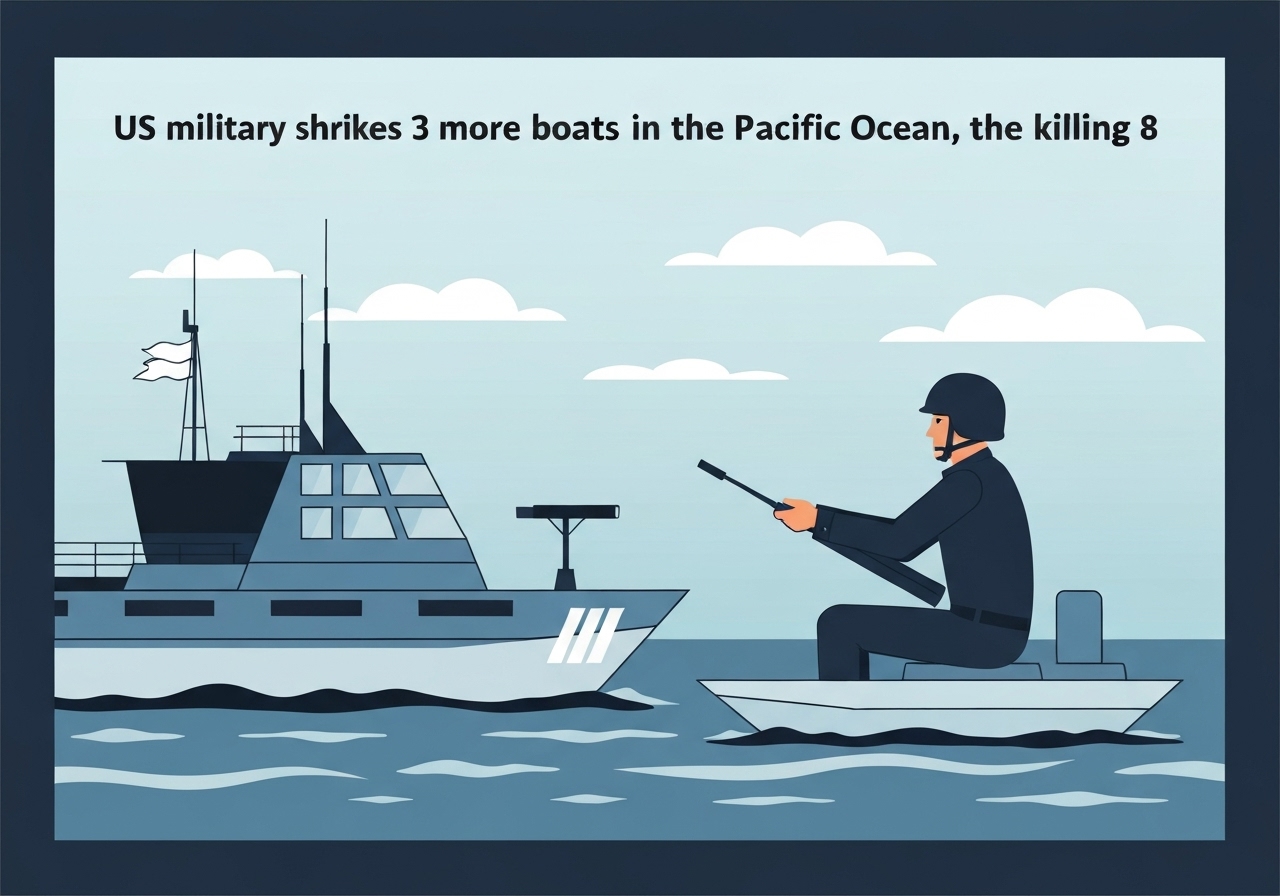
On Dec. 15, US Southern Command said American forces carried out lethal strikes on three boats in the eastern Pacific, killing eight people. The command said the vessels were suspected of narco‑trafficking and were struck at the direction of Defense leadership. The action is part of a broader campaign dubbed Operation Southern Spear. The announcement deepens scrutiny over the legal and congressional oversight of the strikes.
Key Takeaways
- On Dec. 15, US Southern Command reported lethal strikes on three vessels in the eastern Pacific that killed eight people.
- US forces say the boats were transiting known narco‑trafficking routes and associated with drug trafficking operations.
- At least 95 people have been killed overall in strikes on suspected drug boats since the campaign began.
- Operation Southern Spear, announced by the Trump administration, is the name given to the offensive aimed at curtailing narcotics trafficking.
- The administration has told Congress the US is in an “armed conflict” against drug cartels, a designation that underpins use-of-force claims.
- Senate Minority Leader Chuck Schumer scheduled an all‑senators briefing and House and Senate classified briefings with senior officials to press for oversight.
- The campaign has coincided with increased US military presence in the Caribbean and new sanctions and seizures targeting Venezuelan shipping.
Background
Operation Southern Spear is a months‑long US campaign against maritime drug trafficking routes in the Caribbean and eastern Pacific. US military movements accompanying the campaign have included deployment of thousands of troops and a carrier strike group into the Caribbean, according to official accounts. The Trump administration has framed the effort as a campaign to disrupt flow of narcotics and related revenues to transnational criminal networks.
According to US disclosures to Congress, the administration treats its campaign as part of an “armed conflict” with drug cartels that began with an attack on Sept. 2. That early period included follow‑up strikes after an initial strike in the Caribbean failed to kill everyone on board a suspected vessel, raising legal questions among some lawmakers and experts. The administration says those killed are “unlawful combatants” and cites a classified Department of Justice finding as its legal basis for strikes without traditional judicial review.
Main Event
On Dec. 15, US Southern Command posted that, at the direction of Defense leadership, Joint Task Force Southern Spear conducted lethal kinetic strikes on three vessels in international waters of the eastern Pacific. Southern Command said intelligence indicated the vessels were transiting known narco‑trafficking routes and engaged in narcotics movement. The statement identified the strikes as directed by @SecWar Pete Hegseth and attributed operation responsibility to the joint task force.
Southern Command’s public post said the strikes killed eight people. This follows a Dec. 4 strike in the eastern Pacific that the command said killed four people, and brings the campaign’s reported death toll in maritime strikes to at least 95. Officials have described targets as linked to designated terrorist organizations and narcotics networks, language used to justify kinetic action in international waters.
The strikes have coincided with other pressure measures against Venezuela, including new sanctions on shipping firms and seizures of vessels alleged to be involved in sanctioned oil movements. US officials say these steps aim to choke illicit revenue streams tied to regional traffickers and sanctioned regimes; critics argue the moves risk escalation and civilian harm.
Analysis & Implications
The strikes mark an intensification of a strategy that mixes military force, sanctions, and maritime interdiction to combat drug trafficking. For US policymakers, the approach signals willingness to use military means outside traditional battlefields to disrupt transnational criminal networks. That creates immediate operational pressures on trafficking routes but also raises questions about long‑term effectiveness and possible displacement of smuggling paths.
Legally, treating the campaign as an “armed conflict” with cartels is consequential. That framing, coupled with a classified Justice Department rationale, is being used to argue for authority to conduct lethal strikes without standard judicial oversight. Legal scholars and some Democratic lawmakers have warned that follow‑up strikes and targeting choices could implicate international humanitarian law and domestic legal constraints.
Politically, the strikes are already producing bipartisan oversight demands. Senate and House briefings requested by congressional leaders aim to probe targeting criteria, casualty verification, the chain of command for authorization, and the classified legal opinion the administration cites. The intensity of legislative scrutiny could shape subsequent operational transparency, funding, and statutory constraints.
Comparison & Data
| Date | Region | Reported kills | Notes |
|---|---|---|---|
| Sept. 2 | Caribbean | Initial strike (follow‑ups occurred) | Administration marks campaign start |
| Dec. 4 | Eastern Pacific | 4 | US Southern Command reported strike |
| Dec. 15 | Eastern Pacific | 8 | Three vessels struck, Southern Command statement |
The table summarizes key reported strikes tied to Operation Southern Spear. Official death counts for maritime strikes now total at least 95, according to Southern Command statements; independent verification of all incidents and identities of the deceased is limited. Comparing the timeline suggests a pattern of repeated engagements along established trafficking routes rather than isolated, one‑off incidents.
Reactions & Quotes
“On Dec. 15, at the direction of @SecWar Pete Hegseth, Joint Task Force Southern Spear conducted lethal kinetic strikes on three vessels operated by Designated Terrorist Organizations in international waters.”
US Southern Command post on X (official military statement)
“The American people deserve oversight. We intend to deliver it.”
Senate Minority Leader Chuck Schumer (public post)
“The US is in an ‘armed conflict’ against drug cartels,”
Administration disclosure to Congress (reported)
Southern Command’s statement framed the strikes as intelligence‑driven interdictions of traffickers on known routes. Senate leaders quickly demanded briefings for all senators and classified sessions for House members, signaling an appetite for congressional oversight. Legal and human‑rights organizations, while not quoted directly in the official release, have previously urged full transparency and independent investigations into civilian harm and targeting standards.
Unconfirmed
- Independent verification of the identities and affiliations of the eight people killed on Dec. 15 is not publicly available.
- Details of the classified Justice Department finding that the administration cites have not been released and cannot be independently assessed.
- Public evidence linking every struck vessel to specific cartels or designated terrorist organizations has not been disclosed in full.
Bottom Line
The Dec. 15 strikes are the latest in a sustained US campaign to intercept suspected narcotics shipments at sea, and they underscore a shift toward using military force against transnational criminal networks. Officials present the strikes as intelligence‑driven actions to disrupt revenue streams for traffickers, while critics raise legal and oversight concerns surrounding targeting, casualty verification, and the administration’s use of a classified legal rationale.
Congressional briefings and public scrutiny in the coming days will be pivotal: lawmakers seek answers about authorization, rules of engagement, and civilian harm. How the administration responds — by releasing more details, declassifying legal reasoning, or changing operational procedures — will determine whether the campaign can sustain broad legitimacy at home and withstand international legal scrutiny.