
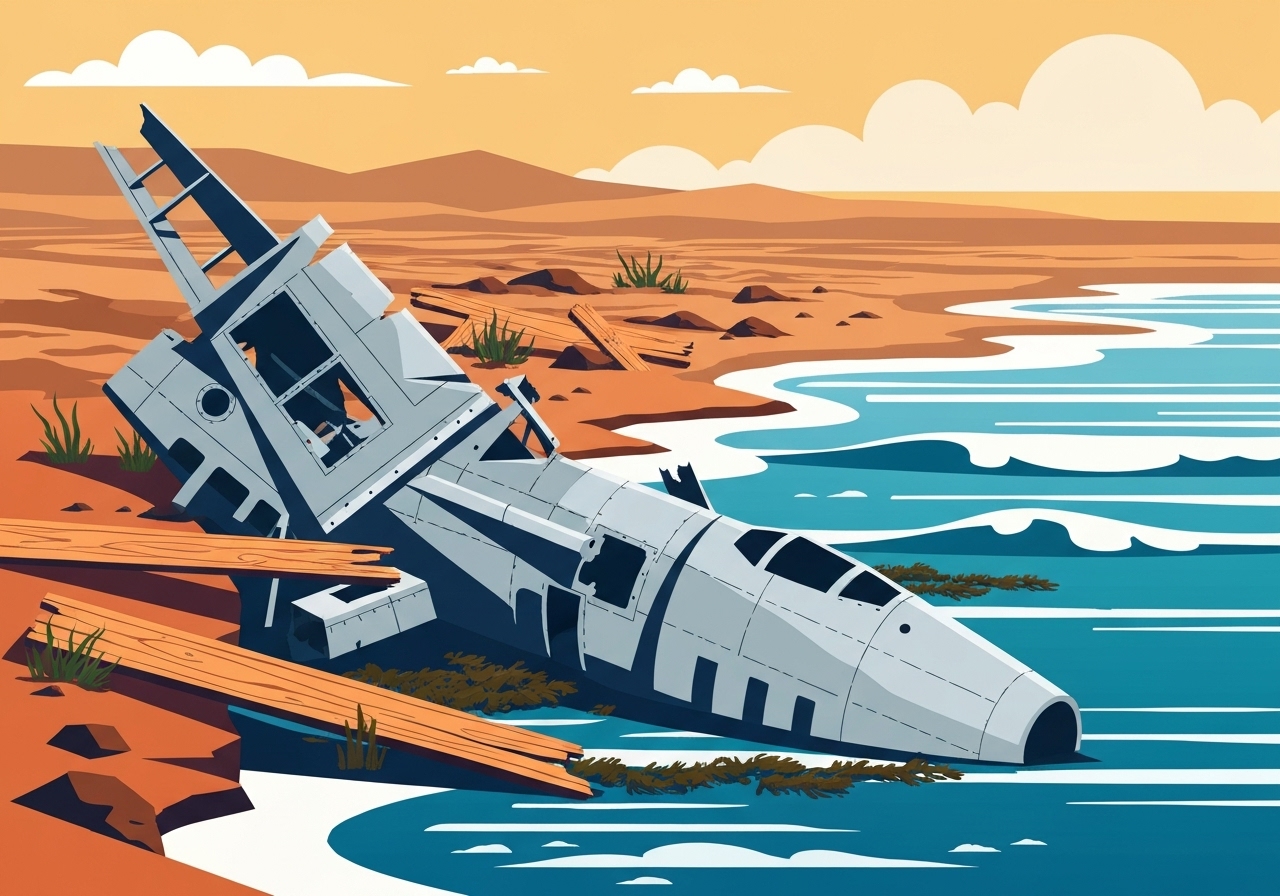
On Nov. 6, witnesses on the Guajira Peninsula—shared by Colombia and Venezuela—noted a thunderous blast and rising smoke over the sea. Days later a scorched 30‑foot boat, two mangled bodies and singed debris, including packets with traces consistent with marijuana, washed ashore near Puerto López. The debris is the first publicly documented physical evidence tied to the Trump administration’s air campaign against so‑called “narco‑terrorists,” a campaign that U.S. officials say has destroyed 29 vessels and that independent reporting links to more than 100 deaths across the Caribbean and eastern Pacific. Local fishermen now say the strikes have left them fearful of waters that have long sustained their livelihoods.
Key takeaways
- On Nov. 6 a resident filmed smoke over the water near Puerto López on the Guajira Peninsula; a burned 30‑foot boat later washed up on the same shore.
- Investigators and reporters observed charred jerrycans, life jackets and dozens of small packets; traces resembling marijuana were found in the lining of a few packets.
- The U.S. campaign has, according to public statements, destroyed 29 vessels and is associated with more than 100 deaths in the Caribbean and eastern Pacific.
- Most struck boats are presumed to have sunk with crews and cargo; the U.S. military has not publicly produced evidence tying those boats to illicit shipments or criminal networks.
- Fisherfolk and coastal communities report increased fear and disruption to fishing activity following the strikes, raising economic and safety concerns.
Background
The campaign described by U.S. officials targets maritime vessels they characterize as tied to transnational criminal groups. The Trump administration has framed its operations as a counter‑narcotics and counter‑terrorism effort, using strikes at sea to disable fast boats and other craft it says are engaged in illicit activity. Historically, interdiction at sea has relied on boarding, seizure and prosecution; the current approach includes kinetic strikes that carry a higher risk of sinking vessels and causing casualties.
The Guajira Peninsula is a remote coastal region with strong cross‑border ties between Colombian and Venezuelan fishing communities. Small, fast boats operate routinely in the area for legal fishing and, at times, for trafficking routes that have long run through the Caribbean and eastern Pacific. Coastal economies are fragile, and sudden loss of boats and crews has multiplier effects on food security and local markets. Local officials and aid groups warn that reduced fishing activity and fear of offshore operations could deepen hardship in communities that already face economic strain.
Main event
Witnesses reported a loud explosion in late afternoon on Nov. 6 and then saw smoke rising from the sea. A resident, Erika Palacio Fernández, later recorded the smoke; reporters say that clip is the only independently verified footage linked to the incident so far. Two days after the blast, a badly burned 30‑foot vessel washed ashore near Puerto López. Journalists on site documented damaged life jackets, scorched fuel containers and multiple sealed packets similar to those recovered after other anti‑narcotics actions.
Most of the packets were empty when examined, though a few retained residue that smelled like and tested for compounds consistent with marijuana, according to field observations. The badly damaged bodies recovered from the wreckage were later reported by local authorities; identifications and forensic examinations have been limited in the immediate aftermath. Residents described an atmosphere of shock as bodies and wreckage were processed by local officials and investigators.
U.S. officials have publicly described the strikes as targeting “narco‑terrorists,” asserting they degrade criminal maritime networks. Independent reporting indicates that, prior to this shoreline discovery, struck boats were assumed to have sunk without leaving recoverable evidence; the wreckage on Guajira represents the first such material linked in the public record to the campaign. Local leaders say the presence of wreckage on their beaches has made the campaign’s human cost visible in a way the previously unobserved sinkings had not.
Analysis & implications
The appearance of physical wreckage changes the factual basis for public debate: it supplies material for investigators, journalists and families seeking answers about specific strikes. For policymakers, the evidence raises questions about rules of engagement at sea, transparency of targeting decisions, and mechanisms for casualty accounting. If more debris surfaces, it could help establish clearer chains of custody for affected vessels and provide forensic data on whether boats carried illicit cargo.
Economically, coastal communities may curtail fishing activity out of fear, which could reduce household incomes and local food supply. The loss of boats and crews also strains local emergency response and forensic capacity, complicating identification and repatriation efforts. Politically, the strikes risk inflaming bilateral sensitivities in border regions shared by Colombia and Venezuela, where jurisdictional and humanitarian coordination is already complex.
International law and maritime practice favor interdiction and detention over unilateral destruction when possible, particularly to preserve life and evidence. The campaign’s reliance on strikes at sea may be justified by U.S. officials on operational grounds, but it also invites scrutiny from human rights groups and regional governments concerned about proportionality and accountability. Absent transparent after‑action reporting and independent verification, public trust in the operation’s legality and effectiveness is likely to remain low.
Comparison & data
| Metric | Reported total | Region |
|---|---|---|
| Vessels destroyed | 29 | Caribbean & eastern Pacific |
| Reported fatalities | More than 100 | Caribbean & eastern Pacific |
| Documented beach wreckage | 1 noted case (Guajira) | Colombia (Guajira Peninsula) |
The numbers above are drawn from public statements and independent reporting. Until wreckage and forensic chains are more systematically documented, the vast majority of strikes remain undocumented on shore, with sunk boats and missing crews forming the principal basis for casualty estimates. Comparative historical practice shows that interdiction with detention typically yields more prosecutable evidence than actions that destroy vessels outright.
Reactions & quotes
Locals and analysts offered immediate, sometimes stark, reactions to the discovery of wreckage and bodies.
“I recorded the smoke because it looked like the horizon was on fire,”
Erika Palacio Fernández, witness
Erika’s clip, residents say, provides rare visual confirmation of an at‑sea strike; journalists and investigators consider it an important piece of evidence given that most struck boats had previously disappeared without a trace. Her account highlighted the suddenness of the explosion and the later discovery of burned material along the coastline.
“The administration has described the campaign as targeting ‘narco‑terrorists,’”
Trump administration public rhetoric
The phrase reflects official framing used by the U.S. government to justify the operations; critics argue the label can obscure the need for careful verification before lethal force is used. That terminology has become a focal point in debates over whether the strikes meet legal and evidentiary standards for force at sea.
“We are afraid to go back out; the sea that fed us feels unsafe now,”
Local fishermen (summarized)
Fisherfolk described declining catches and reluctance to work offshore following the strikes. Their testimony underscores the broader local economic effects that extend beyond the immediate human toll of sunk boats and lost crews.
Unconfirmed
- Whether the packets recovered conclusively contained marijuana remains under formal forensic testing and independent laboratory confirmation.
- Attribution of the damaged vessel to any specific criminal network has not been publicly confirmed by independent investigators.
- The U.S. military has not released detailed evidence publicly demonstrating that the specific boats destroyed were carrying illicit cargo or belonged to designated groups.
Bottom line
The Guajira wreckage gives the first tangible, verifiable material link to a U.S. air campaign that has otherwise left little recoverable evidence on shore. That change matters: debris and residue allow for forensic work that can clarify who was aboard, what the cargo was, and whether strikes complied with legal and operational guidelines. For families of the missing and for regional authorities, such evidence can be a critical step toward accountability and clarity.
For policymakers and the public, the incident spotlights trade‑offs inherent in maritime counter‑crime tactics. Greater transparency from military authorities, independent forensic testing of recovered material and protections for coastal communities should be central to any review of the campaign’s strategy and rules of engagement. Without those measures, questions about legality, proportionality and long‑term regional impact will persist.
Sources
- The New York Times — news report (media; on‑site reporting)