
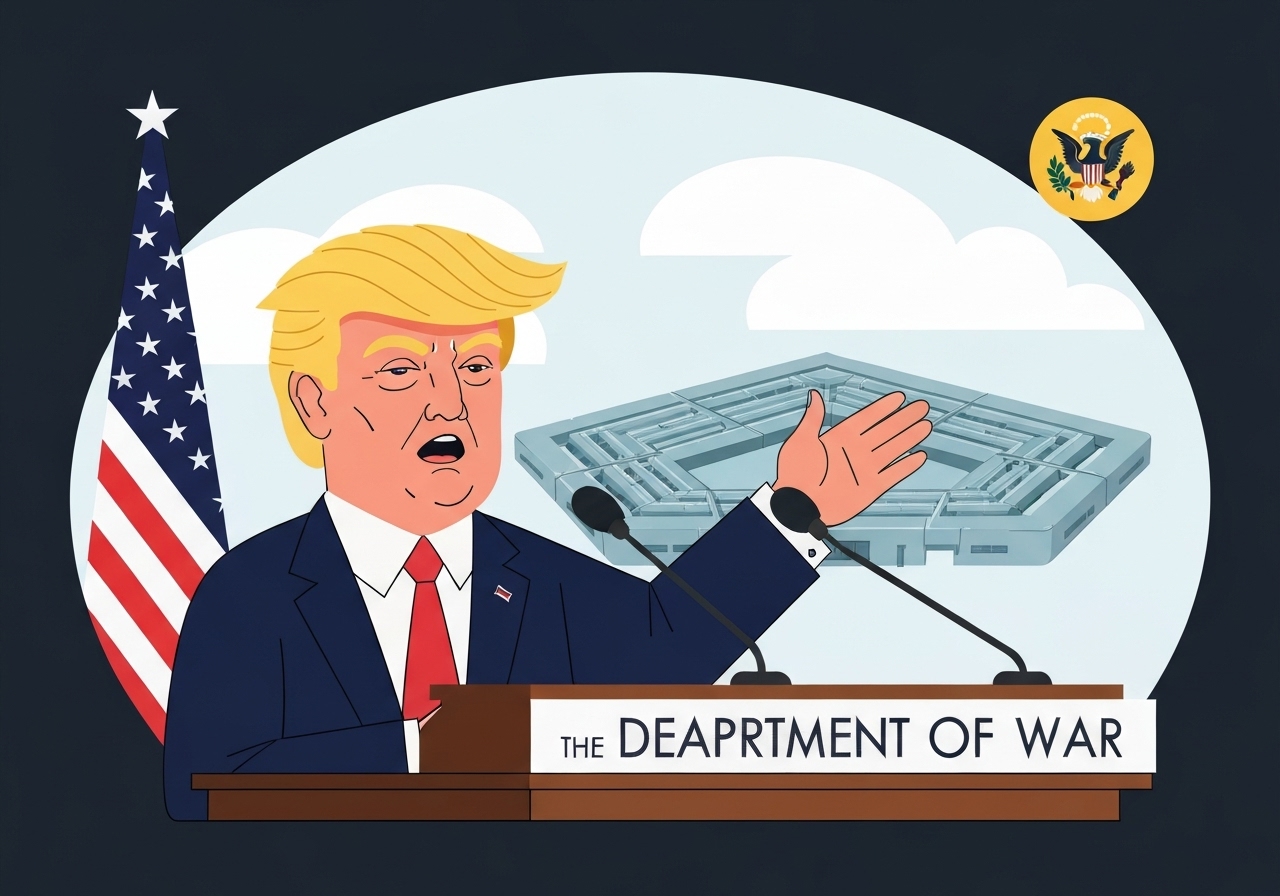
Lead: President Donald Trump announced on Sept. 4 that he will sign an executive order to rename the U.S. Department of Defense the ‘Department of War,’ directing Defense Secretary Pete Hegseth to begin using the new secondary titles and to recommend steps to make the change permanent.
Key Takeaways
- The White House said an order will allow the use of secondary titles such as ‘Department of War’ in official communications.
- Defense Secretary Pete Hegseth supports the change, citing a ‘warrior ethos.’
- Formally changing the department’s name requires congressional action; GOP leaders hold slim majorities.
- Critics call the move costly and distracting from defense priorities; past renaming efforts have carried multi-million-dollar price tags.
- The Department of Defense was known as the War Department until 1949.
- Democratic lawmakers, including Sen. Tammy Duckworth, warned funds should be used for service members and deterrence, not political gestures.
Verified Facts
The White House released a fact sheet saying the order would permit the Defense Department and subordinate officials to use secondary titles such as ‘Secretary of War’ and ‘Deputy Secretary of War’ in correspondence and public communications. It also directs Secretary Hegseth to recommend legislative and executive actions to make the renaming permanent.
Historically, the U.S. defense organization was called the War Department until Congress reorganized the military services after World War II; the National Security Act era led to the Department of Defense name in 1949 to emphasize prevention of conflict in the nuclear age.
Department-wide renaming would affect signage, letterhead and materials across the Pentagon and global installations. A prior U.S. effort to rename nine military bases away from Confederate names was estimated to cost about $39 million before that initiative was reversed earlier this year.
Legally, an executive order can authorize interim usage of titles, but an official statutory name change would require congressional legislation or specific statutory action by lawmakers, according to legal and historical precedents.
Context & Impact
Symbolism and branding are central to the administration’s rationale: supporters say the change restores historical language and signals a more assertive posture. Opponents argue the move distracts from operational priorities and modernization needs.
Practical impacts to consider include:
- Immediate administrative costs for signs, stationery and digital assets.
- Potential confusion in international and diplomatic communications while transitions occur.
- Policy implications: some critics fear the renaming signals a rhetorical shift toward offensive military language.
Political dynamics matter: Republicans control narrow majorities in both chambers, and party leaders have shown little appetite to block administration initiatives, which could affect whether the change becomes permanent.
Official Statements
‘Changing the name is not just about words — it’s about the warrior ethos.’
Pete Hegseth, U.S. Secretary of Defense
‘Why not put this money toward supporting military families or toward employing diplomats that help prevent conflicts from starting in the first place?’
Sen. Tammy Duckworth (D-IL)
Unconfirmed
- Whether Congress will enact legislation to permanently change the department’s statutory name.
- The final cost of a full rebranding effort across all global military installations and federal records.
- Any definitive timeline for when statutory changes, if pursued, would reach committee or floor votes.
Bottom Line
The White House move to rebrand the Department of Defense as the ‘Department of War’ highlights a deliberate shift in rhetoric and priorities by the administration, but making the change permanent would require congressional action and carry tangible costs and operational implications. The debate is likely to center on symbolism versus practical priorities for defense funding and readiness.