
Lead
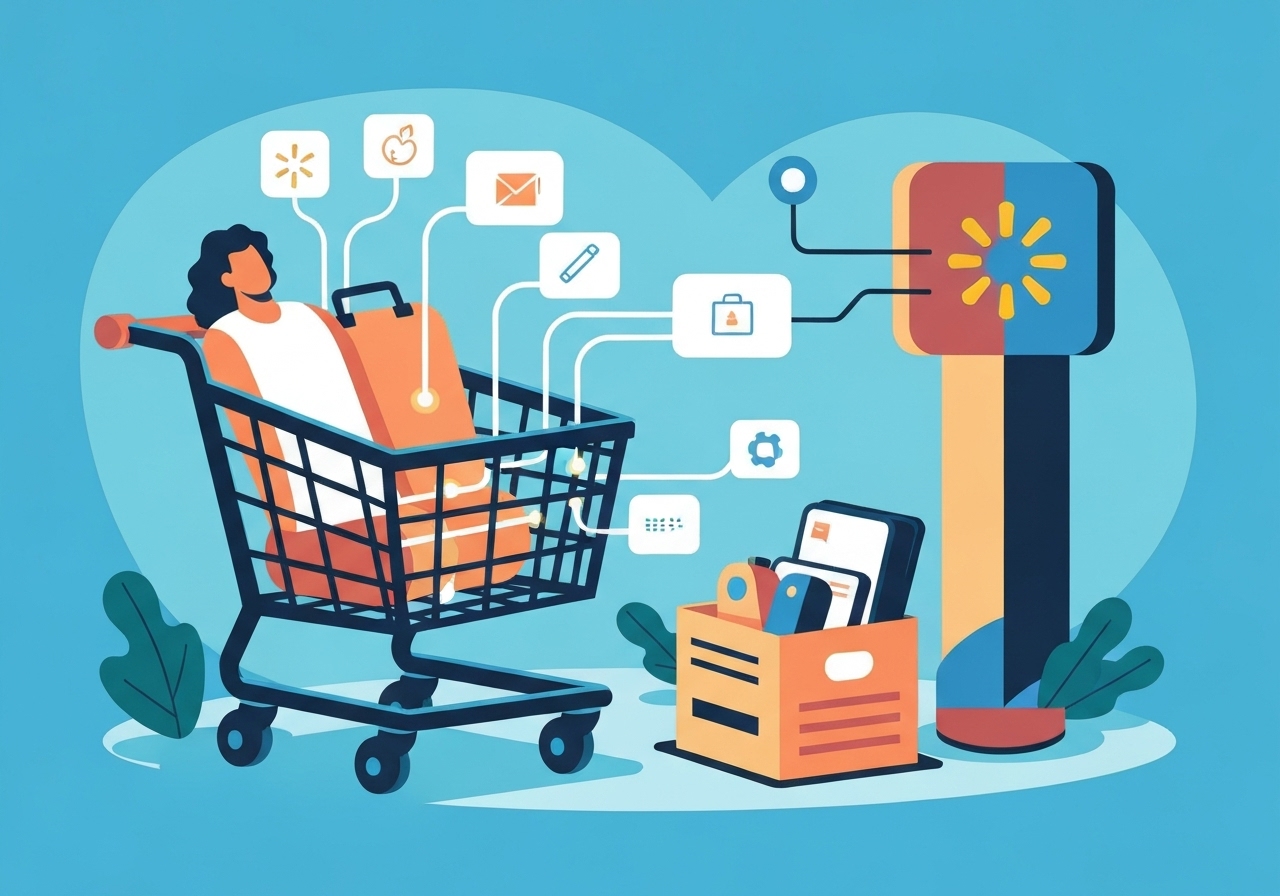
Walmart and Google on Jan. 11, 2026 announced a partnership to let shoppers use Google’s AI assistant, Gemini, to discover and buy items from Walmart and Sam’s Club. The deal was revealed onstage by incoming Walmart CEO John Furner and Google CEO Sundar Pichai at the National Retail Federation’s Big Show in New York City. The companies said the experience will roll out first in the U.S. with plans to expand internationally, but provided no launch date or financial terms. The move follows Walmart’s recent work with other AI providers and reflects a broader push to meet shoppers in new digital touchpoints.
Key takeaways
- Announcement date: Jan. 11, 2026, at the NRF Big Show in New York City; disclosed by John Furner and Sundar Pichai onstage.
- Scope: The integration will connect Google’s Gemini assistant with Walmart and Sam’s Club catalogs, initially in the U.S.; international expansion was stated but not scheduled.
- Timing and terms: No specific launch date or commercial terms were shared publicly at the event.
- Related moves: Walmart struck a partnership with OpenAI in October 2025 to enable Instant Checkout via ChatGPT, which already supports purchases with some retailers.
- Walmart strategy: Leadership frames this as a shift toward “agent-led” commerce to reach customers earlier in shopping journeys across more platforms.
- Workforce context: Walmart leaders, including outgoing CEO Doug McMillon, have emphasized that AI will significantly reshape jobs across the company; Furner assumes the CEO role on Feb. 1, 2026.
- Customer experience goal: The collaboration aims to shorten the path from discovery to purchase, including new conversational purchase flows and faster checkout options.
Background
Retailers are racing to embed large language models and conversational agents into shopping paths as consumers increasingly start product searches outside traditional apps and websites. Walmart has pursued several AI partnerships and built its own assistant, Sparky, to modernize search and personalized recommendations. In October 2025 Walmart announced an integration with OpenAI to enable Instant Checkout inside ChatGPT, reflecting a broader industry trend toward agent-assisted transactions.
NRF’s Big Show is a high-visibility platform where major retail executives often unveil strategic shifts; this year’s Javits Center stage provided the venue for Walmart and Google to present a joint effort that leverages Gemini’s conversational capabilities and Walmart’s catalog, logistics and membership base through Sam’s Club. The announcement comes as Walmart prepares a leadership transition: Doug McMillon will retire and John Furner becomes CEO on Feb. 1, 2026, signaling continuity in a strategy that prioritizes technology-driven convenience.
Main event
Onstage at the NRF conference, Furner described the partnership as part of a deliberate push to reorient how customers find and purchase goods, emphasizing a move from app- or site-first searches to agent-led discovery. He framed the collaboration as accelerating the retailer’s effort to close the time between desire and ownership by embedding Walmart into conversational interfaces where shoppers already ask questions and seek inspiration.
Pichai characterized the collaboration as a timely step in AI adoption for commerce, saying Google saw the deployment of conversational assistants as a transformative moment for how consumers interact with retail inventory. Executives declined to provide a rollout schedule or disclose commercial arrangements, noting only that the initial phase targets U.S. shoppers with subsequent international expansion.
Operationally, the integration will surface Walmart and Sam’s Club products inside Gemini flows and is intended to connect discovery with purchase paths—potentially including streamlined checkout experiences similar to the Instant Checkout feature Walmart launched with other AI partners. Walmart emphasized that the experience will complement rather than replace its existing app and web storefronts, aiming to meet shoppers at earlier points in decision-making.
Analysis & implications
Strategically, the tie-up helps Walmart address the risk that consumers increasingly begin product queries inside general-purpose AI agents rather than retailer-owned search. By making Walmart inventory accessible inside Gemini, the retailer preserves visibility and the chance to capture purchase intent before competitors. That lowers friction for consumers and could shift market share toward brands that secure early placements within prominent AI assistants.
For Google, partnering with a major omnichannel retailer strengthens Gemini’s relevance in commerce and provides a practical use case for conversational shopping. The collaboration enhances Gemini’s utility beyond information retrieval, positioning Google to participate in transaction flows that generate new revenue opportunities for ecosystem partners and potentially for Google itself through service integrations.
On the workforce and operations side, Walmart’s leadership has signaled that AI will change job scopes across the company. While executives portray the technology as a tool to improve productivity and customer service, the scale of adoption raises questions about retraining requirements, labor allocation, and long-term workforce planning at the nation’s largest private employer.
Regulatory and competitive implications should be monitored. As agent-led commerce grows, questions about data sharing, privacy, attribution, and platform steering will attract attention from regulators and rivals. Retailers will need to navigate merchant fee models, consumer consent for data use, and the transparency of recommendation and ranking algorithms inside AI assistants.
Comparison & data
| Partner | Public launch / announcement | Key commerce feature |
|---|---|---|
| Google (Gemini) | Announced Jan. 11, 2026 (NRF) | Discovery + purchase flows; U.S. first, checkout integration unspecified |
| OpenAI (ChatGPT) | Walmart pilot announced Oct. 2025 | Instant Checkout—purchase without leaving chat; live with several retailers |
The table shows two distinct approaches: integrations focused on discovery and catalog access (Gemini) versus earlier implementations emphasizing in-chat checkout (ChatGPT Instant Checkout). Both strategies aim to shorten conversion funnels, but differ in technical integration points and participating partners. Retailers balancing visibility and control will weigh the trade-offs between platform reach and direct customer engagement.
Reactions & quotes
Retail and company responses were cautious-positive, noting the potential to simplify buying while highlighting the need for clarity on timing and economics. Executives and industry observers emphasized customer convenience, competitive necessity, and operational implications.
“The transition to agent-led commerce is the next major evolution in retail—it’s not something we’re observing from the sidelines,”
John Furner, incoming Walmart CEO (onstage remarks)
Context: Furner used the NRF platform to frame the partnership as proactive and strategic. He positioned the integration as part of Walmart’s plan to embed the retailer in earlier phases of the customer journey, while stressing that details on timing and commercial terms would follow.
“We are excited to work with Walmart—AI adoption in commerce is a transformative moment,”
Sundar Pichai, CEO, Google
Context: Pichai emphasized Google’s view of conversational agents as a meaningful shift for consumer interactions. Google presented Gemini as a vehicle to connect users’ conversational queries with practical shopping outcomes, enhancing the assistant’s role in everyday tasks.
Unconfirmed
- No official launch date for the Gemini shopping experience has been released; timelines beyond a U.S. roll‑out are unspecified.
- Financial terms and revenue-sharing arrangements between Walmart and Google were not disclosed at the announcement and remain unconfirmed.
- Details on how customer data will be shared between the companies and handled for personalization and advertising were not clarified publicly.
Bottom line
The Walmart–Google Gemini partnership signals a concrete step toward conversational, agent-driven commerce and reflects retailers’ urgency to be present where consumers initiate purchases. By integrating Walmart inventory into Gemini flows, the retailer aims to capture earlier stages of demand and reduce purchase friction, while Google strengthens Gemini’s commercial utility.
Key open questions—timing, commercial terms, consumer data handling, and workforce impacts—will determine how consequential the partnership becomes. Observers should watch pilot implementations for conversion lifts, consumer satisfaction, and any regulatory attention that may emerge as agent-led shopping scales.
Sources
- CNBC — media report of the NRF announcement and company statements
- Walmart Corporate Newsroom — official corporate newsroom and press releases