
Lead
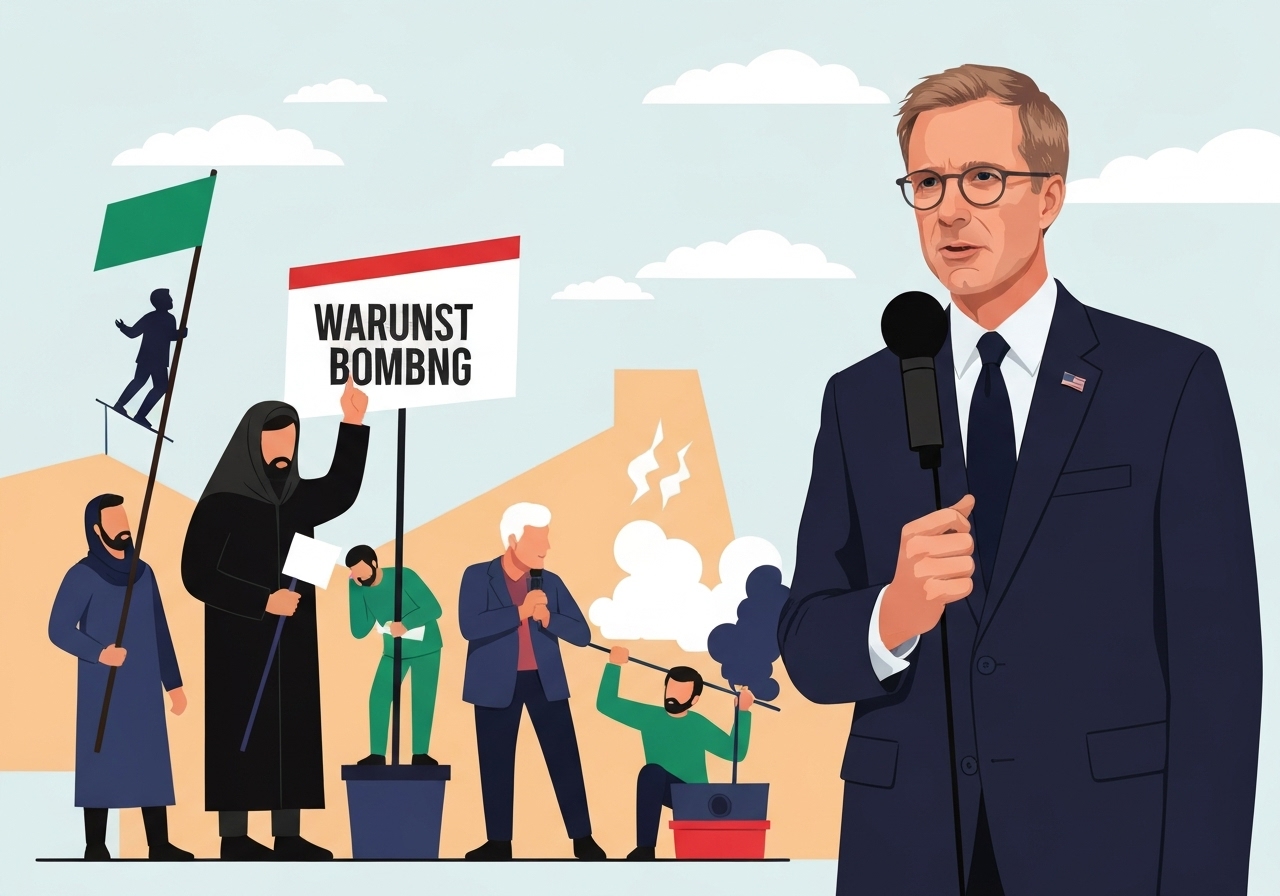
On Jan. 11, 2026, Republican Sen. Rand Paul told ABC News that U.S. military strikes on Iran would likely produce unintended consequences and are not the right response to protests inside the country. Speaking on This Week, Paul said threats to bomb Iran—made this week by President Donald Trump if Tehran killed protesters—risk strengthening the Iranian government’s hand rather than helping demonstrators. He urged encouragement for freedom movements and stressed constitutional limits on presidential war powers. Paul expressed hope the Iranian freedom movement survives while arguing military action could backfire.
Key Takeaways
- Sen. Rand Paul spoke with ABC News on Jan. 11, 2026, warning that bombing Iran may rally citizens around their government instead of aiding protesters.
- The remarks followed President Donald Trump’s reported threat this week to bomb Iran if the regime killed demonstrators protesting the government.
- Paul said U.S. support should be diplomatic—recognizing a government that allows free elections—rather than kinetic strikes.
- He invoked constitutional constraints, arguing presidents should seek Congress before launching major military operations.
- Paul predicted bipartisan resistance to a full-scale invasion, saying there would be political pressure to prevent such action.
- He framed the debate within the War Powers discussion, noting it has implications beyond Iran for future use of force.
Background
Protests against Iran’s ruling authorities have drawn international attention and prompted varying calls for support from outside governments. In Washington, responses have ranged from diplomatic statements to implicit threats of force; those messages intensified this week after a presidential warning about bombing Iran if protesters were harmed. The U.S. Constitution and subsequent statutes, including the War Powers frameworks, set legal and political limits on when and how the executive can order military strikes without legislative approval.
U.S. political debate over intervention is shaped by competing priorities: supporting human rights and democracy abroad versus avoiding military escalation and unintended harm. Past U.S. actions in the Middle East remain reference points for lawmakers and analysts weighing costs, legality and likely outcomes. Policymakers must balance immediate solidarity with protesters against the risk that force could consolidate the targeted government’s domestic support.
Main Event
During the Jan. 11 interview on ABC News’ This Week, Paul responded directly to recent presidential rhetoric about bombing Iran if Tehran used lethal force against demonstrators. He argued that bombing can strengthen nationalist sentiment and cause populations to rally behind existing leaders, undermining the goals of protest movements. Paul said he shares the desire for the protesters’ success but questioned the efficacy of military strikes as a tool to achieve that outcome.
Paul also addressed the constitutional dimension, asserting that presidents should not unilaterally launch military attacks without securing congressional authorization. He warned that keeping military options as a routine policy posture—repeatedly signaling potential strikes—complicates democratic oversight and risks normalizing force as a first recourse. Paul framed the debate as part of a broader War Powers conversation that reaches beyond any single country or crisis.
He further suggested that large-scale invasions are unlikely to find wide support in Congress or among the public, saying members on both sides of the aisle would be hard-pressed to back an invasion. Paul criticized what he described as saber-rattling and urged clearer processes for when force is considered. Throughout, he urged non-kinetic measures—political recognition for free governments and diplomatic encouragement for electoral reforms—rather than preemptive strikes.
Analysis & Implications
Paul’s intervention injects a constitutional and strategic caution into a high-stakes foreign-policy conversation. Strategically, the “rally-around-the-flag” dynamic he described is well documented: external military pressure can strengthen incumbent leaders by framing opposition as foreign-enabled. That risk complicates any calculation that kinetic action will translate into immediate gains for domestic protest movements.
Legally and politically, Paul’s emphasis on congressional authorization revives longstanding institutional tensions. The War Powers frameworks and the Constitution allocate formal war-declaring authority to Congress, while presidents have often used limited military force without explicit new authorization. Renewed public debate could pressure lawmakers to clarify or reinvigorate legislative oversight before new major actions are taken.
Regionally, direct U.S. strikes on Iran would carry significant escalation risk, potentially drawing in allied states and non-state actors across the Middle East. Even strikes framed narrowly could have unintended humanitarian, economic and diplomatic consequences—heightening refugee flows, disrupting energy markets and complicating relations with partners. Domestically, any rush toward military action without broad congressional support could become a polarizing political flashpoint ahead of elections and legislative battles.
Comparison & Data
| U.S. Action | Year | Congressional Authorization | Post-action Notes |
|---|---|---|---|
| Afghanistan operations | 2001 | Authorization for Use of Military Force (AUMF) 2001 | Extended military engagement and long-term commitments |
| Iraq invasion | 2003 | Authorization approved (2002) | Large-scale conflict with prolonged stabilization challenges |
| Libya strikes | 2011 | No new congressional authorization | Rapid regime change debate, followed by long-term instability |
The table highlights differences in congressional backing and subsequent outcomes for notable U.S. military actions in the 21st century. Those precedents inform current legislator concerns about both legal authority and the long-term political costs of intervention. Lawmakers citing these cases argue for clearer criteria and oversight before the U.S. undertakes new military operations.
Reactions & Quotes
“The only problem I have with saying, ‘Oh, we’re going to bomb Iran,’ is that sometimes it has the opposite effect,”
Sen. Rand Paul, ABC News interview, Jan. 11, 2026
Paul made this point to underline his central strategic concern: external strikes can cause domestic audiences to coalesce around leaders portrayed as defending the nation from foreign aggression.
“I don’t think it’s the job of the American government to be involved with every freedom movement around the world,”
Sen. Rand Paul, ABC News interview, Jan. 11, 2026
He used that line to differentiate diplomatic and rhetorical support from direct military intervention, urging Congress to play a role in authorizing any use of force.
Unconfirmed
- Whether a U.S. bombing campaign is imminent: reporting of threats does not confirm an imminent operational plan.
- That military strikes would decisively help Iranian protesters: the political effect of strikes on domestic movements is contested and not empirically settled for this situation.
- Any classified assessments about Iran’s likely civilian response or the regime’s immediate stability after strikes remain unpublished and unconfirmed in open reporting.
Bottom Line
Sen. Rand Paul’s comments on Jan. 11, 2026, inject caution into a debate sparked by presidential threats to bomb Iran if protesters are killed. His argument centers on strategy—warning that strikes can backfire politically—and on constitutional process, urging Congress to weigh in before major military actions. Those twin themes—effectiveness and legality—are likely to shape congressional and public responses if the administration pursues a more coercive posture.
For readers and policymakers, the immediate questions to watch are whether the White House clarifies intent, whether Congress asserts a formal role, and how Tehran and regional actors respond to any escalation in rhetoric or action. The stakes include humanitarian outcomes for protesters, regional stability, and the precedent set for U.S. use of force in future crises.