
Lead
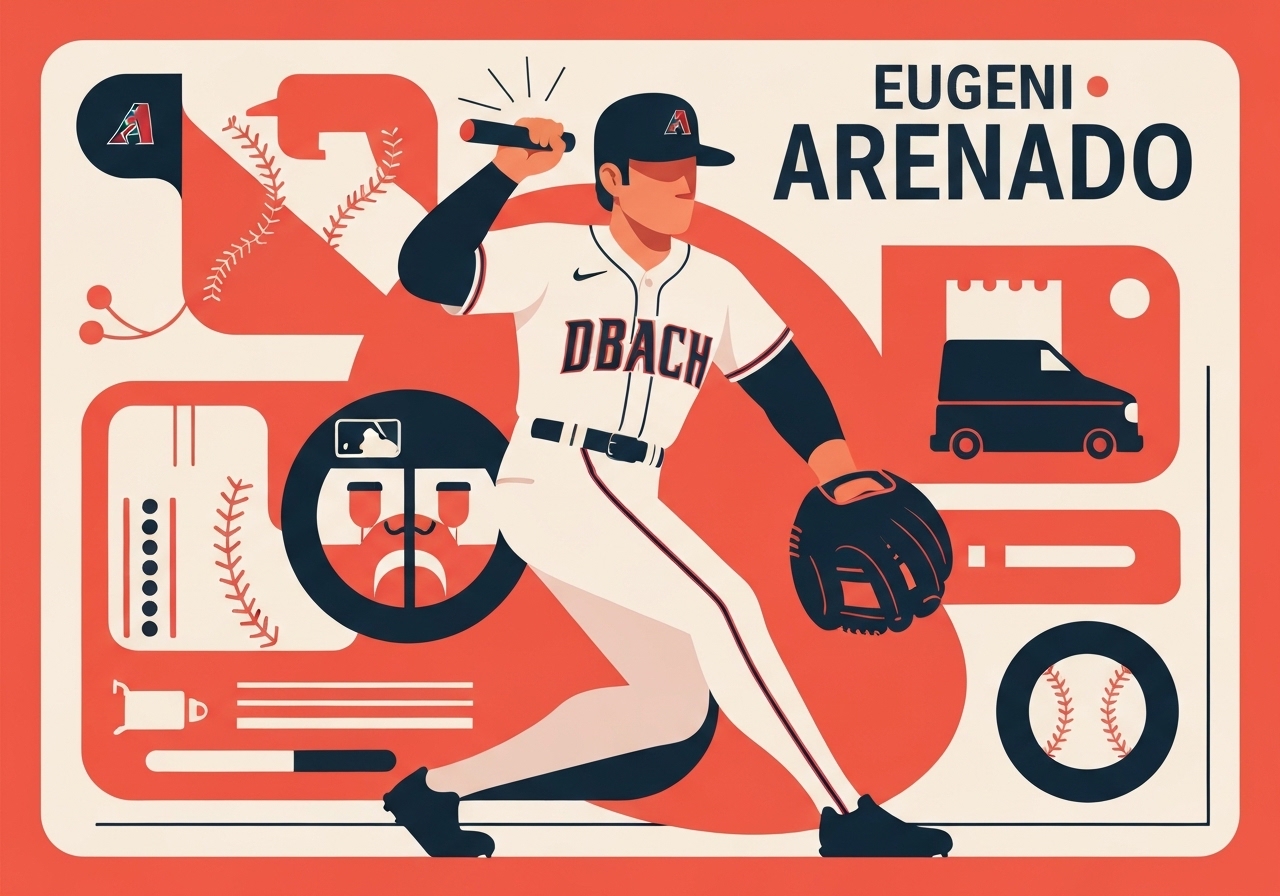
Nolan Arenado, an eight-time All-Star and 10-time Gold Glove third baseman, was traded to the Arizona Diamondbacks on Jan. 14, 2026, aiming to finally reach postseason success. The 34-year-old, who turns 35 in April, arrives after five seasons with the St. Louis Cardinals and eight with the Colorado Rockies. Arizona acquired Arenado in a deal that leaves the Cardinals paying $31 million of the remaining $42 million owed over two seasons. Arenado says he still expects to compete for playoff berths and believes the D-backs’ young core gives him that chance.
Key Takeaways
- Nolan Arenado, 8x All-Star and 10x Gold Glove winner, was traded to the Arizona Diamondbacks on Jan. 14, 2026.
- Career postseason production remains limited: five hits in 33 at-bats across 13 seasons, a gap Arenado wants to change.
- Last season Arenado hit .237 with 12 home runs and 52 RBIs while the Cardinals finished 78-84 in 2025.
- The financial structure of the deal leaves Arenado owed $42 million over two seasons; St. Louis covers $31 million as part of the trade.
- Arizona finished 80-82 in 2025 and last reached the World Series in 2023; the club views Arenado as a veteran fit for a young, speedy lineup.
- Arenado waived a no-trade clause and expanded his list of acceptable destinations this offseason to roughly eight to 10 teams.
Background
Nolan Arenado began his major-league career with the Colorado Rockies, spending eight seasons in Denver before a five-year stint in St. Louis. He established himself as an elite defender with 10 consecutive Gold Gloves and earned eight All-Star selections, building a resume many project to one day merit Hall of Fame consideration. Despite individual accolades, Arenado’s teams have not produced postseason breakthroughs for him personally; he has recorded five hits in 33 postseason at-bats across 13 seasons.
The Cardinals entered a rebuilding phase after a 78-84 finish in 2025 under president of baseball operations Chaim Bloom, who signaled a shift toward younger players. St. Louis actively shopped Arenado for more than a year, seeking to retool the roster and give prospects room to play. Arizona, by contrast, remains in win-now mode while blending a youthful core—including Corbin Carroll, Ketel Marte and Geraldo Perdomo—with experienced pieces that can accelerate a playoff push.
Main Event
The trade was completed on Jan. 14, 2026, with Arenado agreeing to the destination by waiving a no-trade clause. He described the moment as unexpected relief after a protracted trade process, saying he was ‘‘kind of in shock’’ when the deal finally landed. The move reunites him with a club that believes its blend of speed and defense can complement Arenado’s veteran presence.
Arenado acknowledged that the last several seasons have not met his standards at the plate, citing injuries and adjustments that limited his output in 2025. He told Arizona coaches he’d already shared hitting video to accelerate preparation for spring training and expressed confidence a few mechanical tweaks will yield improvement. Arizona general manager Mike Hazen framed the signing as low-risk for the potential reward, noting Arenado’s winning mentality and clubhouse influence.
The Cardinals’ willingness to absorb $31 million of Arenado’s remaining $42 million contract reduced Arizona’s financial exposure and made the acquisition more feasible. St. Louis views the move as part of a deliberate rebuild to identify younger contributors and redefine the club’s identity. For Arenado, the trade represents a third-team chapter late in his career and an opportunity to add a postseason run to an otherwise decorated resume.
Analysis & Implications
On the field, the primary question is whether Arenado can regain consistent offensive production to match his defensive value. At 34 (turning 35 in April), age-related decline is a realistic concern, but short-term rebounds are common when hitters join new environments with altered roles and fresh coaching input. Arenado’s .237 average with 12 homers and 52 RBIs in 2025 is a tangible baseline; Arizona’s coaching staff will target specific swing and approach adjustments he has already begun sharing.
Strategically, the D-backs’ gamble is calculated: they add a proven defender and middle-order bat while absorbing only about $11 million of Arenado’s remaining contract out of $42 million. That deals both a low-cost opportunity for upside and a manageable financial commitment if production is uneven. For a club that finished 80-82 last year, veteran leadership and defensive stability at the hot corner can shorten the timeline for contending, especially for a lineup built on speed and on-base skills.
For St. Louis, the move accelerates a youth-focused rebuild that Bloom said was necessary to discover the club’s identity. Trading an established veteran who blocked infield prospect playing time is a common rebuild choice; the Cardinals’ 78-84 2025 finish and roster composition made the decision predictable. The team’s salary relief also creates flexibility to invest in younger talent or targeted free agents.
League-wide, the trade underscores how teams balance postseason urgency with long-term planning. Contenders with cost-effective windows will often pursue veterans willing to accept shorter-term roles; rebuilding clubs monetize older contracts to reset. Whether Arenado’s presence is the marginal difference for Arizona’s playoff prospects will depend on health, offensive rebound, and how quickly young hitters around him develop.
Comparison & Data
| Metric | Career / 2025 |
|---|---|
| All-Star selections | 8 |
| Gold Gloves | 10 |
| Postseason hits (AB) | 5 (33) |
| 2025 batting line | .237, 12 HR, 52 RBI |
| Age | Turns 35 in April 2026 |
| Contract remaining | $42M over 2 seasons (Cards pay $31M) |
| Cardinals 2025 record | 78-84 |
| Diamondbacks 2025 record | 80-82 |
The numbers show a decorated defender whose recent offensive output has dipped. Arizona’s front office appears willing to bet that marginal offensive gains and his elite defense can swing close games in their favor. The contract structure reduces downside for the D-backs while giving Arenado a clearer path to meaningful playing time and a supportive lineup.
Reactions & Quotes
Players and executives framed the move in terms of mutual fit: Arenado wants postseason chances; Arizona wants a veteran presence.
“I still want to play in the playoffs. I know my numbers aren’t great, but that doesn’t take away from the fact that I was prepared for it.”
Nolan Arenado
Arenado made the comments on arrival, emphasizing preparation and a desire to contribute in October. His words underline a personal objective tied to this trade: a late-career chance at postseason success.
“We’ve always liked the way he’s played the game and the impact he can have when he’s not playing. I think he’s a good fit.”
Mike Hazen, Arizona GM
Hazen presented the deal as both a cultural and on-field addition, stressing Arenado’s winning mindset. The GM highlighted the low-risk financial structure that made the move practical for Arizona.
“It was very evident that there was a step they needed to take in letting these young guys go, finding out who they are and who their identity is.”
Chaim Bloom, St. Louis (paraphrased)
St. Louis leadership framed the trade as part of a deliberate rebuild designed to evaluate prospects and reshape the roster. Bloom’s position reflects standard rebuilding logic rather than a critique of Arenado personally.
Unconfirmed
- Whether Arenado’s offseason mechanical adjustments will produce a measurable offensive rebound in 2026 remains uncertain and will require spring training and early-season data to confirm.
- The precise in-season role and lineup slot Arenado will occupy in Arizona is not finalized; spring manager decisions and injuries could alter plans.
- Long-term Hall of Fame timing and voter response are projections; while many observers see him as a strong candidate, official induction depends on future ballot outcomes.
Bottom Line
The trade gives Nolan Arenado a clear path to chase postseason opportunities late in his career while providing Arizona with an accomplished defender and potential offensive reclamation project. Financially, the structure favors the D-backs because St. Louis shoulders the majority of the remaining contract, making the gamble lower-cost than a full-salary acquisition.
Outcomes will hinge on Arenado’s health and whether the hitting adjustments he’s pursuing produce timely results. If he regains even modest offensive form while maintaining elite defense, Arizona’s window to contend tightens; if not, the move still offers intangible clubhouse leadership and a reliable defender at third base. Fans and analysts should watch spring training and the season’s opening weeks for the clearest signs of impact.
Sources
- ESPN (sports news report summarizing Associated Press coverage)
- Associated Press (news wire reporting, original quotes and transaction details)