
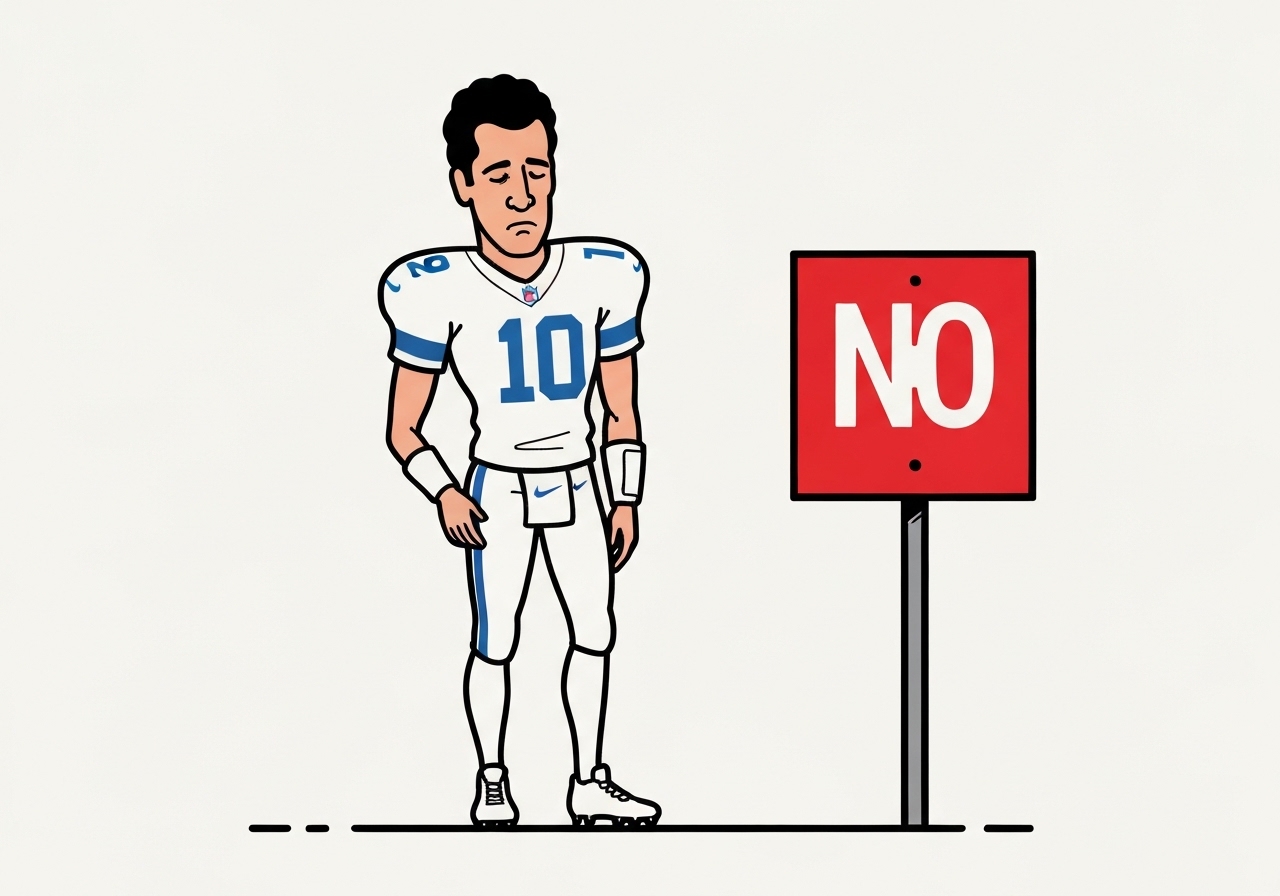
— Eli Manning will wait at least another year for induction into the Pro Football Hall of Fame, according to multiple league sources. The former New York Giants quarterback, one of 15 modern-era finalists for the second straight year, did not reach the final ballot. Manning remains notable for two Super Bowl championships and two Super Bowl MVP awards, but voters again withheld induction. The vote outcome keeps his candidacy alive but unresolved.
Key takeaways
- Manning was a 2026 modern-era finalist but was not elected to the Pro Football Hall of Fame on Jan. 28, 2026; multiple league sources reported the result.
- He spent 16 seasons (2004–2019) with the New York Giants, starting 210 consecutive games from 2004 to 2017 — the third-longest streak by a quarterback.
- Manning ranks 11th in career passing yards and 11th in career passing touchdowns as of Jan. 28, 2026; he retired after 2019 ranked seventh in both categories.
- He finished his career with a 117–117 record as a starter and led the NFL in interceptions three times, factors cited by some voters as weighing against him.
- Manning is one of six players with multiple Super Bowl MVP awards; among that group, Joe Montana, Terry Bradshaw and Bart Starr were first-ballot Hall inductees, while Tom Brady and Patrick Mahomes remain likely unanimous selections when eligible.
- Observers and many fans argue Manning’s postseason résumé — including two Super Bowl wins and two Super Bowl MVPs — will keep him in future consideration despite repeated ballot setbacks.
Background
Eli Manning entered the NFL as the first overall pick in 2004 and spent his entire 16-year career with the New York Giants, a rarity in the modern era. Over his career he compiled top-15 totals in both passing yards and touchdown passes, and he engineered two late-season playoff runs that culminated in Super Bowl XLII (2007 season) and Super Bowl XLVI (2011 season) victories. Those postseason performances earned Manning two Super Bowl MVP honors, placing him in a small club with only five other players to win multiple Super Bowl MVPs. Historically, the Hall of Fame has favored candidates who combine sustained peak performance with postseason success, making Manning’s mixed résumé a subject of debate.
When he retired after the 2019 season, Manning stood seventh all-time in career passing yards and touchdowns; by 2026 his rankings had slipped to 11th in both categories as later-era passers accumulated larger totals. Voters for the modern-era ballot evaluate candidates on career statistics, peak dominance, postseason impact and honors such as All-Pro selections and Pro Bowl appearances. Manning’s résumé includes four Pro Bowl nods but no first-team All-Pro selections, a contrast with many quarterbacks already enshrined.
Main event
The Hall of Fame’s modern-era finalists list was released earlier this month with 15 names; Manning again made that cut but did not advance to induction. Sources familiar with the voting process told reporters that, while many voters acknowledge Manning’s championship-winning moments, hesitancy persists because he was not routinely considered among the era’s very top quarterbacks during his peak seasons. The Hall’s committee declined to release vote totals, consistent with its usual practice, leaving observers to infer margins from which candidates were chosen.
Within the voting body, several factors were cited by sources as influential: lack of All-Pro first-team recognitions, a career starter record that finished exactly even at 117–117, and leading the league in interceptions three seasons — all elements that contrasted with Manning’s postseason résumé. Conversely, supporters emphasized his two Super Bowl MVPs and the timing of his playoff performances against highly regarded opponents. That split assessment appears to have produced the continued delay in induction.
Giants fans and former teammates responded publicly with reminders of Manning’s franchise significance and clutch playoff moments. League analysts noted that modern Hall voting has become more comparative as a larger pool of eligible players — particularly high-volume passers from the 2010s and 2020s — compete for a limited number of slots each year. For now, Manning remains an active candidate for future ballots rather than an inductee.
Analysis & implications
Manning’s exclusion this year underscores how Hall voting balances peak performance against longevity and signature moments. His case is unusual: two Super Bowl MVPs and two championships are powerful credentials, but voters also value All-Pro honors and sustained seasons of dominance, where Manning’s résumé is lighter. That tension—between peak postseason impact and regular-season eminence—has defined many recent borderline candidacies.
The shifting statistical landscape of the NFL has also complicated assessments. Since Manning retired, passing totals across the league have grown, and several quarterbacks who were behind him in 2019 have surpassed his career totals, pushing him down the career leaderboard to 11th in yards and touchdowns. Voters who emphasize cumulative statistics may therefore favor newer high-volume passers, while those who weigh clutch postseason achievements may remain sympathetic to Manning’s case.
Practically, Manning’s best path to the Hall may be continued presence on the finalist list and clearer comparative narratives that highlight his unique postseason achievements relative to peers who lack championships. If future ballots remain crowded with recently retired quarterbacks and skill-position stars, Manning could face further delays regardless of his Super Bowl record. Conversely, a less crowded ballot year or additional advocacy from prominent voters could tilt the balance in his favor.
Comparison & data
| Metric | Eli Manning (ret. 2019) | Rank as of Jan. 28, 2026 |
|---|---|---|
| Seasons | 16 (2004–2019) | — |
| Career passing yards | — | 11th |
| Career passing touchdowns | — | 11th |
| Career record (as starter) | 117–117 | — |
| Consecutive starts | 210 (2004–2017) | 3rd longest among QBs |
| Pro Bowls | 4 | — |
| All-Pro (first team) | 0 | — |
| Super Bowl MVPs | 2 | One of six players |
The table above highlights the mix of career volume (yards, touchdowns) and signature achievements (Super Bowl MVPs) that define Manning’s résumé. While his cumulative totals remain strong historically, the relative absence of first-team All-Pro seasons and the even win–loss record as a starter stick out to voters who prioritize sustained peak seasons.
Reactions & quotes
“He has the championship résumé, but some voters look for a different kind of peak season dominance.”
Anonymous Hall of Fame voter
The anonymous voter framed the split assessment: postseason greatness versus regular-season peak. That encapsulates why Manning’s two Super Bowl MVPs carry weight while other traditional markers have held him back.
“Giants fans will point to those two Super Bowls — they were seasons that defined the franchise.”
Giants supporter on social platform
Fan reaction emphasized franchise impact and signature moments; social platforms showed immediate defense of Manning’s legacy following the vote announcement.
“The Hall’s process favors different mixes of criteria over time; that makes some cases harder to predict.”
Independent football analyst
Analysts noted the Hall’s evolving standards and a growing pool of eligible players increases year-to-year variability in selections.
Unconfirmed
- The precise vote totals and exact reasons individual voters withheld support for Manning have not been released and remain unconfirmed.
- Any specific promises or private discussions about future induction timetables for Manning have not been corroborated by Hall of Fame officials.
Bottom line
Eli Manning’s omission from this year’s Hall of Fame induction class does not close his candidacy; it highlights a persistent divide in how voters weigh postseason excellence against regular-season peak honors. His two Super Bowl MVPs and franchise-defining moments keep him squarely in ongoing consideration, even as voters point to the absence of All-Pro selections and an even career record as reasons for caution.
Going forward, Manning’s prospects will depend partly on ballot composition in future years and on whether advocates can reframe his career as one of sustained contribution plus uniquely high-impact postseason performance. For now, he remains a notable and unresolved case in the Hall conversation rather than a new inductee.