
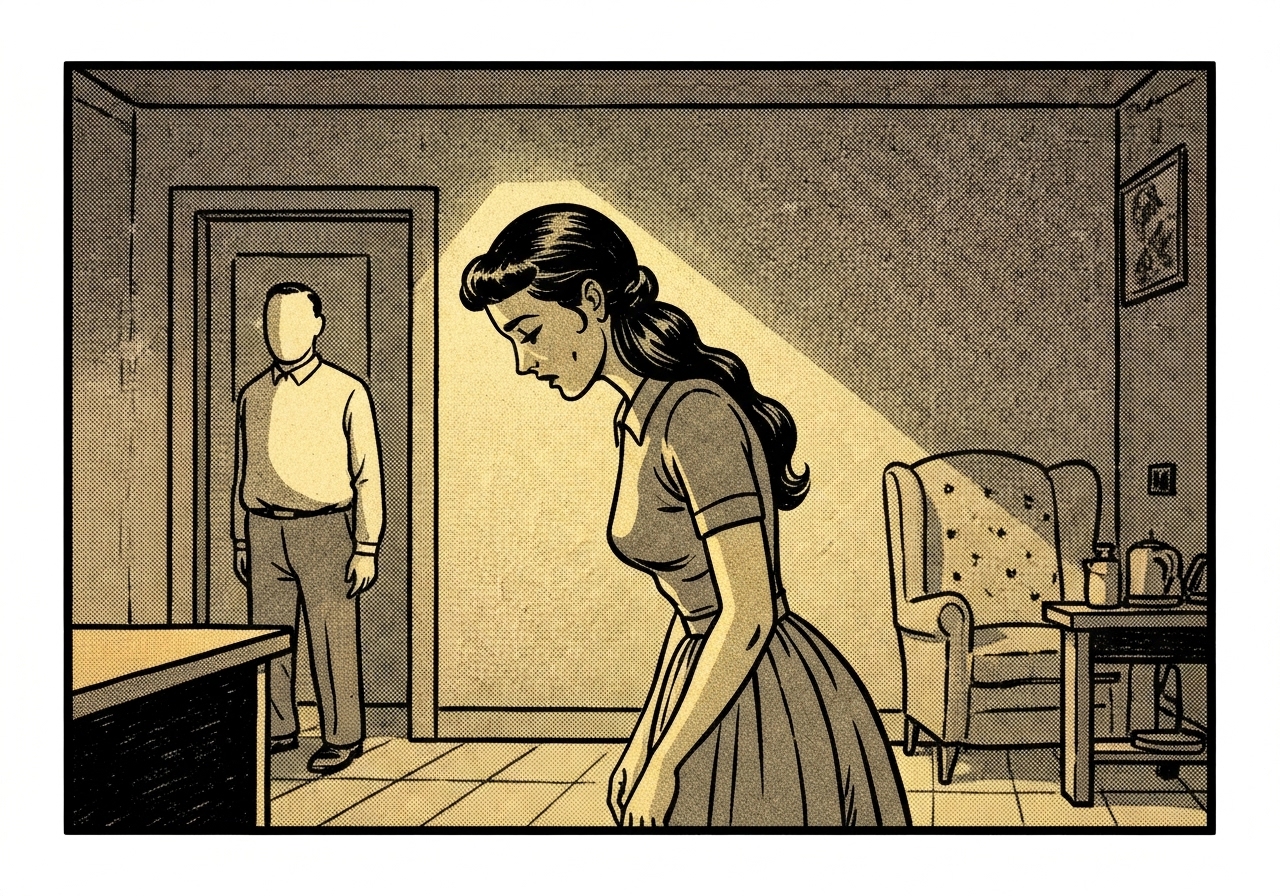
— In Heshun County, Shanxi Province, prosecutors concluded that a woman identified by the surname Bu was so impaired by mental illness that she had “no sexual self-defense capacity,” yet they decided not to criminally charge a man who lived with her and fathered several of her children. The ruling, involving relationships that lasted roughly 13 years, has ignited public debate across China over how consent is interpreted in cases involving mental disorder. Two other men from the same village were charged with rape, intensifying questions about consistency in prosecutor decisions and how the law treats sexual relations that produce children.
Key Takeaways
- Prosecutors in Heshun County (Shanxi Province) concluded a woman surnamed Bu lacked the ability to resist sexual advances, citing a medical assessment that she had “no sexual self-defense capacity.”
- The man who lived with Bu for about 13 years and fathered several children was detained but ultimately not charged with rape by prosecutors.
- Two other male villagers were charged with rape; official documents and a doctor’s assessment were cited in their indictments.
- The case has provoked widespread online outrage and discussion about consent, mental capacity and reproductive policy in China.
- Chinese criminal law does not explicitly define sexual consent; rape is specified as involving “violence, coercion or other means,” leaving grey areas in cases involving disability or mental illness.
- Legal advocates say the decision may reflect evidentiary challenges and social attitudes toward long-term cohabitation and childbearing.
Background
In recent years, China has faced renewed scrutiny over how its legal system handles sexual violence, especially involving victims who have intellectual disabilities, psychiatric illness or other impairments. The country’s criminal code requires proof of “violence, coercion or other means” for a rape conviction, but lacks a standalone statutory definition of consent, which leaves prosecutors to interpret guidelines and medical assessments. Guidelines used by local authorities instruct evaluators to determine whether a potential victim has “sexual self-defense capacity,” a phrase that has emerged as decisive in multiple recent prosecutions.
Heshun County is a rural area in northern Shanxi Province where social ties and village networks strongly influence how disputes are reported and pursued. Cases involving long-term cohabitation—especially when children are born—often present complicated evidentiary records: birth certificates and family life can be taken as signs of mutual relationship, even where capacity to consent is questioned. Advocates for victims of sexual violence say this dynamic can lead to uneven charging decisions, depending on local investigators’ interpretation of relationships and prevailing social attitudes.
Main Event
The woman, identified by the surname Bu in reporting, first appeared in a village in northern China years ago in a disheveled state and showing signs of mental illness. A local man reportedly brought her into his home; over approximately 13 years, he fathered several children with her. At some point authorities detained the man on suspicion of rape, and prosecutors reviewed medical assessments and statements from villagers.
Prosecutors ultimately determined that although Bu lacked sexual self-defense capacity, the long-term cohabitation and the existence of children “fundamentally distinguished” the man’s conduct from rape, and they chose not to bring charges against him. The decision document, as summarized in reporting, contrasted that outcome with the charging of two other men from the village, who were accused of raping Bu and whose prosecutions cited the same medical finding about her lack of defensive capacity.
The divergence in charging prompted immediate reaction on Chinese social platforms, where users expressed disbelief that parenthood and shared residence could be treated as evidence negating criminality. Local officials have not released a full public explanation beyond the prosecutorial memorandum obtained by reporters; court filings and investigation notes remain largely unavailable to the public, according to media accounts.
Analysis & Implications
The case highlights a structural ambiguity in the Chinese criminal code: without a statutory definition of consent, prosecutors rely on ancillary standards and medical reports to determine criminal responsibility in sexual assault cases. When a victim is found to have impaired recognition or protective capacity, that finding should logically strengthen a rape prosecution. Instead, here it produced conflicting outcomes for different defendants, raising concerns about unequal application of the standard.
Several factors can influence charging decisions: availability and timing of forensic evidence, witness statements, local prosecutorial discretion, and social perceptions of long-term relationships. Births and family life may create documentary traces that complicate assessments of coercion versus consensual relations, especially where records of abuse are sparse or where the victim’s statements are inconsistent due to cognitive impairment.
International human-rights observers say the ruling could chill reporting by victims with disabilities, who already face obstacles in accessing legal remedies. If prosecutors equate procreation or cohabitation with consent, victims with limited capacity may find fewer avenues for redress. Domestically, the case may prompt renewed calls from legal scholars and advocacy groups for clearer statutory language on consent and for mandatory training for medical assessors and prosecutors handling capacity evaluations.
Comparison & Data
| Item | Outcome |
|---|---|
| Man who cohabited and fathered children | Detained; not charged with rape |
| Two other male villagers | Charged with rape |
| Medical finding | “No sexual self-defense capacity” for the victim |
| Duration of relationship | Approximately 13 years |
The table summarizes the contrasting prosecutorial outcomes in the Heshun County matter. Such splits are difficult to interpret without access to full investigative records: prosecutorial decisions commonly rest on case-specific evidence such as timing of alleged incidents, witness testimony, physical or forensic findings, and the credibility assessments of the victim. Analysts caution against assuming legal precedent from a single county-level decision, but note the potential for broader social and legal impact if patterns persist.
Reactions & Quotes
Public and institutional responses arrived quickly after the reporting surfaced. Civil society advocates emphasized the need for clearer rules on consent and greater protections for people with mental illnesses. At the same time, some local commentators argued prosecutors may have acted within narrow evidentiary bounds.
This decision sends a worrying signal that parenthood can be used to discount the possibility of sexual violence, especially for vulnerable people.
Legal advocate for victims (civil society)
Supporters of strict evidentiary standards defended the county prosecutors’ discretion, arguing that charging must be grounded in provable criminal elements rather than presumptions about relationships. They urged improved investigatory resources to document coercion when victims have limited capacity to testify.
Prosecutors must weigh the facts before bringing charges; different defendants and different crimes can legitimately produce different charging outcomes.
Local legal commentator (media)
Some villagers and online commenters expressed both sympathy for Bu and confusion at the legal reasoning. The split in charging—two men indicted, one not—was repeatedly cited as the core reason the case captured national attention.
The inconsistency in who was charged is what people cannot understand; if she could not defend herself from some men, why not from others?
Online commentator (social media)
Unconfirmed
- Precise internal reasoning in the Heshun County prosecutors’ file is not publicly available; summaries come from reporting based on a copy of the decision.
- Timing and details of specific incidents alleged against the three men have not been fully disclosed in public court records.
- Information about whether Bu or her family sought separate civil remedies or social services has not been independently confirmed.
Bottom Line
This case spotlights a legal and social gap: without a clear statutory definition of consent, determinations hinge on medical assessments and prosecutorial interpretation, which can produce outcomes that appear inconsistent to the public. The juxtaposition—medical findings that a woman could not defend herself, paired with a decision not to charge a man who lived with and fathered children by her—has fueled debate over how to balance evidentiary rigor with protection for vulnerable victims.
Looking ahead, the controversy could prompt calls for reform: clearer legal language on consent, standardized protocols for capacity evaluations, and training for prosecutors and medical examiners. For victims with mental illness, the practical effect will depend on whether authorities adopt more consistent standards that prioritize protection and reliable evidentiary collection in cases of alleged sexual abuse.
Sources
- The New York Times — International media report, contains copy of the prosecutorial decision and reporting on the Heshun County case.
- National People’s Congress (npc.gov.cn) — Official source for China’s criminal law framework and legal texts (official).