
Lead
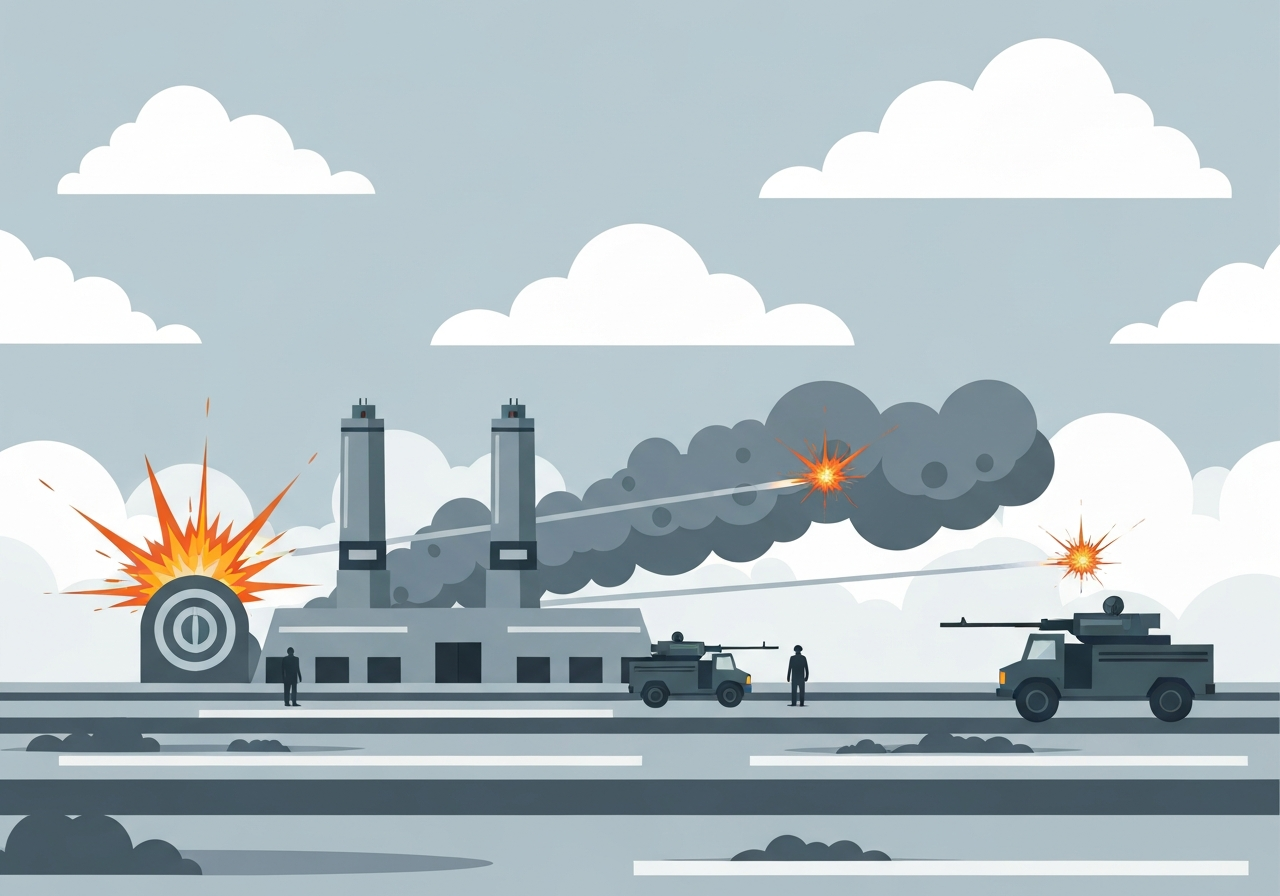
The US military launched fresh strikes on a military site near Bandar Abbas, Iran, after Centcom said its forces shot down four Iranian one-way attack drones that threatened traffic around the Strait of Hormuz. Centcom said the site was struck as it prepared to launch a fifth drone; Iranian media reported explosions east of the port city. The action comes amid a fragile ceasefire and months of negotiations intended to end a conflict that began on 28 February when US and Israeli strikes on Iran marked a major escalation. US officials described the strikes as defensive; Iran condemned them as a breach of the ceasefire and vowed retaliation.
Key takeaways
- The US struck a military site in Bandar Abbas after shooting down four one-way attack drones, Centcom said.
- Centcom said the Bandar Abbas site was preparing to launch a fifth drone at the time of the strike.
- This is the second US attack on targets inside Iran in three days; an earlier round targeted missile sites and boats alleged to be laying mines in the Strait.
- The conflict began on 28 February with US and Israeli strikes on Iran and has lasted roughly three months, disrupting tanker traffic through the Strait of Hormuz.
- Thousands of commercial tankers have been delayed or stranded in the region, contributing to higher global energy prices.
- Iran’s government called the strikes a “grave violation of the ceasefire” and the IRGC said it had downed a US drone and engaged other aircraft, though timing and full details remain unclear.
- President Donald Trump reiterated that the US could resume larger strikes if negotiations fail, while saying a deal was still possible.
Background
The current hostilities trace back to 28 February, when the US and Israel carried out strikes on Iranian targets; that operation marked the start of a broader confrontation that has continued for about three months. The Strait of Hormuz — the narrow shipping lane that links the Persian Gulf to the Arabian Sea — has been a focal point: both sides have accused each other of actions that endanger commercial shipping. Thousands of tankers have been delayed or rerouted, contributing to upward pressure on global energy markets and prompting concern among Gulf states and international shippers.
Diplomatic efforts to halt the fighting have been intermittent. Last week both Washington and Tehran signalled progress in talks, but statements have been inconsistent: Iranian state television later released a draft text that the White House called a fabrication. The ambiguity has left negotiators and regional partners uncertain about whether a durable deal can be signed, even as a fragile ceasefire has at times reduced the intensity of direct strikes.
Main event
US Central Command reported that its forces shot down four incoming one-way attack drones that posed a threat near the Strait of Hormuz and then struck a military site in Bandar Abbas as it was preparing to launch a fifth drone. Iranian media outlets reported explosions east of Bandar Abbas at roughly the same time; local officials and independent verification of specific damage are limited at present. Centcom described the operation as measured and purely defensive, designed to preserve the ceasefire and protect US forces and regional shipping.
The strikes follow a prior US operation earlier in the week that targeted missile sites and vessels alleged to be deploying mines in the southern Iranian littoral. Centcom said those earlier strikes were intended to prevent threats to US personnel and to keep the main shipping lanes open. Iran’s Islamic Revolutionary Guard Corps (IRGC) said it had shot down a US drone and fired at a fighter jet and another drone that entered Iranian airspace; the IRGC did not specify the timing of those actions, leaving gaps in the public timeline.
In Washington, President Donald Trump spoke at a White House cabinet meeting, warning that the US might resume a larger bombing campaign if Tehran does not accept US conditions. He gave a mixed assessment of negotiations, saying a deal was largely negotiated over the weekend but adding that Washington remained unsatisfied and would not hesitate to act. Trump also urged Gulf states to normalise relations with Israel through the Abraham Accords during the same meeting.
Analysis & implications
The Bandar Abbas strike raises the immediate risk that the fragile ceasefire will collapse. US officials frame these strikes as self-defence intended to deter further Iranian attacks on shipping and US forces; if Iran views the strikes differently, escalation dynamics could quickly intensify. A breakdown of the ceasefire would likely lead to renewed attacks on maritime traffic, with consequences for insurance costs, rerouting of tankers, and higher energy prices worldwide.
Politically, Washington’s posture is shaped by competing pressures: a desire to secure an agreement that reduces regional risk, and domestic political calculations ahead of the November midterms. President Trump’s public comments — threatening to “finish the job” if necessary while also signalling negotiators not to rush — suggest a strategy that mixes negotiation leverage with the option of military pressure. That ambiguity may help extract short-term concessions but also increases the chance of miscalculation.
Regionally, Israel remains engaged in parallel confrontations, including fighting with Hezbollah in Lebanon, which complicates any settlement. Gulf states, dependent on stable shipping lanes, face an acute choice between deeper alignment with Washington or hedging relations with Tehran to preserve trade flows. Any sustained disruption in the Strait of Hormuz would have ripple effects across global energy markets and would test the capacity of international institutions to mediate.
Comparison & data
| Date | Action | Official claim |
|---|---|---|
| 28 Feb | US and Israeli strikes on Iranian targets | Marked start of broader conflict |
| This week (Monday) | US strikes in southern Iran on missile sites and boats | Centcom: self-defence, to stop mine-laying |
| Today | Strike on Bandar Abbas site; four drones shot down | Centcom: defensive, site preparing to launch fifth drone |
The table summarises public claims and key dates. Independent verification of specific damage and casualty figures inside Iran is limited, and the timing of some IRGC actions remains unspecified, complicating a precise chronological reconstruction.
Reactions & quotes
“Measured, purely defensive, and intended to maintain the ceasefire.”
US Central Command (official)
Centcom framed the operation as narrowly tailored to remove an immediate threat. Officials emphasised protection of shipping and US forces as the rationale for the strikes.
“A grave violation of the ceasefire. We will not leave any act of hostility unanswered.”
Iranian government / state media (official)
Iran’s public response warned of retaliation and framed the strikes as a breach of negotiated understandings, increasing the diplomatic stakes for negotiators on both sides.
“Maybe we have to go back and finish it, maybe we don’t.”
President Donald Trump (White House)
The president’s remarks blended a willingness to press for a diplomatic deal with an explicit threat of renewed military action if talks fail, underscoring the administration’s dual-track approach.
Unconfirmed
- The IRGC’s claim that it downed a US drone has not been independently verified and lacks precise timing or forensic detail.
- Details published by Iranian state television about a draft agreement, including US force withdrawal, were branded a “complete fabrication” by the White House and remain unconfirmed.
- The scale and damage at the struck Bandar Abbas site, and whether there were casualties, have not been independently corroborated.
Bottom line
The US strikes on a Bandar Abbas military target and the shooting down of multiple drones mark a critical juncture in a conflict that has already disrupted global shipping and energy prices. Washington describes the actions as defensive steps to protect shipping and personnel; Tehran frames them as violations of a ceasefire. That difference in framing raises the prospect that the pause in large-scale hostilities could collapse if either side interprets the other’s actions as unacceptable provocation.
Diplomatic negotiations remain the most viable route to stabilise the region, but inconsistent public statements and unverified claims make near-term progress uncertain. Observers should watch whether Gulf partners step in to mediate, whether verification mechanisms for any draft agreement are agreed, and if either side takes actions that close the space for negotiation and increase the risk of wider escalation.
Sources
- BBC News — media report summarising Centcom and Iranian statements
- US Central Command — official military statements and press releases
- The White House — official statements and remarks