
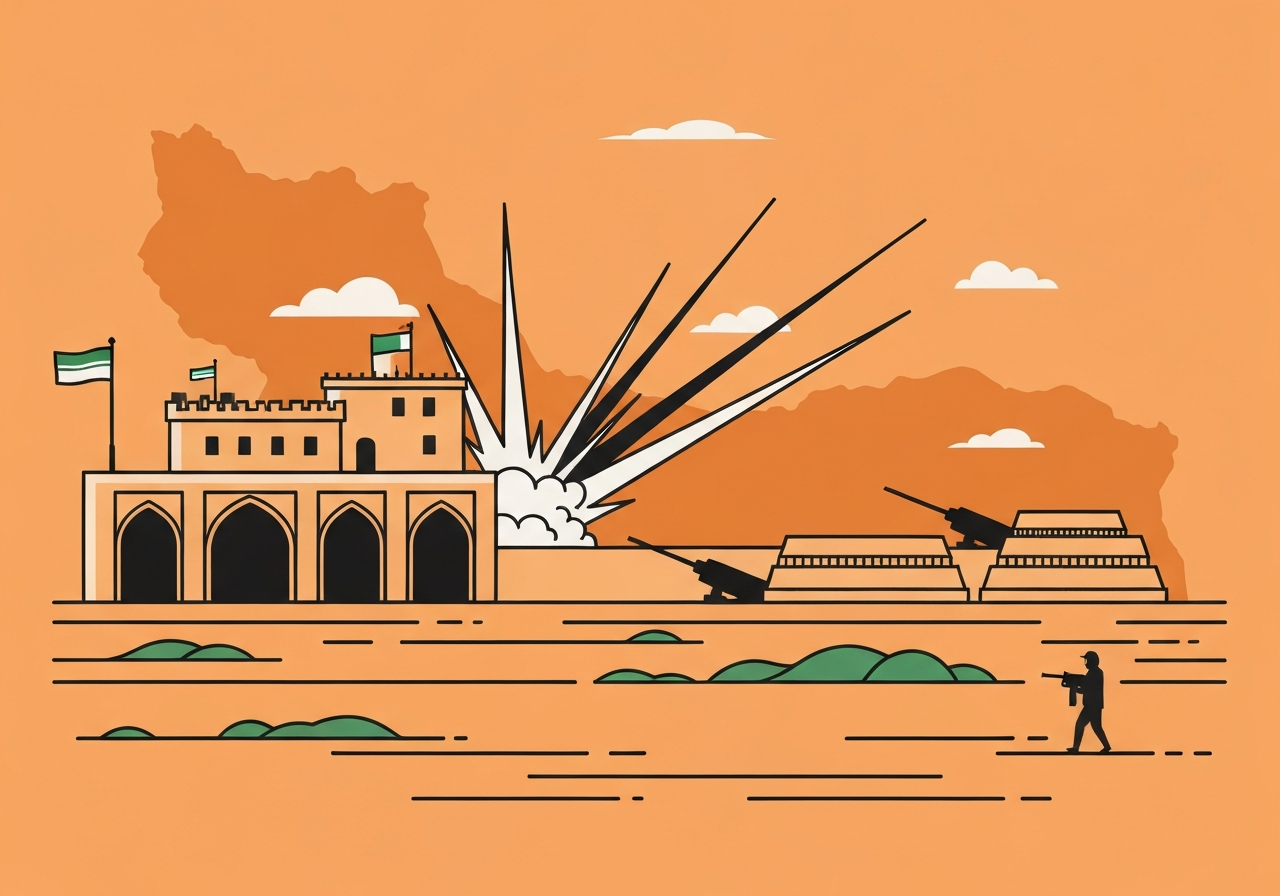
Lead: US forces struck a military site in southern Iran on Tuesday, saying the action destroyed a facility preparing to launch another attack drone. Iran’s Islamic Revolutionary Guard Corps (IRGC) responded by saying it had targeted an American air base in the region. Kuwait reported intercepting hostile missiles and drones as tensions flared around the Strait of Hormuz, imperiling a fragile ceasefire and ongoing negotiations to end the three-month conflict.
Key Takeaways
- The US military reported striking a site near Bandar Abbas after shooting down multiple Iranian attack drones; Centcom said the site was about to launch a fifth drone.
- US forces also said they shot down four one-way Iranian attack drones near the Strait of Hormuz on Tuesday.
- The IRGC claimed it had targeted a US air base it described as the origin of the Bandar Abbas strike, but did not name the base.
- Kuwait said it intercepted “hostile missile and drone threats” without identifying their source or targets.
- The strikes mark the second US attack on Iranian territory in three days and came amid protracted negotiations to end the war that began on 28 February.
- One-fifth of global liquefied natural gas and oil normally transit the Strait of Hormuz, and the confrontation has disrupted shipping and raised energy costs.
- The US Treasury announced sanctions on the Persian Gulf Strait Authority, warning shippers could face secondary sanctions for paying Iranian fees.
Background
The wider conflict began on 28 February when the US and Israel carried out strikes against Iran, triggering months of tit-for-tat attacks that have constricted traffic through the Strait of Hormuz. The waterway is a critical artery for global energy supplies; roughly 20% of the world’s liquefied natural gas and oil normally pass through it. Commercial tankers have been delayed or stranded, and insurance and freight costs have risen as a result.
Diplomatic efforts have been underway for weeks to negotiate an end to hostilities. Officials on both sides signalled intermittent progress last week, but negotiators subsequently cautioned that a final agreement was not imminent. Tehran has said it is collecting fees for navigational services in the Strait; Washington has condemned the move and applied sanctions on the Iranian body handling those payments.
Main Event
US Central Command (Centcom) said its forces shot down Iranian drones over the Strait of Hormuz and carried out a strike on a military site in Bandar Abbas. Centcom described the strike as “measured, purely defensive, and intended to maintain the ceasefire,” saying the targeted site was preparing an additional attack drone. Iranian state media reported explosions east of Bandar Abbas following the strike.
The IRGC announced it had targeted an American air base it claimed was the source of the Bandar Abbas action, though it did not specify the base’s location. Kuwait, host to a US base in the region, said it had intercepted hostile missile and drone threats but did not attribute their origin. Earlier US actions this week included strikes on Iranian missile sites and vessels accused of attempting to lay mines in the Strait.
Centcom also reported downing four one-way attack drones that it said posed a threat to forces around the Strait of Hormuz. US officials framed the operations as defensive responses to imminent threats. Iranian statements also said the IRGC had downed a US drone and fired at an aircraft and another drone that entered Iranian airspace, but provided no timing or independently verifiable details.
Analysis & Implications
The renewed exchanges risk unraveling a tenuous ceasefire and complicating negotiations meant to halt the three-month war. If the strikes escalate, shipping through the Strait could face longer closures or higher security costs, reinforcing recent spikes in global energy prices. For states dependent on Gulf crude, even short disruptions raise inflationary pressures and political headaches for governments trying to balance markets and public sentiment.
Regionally, the strikes show how localized tactical moves — drone launches, point strikes on facilities — can produce strategic shifts. Iran’s public declaration of targeting a US base signals a willingness to claim offensive measures, potentially intended to deter further strikes or to strengthen its negotiating posture. For the US and its partners, the challenge is calibrating responses that protect forces and commercial traffic without provoking wider war.
Politically, US domestic timing matters. President Donald Trump told his cabinet on Wednesday that Tehran was “negotiating on fumes” and repeated that Washington could resume a broader bombing campaign if talks fail. Such public remarks exert pressure on negotiators while signalling to regional actors that the US retains the option of expanded operations, which may harden Iran’s positions or spur third-party actors to act.
Comparison & Data
| Item | Recent Incidents | Previous Week |
|---|---|---|
| US strikes on Iranian soil | 2 strikes in 3 days | 1 confirmed strike (earlier this week) |
| Drones shot down near Strait | 4 one-way attack drones | Multiple Iranian drones interdicted in prior incidents |
| Impact on shipping | Thousands of tankers delayed; route disruptions ongoing | Strait traffic already constrained for weeks |
The table summarizes recent kinetic activity and its continuity with prior incidents. These dynamics show a pattern of short, tactical US operations aimed at neutralising immediate aerial threats combined with Iranian measures that assert its control over nearby waters. The cumulative effect has been persistent commercial disruption rather than decisive territorial change.
Reactions & Quotes
US officials defended the strikes as defensive actions to protect personnel and shipping lanes. Iran’s foreign ministry condemned the US attacks as violations of the ceasefire and warned it would “take all necessary measures to defend its national sovereignty,” according to state media.
“The strikes were measured, purely defensive, and intended to maintain the ceasefire.”
US Central Command (official)
“We will take all necessary measures to defend our national sovereignty.”
Iranian foreign ministry spokesman Esmaeil Baqai (state broadcaster)
Kuwait’s statement about intercepting threats reflects regional alarm and the risk to host-nation security arrangements. Separately, the US Treasury described Iran’s fee collection in the Strait as an attempt to extract revenue from global maritime trade, and said shippers that pay could be exposed to sanctions.
Unconfirmed
- The IRGC’s claim to have downed a US drone and to have fired on a fighter jet is reported by Iranian outlets but lacks independent verification and precise timing.
- The IRGC statement that it targeted a specific American air base has not been corroborated by US or third-party sources and the base was not identified.
- Kuwait said it intercepted hostile threats but did not confirm the origin or intended targets of the missiles and drones it engaged.
Bottom Line
The latest strikes underscore how quickly localized confrontations can jeopardize a fragile ceasefire and global energy stability. Both Tehran and Washington are signaling readiness to defend perceived red lines while simultaneously engaging in talks, a dual posture that raises the risk of miscalculation.
For international observers and commercial actors, the immediate priorities are clear: restoring de-escalation mechanisms, verifying claims through independent channels, and reopening secure transit through the Strait of Hormuz. Absent progress at the negotiating table, tactical strikes and counterstrikes could continue to disrupt markets and regional security.
Sources
- BBC News (international media) — original report summarising events and statements.
- US Central Command (official military statements) — Centcom accounts of strikes and defensive actions.
- IRIB (Islamic Republic of Iran Broadcasting) (state broadcaster) — Iranian official statements and claims.
- US Department of the Treasury (official) — sanctions on Persian Gulf Strait Authority and related guidance.
- The White House (official) — remarks by US leadership about negotiations and policy posture.