
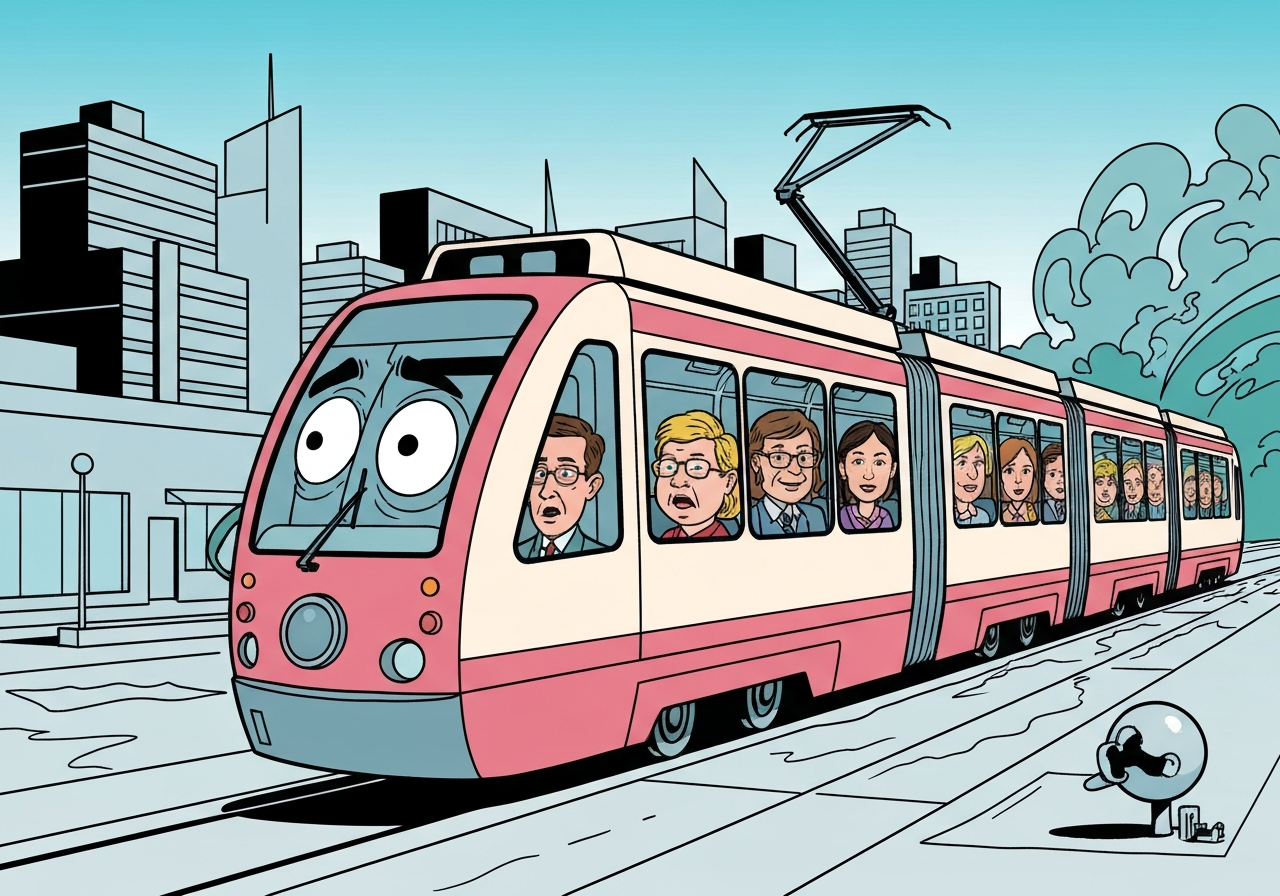
Seattle’s light rail system has finally reached a level of usefulness after decades of delays and controversy, but last week’s budget showdown at Sound Transit exposed a severe funding shortfall that could reshape expansion plans. The agency unveiled an immediate $35 billion gap in the ST3 program, forcing cuts that effectively truncate the promised Ballard extension and delay service to outlying cities. Board votes and public protest—most visible in a satirical funeral staged by transit advocates—captured widespread anger and disbelief. Riders and elected officials now face a choice between scaled-back construction, new revenue asks, or further delays that push promised service into the 2030s and beyond.
Key Takeaways
- Sound Transit disclosed a $35 billion shortfall on the ST3 expansion, putting the program’s original $54 billion estimate at grave risk.
- The Ballard line’s projected cost rose from $6.8 billion in 2016 to as much as $23 billion today, prompting the board to halt its extension beyond Seattle Center.
- Service to Tacoma and Everett is now estimated for the mid-to-late 2030s, with Everett possibly not seeing trains until about 2041.
- Sound Transit currently collects roughly $700 per resident per year in taxes to fund expansions.
- Fare revenue is forecast to provide only about 3.5% of total agency income under the new plan, increasing pressure on taxes and subsidies.
- Ridership is already strong: the light rail averaged 122,000 daily riders in February, a 73% increase from 2019 levels.
- Board members and local leaders expressed deep frustration; several described a loss of trust in the agency’s planning and cost estimates.
Background
The push for regional light rail in the Seattle area dates back to the 1990s, when planners favored lower-cost alignments that could run at street level or in medians, a model similar to Portland’s MAX system. That approach aimed to extend service broadly at relatively modest cost, accepting slower downtown running in exchange for more coverage. Over time the region shifted toward deeper tunneling and elevated guideways—solutions that improve speed and reliability but dramatically raise construction costs and complexity.
Voters approved the ST3 package in 2016 with an estimated price tag of about $54 billion for major new lines and extensions. After prior phases ran well over their initial budgets, the ST3 projections were presented with large contingencies and widely regarded at the time as conservative. Even so, the program now faces what Sound Transit officials call an unprecedented overrun that has forced a first round of painful realignments.
Main Event
Last week the Sound Transit board unveiled its first formal plan to close a $35 billion funding gap in the ST3 expansion program. The shortfall stems from a mix of rising construction inflation, complex tunneling and elevated work, and gaps between early estimates and current market conditions. In response, the board voted to truncate the Ballard extension to Seattle Center and to delay or re-sequence other segments to reduce near-term spending.
That decision provoked visible protest: transit advocates held a mock funeral procession through downtown Seattle to dramatize the perceived death of the promised Ballard line. Local officials whose communities expect rail service reacted angrily at the board meeting, saying residents have been paying into the system for decades without receiving timely benefits. Everett’s mayor and other suburban leaders warned that asking for new revenue before basic promised service arrives would be politically fraught.
Board members acknowledged the political and financial bind. Some urged immediate construction in Tacoma and Everett where projects are closer to ready, while others—especially representatives from affected neighborhoods—demanded better accountability and clearer timelines. The board also passed a resolution put forward by Seattle Mayor Katie Wilson directing staff to plan a potential future revenue package—informally dubbed “ST4”—to close remaining gaps and fund further expansion.
Analysis & Implications
The scale of the shortfall forces a strategic reckoning. If the agency trims scope across many corridors, promised regional connectivity will be delayed or reduced, altering transit-oriented development plans and potentially leaving lower-income and outlying communities waiting decades for service they were promised. Conversely, asking voters for more money risks public backlash, especially in jurisdictions that feel shortchanged by postponed service.
Financially, the forecast that fares will supply only about 3.5% of revenue highlights structural limits to user-based funding; the system will remain heavily reliant on taxes and other public revenue. That dynamic increases scrutiny on cost control, procurement practices, and the choice of heavy engineering (tunnels, elevated structures) versus more surface-level options that were used in other cities to expand coverage more cheaply.
Politically, the agency’s credibility is at stake. Several board members publicly stated they had lost trust in Sound Transit’s projections and management, which could make future ballot measures harder to pass. Restoring confidence will require clearer cost transparency, accelerated work on near-complete segments, and demonstrable progress for communities that have been paying into the system for decades.
Comparison & Data
| Project | 2016 Estimate | Current Estimate / Impact |
|---|---|---|
| ST3 total program | $54 billion | Shortfall ~ $35 billion (implying ~ $89 billion total) |
| Ballard extension | $6.8 billion | Up to $23 billion; extension cut back to Seattle Center |
The table highlights how a few large escalations can cascade through a multi-decade capital plan. With ridership at 122,000 daily trips in February (up 73% from 2019), the core network shows strong demand; the policy tension is between serving existing markets promptly and funding the next wave of geographic expansion.
Reactions & Quotes
Several board members and local officials expressed anger and a loss of confidence during the budget debates.
I’ve lost trust in this agency, in many different ways.
Dan Strauss, Sound Transit board member / Seattle City Council
Board members representing outlying communities said their constituents are rightly frustrated after years of paying into the system.
We’ve just heard this, from Tacoma and from Everett, that we can’t continue to talk about expanding.
Cassie Franklin, Mayor of Everett
Sound Transit leadership described the technical complexity that has pushed costs higher.
It’s the most complex transit project, probably in the world.
Dave Somers, Sound Transit board chair
Unconfirmed
- Whether the Ballard extension is permanently canceled is not finalized; the board’s cutbacks stop work beyond Seattle Center but future restorations remain possible.
- Precise project-level final costs and the complete new price for the ST3 package are still being refined and may change as the agency updates estimates.
- The timing and structure of any future revenue measure (the so-called ST4) are not set and will depend on board decisions and political negotiations.
Bottom Line
The Seattle region now has a robust core light rail system with strong ridership, but the expansion program is at an inflection point. A $35 billion gap forces trade-offs: accelerate building in corridors that are shovel-ready, scale back or reconfigure expensive segments, or seek new revenues from voters. Each option carries political and equity consequences, particularly for suburban communities that have been contributing taxes for decades without seeing promised service.
Restoring public trust will mean clearer cost reporting, faster delivery on near-complete projects, and honest discussion about scope and funding choices. Policymakers must balance the practical success of existing service—122,000 average daily riders in February—with realistic, transparent plans for how and when the network grows next.