
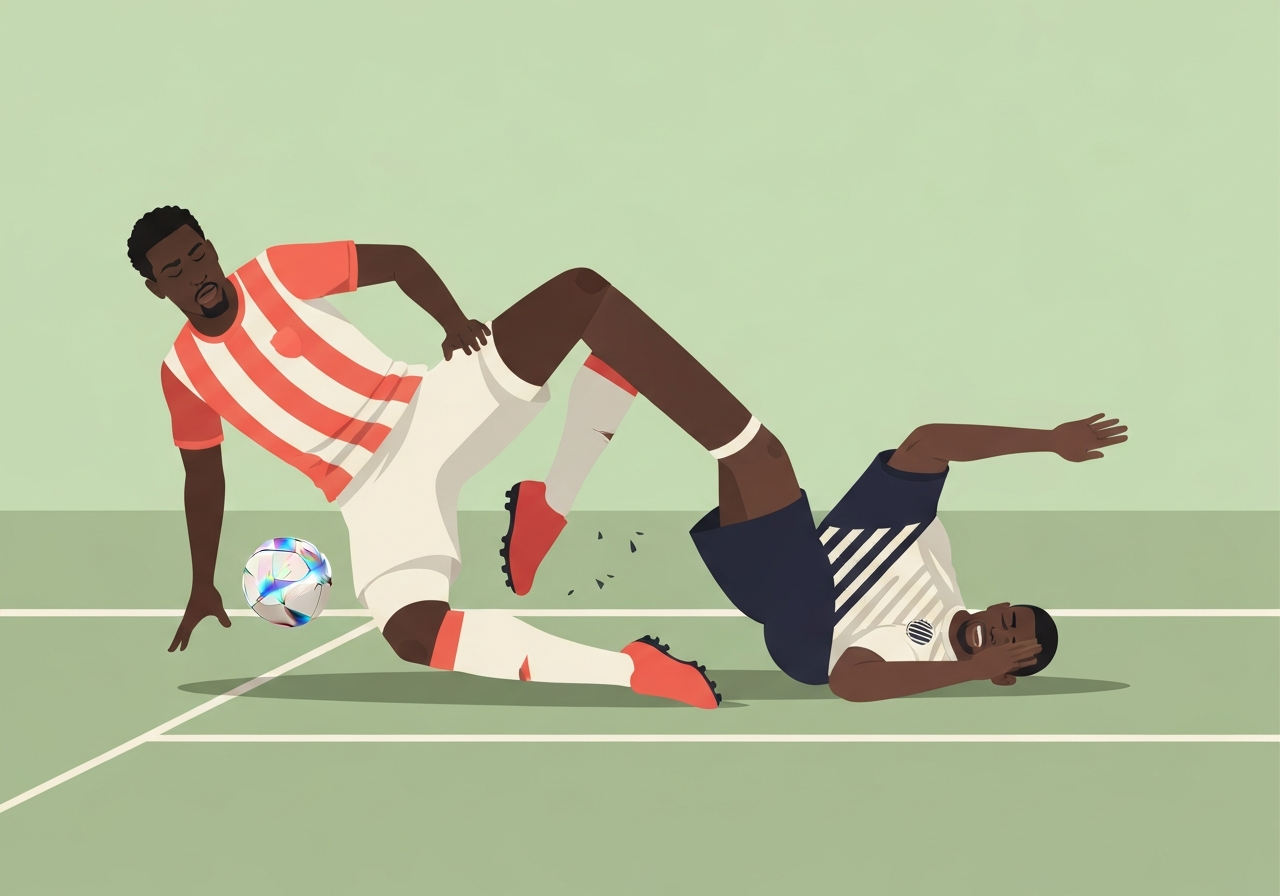
Ismael Kone stretchered off after red-card tackle in Canada vs. Qatar
Lead: On June 18, 2026, in Vancouver, Canada midfielder Ismael Kone suffered a serious left-leg injury early in the second half of his nation’s World Cup Group B match against Qatar after a tackle by Assim Madibo. The challenge was initially called a foul on the field and later upgraded to a red card for Madibo. Trainers fitted an air cast and Kone was carried off on a stretcher as teammates and staff reacted visibly on the touchline. Canada later replaced Kone with Nathan Saliba in the 56th minute; Saliba scored eight minutes later from a free kick and displayed a KONE 8 jersey to the crowd.
Key Takeaways
- Incident date and place: June 18, 2026, Vancouver, Group B World Cup match between Canada and Qatar.
- Foul and sanction: Assim Madibo’s tackle was upgraded to a red card after initial on-field calls; it was Qatar’s second dismissal of the match following Homam Ahmed’s 31st-minute red card.
- Injury and immediate care: Medical staff placed an air cast on Kone’s left leg and removed him from the pitch on a stretcher amid audible concern from the bench and stands.
- Substitution and response: Nathan Saliba entered in the 56th minute, scored from a free kick in the 64th minute, and held up a KONE 8 jersey in tribute.
- Player background: Kone was born in Ivory Coast, moved to Montreal at age seven, progressed through CF Montreal (debut 2021) and transferred to Watford in 2022; this marked his second World Cup after debuting in 2022.
- Tournament context: Canada competes in Group B with Bosnia and Herzegovina, Qatar and Switzerland in the 48-team 2026 World Cup format.
Background
Ismael Kone has emerged rapidly since breaking into professional football with CF Montreal in 2021. After attracting European interest, he signed for Watford in 2022 and received his first senior Canada call-up in March 2022, appearing at his first World Cup months later. By 2026 he was considered a dynamic presence in Canada’s midfield rotation, valued for forward-facing passing and ball progression.
The 2026 World Cup uses a 48-team format split into 12 groups of four, with the top two from each group and the eight best third-place teams advancing to a 32-team knockout stage. Canada entered Group B alongside Bosnia and Herzegovina, Qatar and Switzerland, making early group-stage results important for seeding and momentum. Qatar’s squad had already been reduced to 10 men after Homam Ahmed’s red card in the 31st minute, a factor that shaped tactical choices before the Kone incident.
Main Event
Early in the second half, a tackle from behind by Qatar’s Assim Madibo brought play to a halt and left Kone on the turf, visibly in distress. Canada players and staff reacted immediately; several players confronted opposing players at the scene and coaching staff were audible on the broadcast questioning the on-field decision. Match officials subsequently reviewed or reconsidered the incident and upgraded the initial foul assessment to a red card for Madibo.
Madibo responded to the aftermath by placing his hands over his head and gesturing what was described as an apology while referees managed the disciplinary process. Medical staff attended Kone on the pitch, applied an air cast to his left leg and prepared him for safe removal. He was then transported off the field on a stretcher amid chants from the Vancouver crowd, which Kone acknowledged with a wave.
In the 56th minute Canada made a tactical and emotional substitution, bringing on Nathan Saliba for Kone. Saliba converted a free kick in the 64th minute, providing an immediate on-field response to the injury; upon scoring he ran toward the bench and was handed a KONE 8 jersey, which he lifted to the crowd as fans cheered.
Analysis & Implications
Sporting impact: Losing Kone—if his injury proves long-term—would remove a creative and energetic midfielder from Canada’s options during a tournament where squad depth is critical. Canada’s ability to sustain pressure and control transitions could be affected; coaches will likely reassess midfield pairings and defensive cover for upcoming Group B fixtures.
Disciplinary and regulatory implications: The red card for Madibo adds to Qatar’s disciplinary burden in the match and could prompt a further review by competition disciplinary bodies. FIFA’s disciplinary committee typically examines incidents that result in serious injury or where misconduct is apparent; any supplementary sanctions would depend on a review of the tackle and referee report.
Medical and recovery uncertainty: At the time of writing, team medical staff have not released a definitive prognosis. The use of an air cast and stretcher indicates concern for structural injury to the left leg; full diagnostic imaging (X-ray, MRI) will determine fracture, ligament or soft-tissue damage and the expected absence period. That timeline will shape roster adjustments and Canada’s short-term tactical planning.
Psychological and momentum effects: The incident produced an immediate emotional response—both the bench’s protest and Saliba’s goal afterward illustrate how teams can channel distress into performance. Still, serious injuries can have lingering effects on squad morale and require management by coaching and medical staff to maintain focus across the group stage.
Comparison & Data
| Event | Player | Team | Minute | Outcome |
|---|---|---|---|---|
| Red card (first) | Homam Ahmed | Qatar | 31′ | Sent off |
| Tackle leading to injury | Assim Madibo | Qatar | Early 2nd half | Upgraded to red card |
| Substitution | Nathan Saliba (on for Kone) | Canada | 56′ | Replaced injured player |
| Goal | Nathan Saliba | Canada | 64′ | Free kick; celebrated with KONE 8 jersey |
The table summarizes the match’s decisive disciplinary events and the immediate substitution/goal timeline. The data underline a game marked by two red cards for Qatar and a quick on-field response from Canada after the injury. Tournament disciplinary tracking and medical updates will provide further numerical detail for suspensions and player availability.
Reactions & Quotes
Broadcast and bench reaction captured the immediacy of the moment and the coaching staff’s disbelief at the initial call.
“How could that be just a foul?”
Jesse Marsch (heard on broadcast)
Players and spectators also expressed support for Kone as he was taken off; the crowd’s response underscored the emotional tenor in Vancouver.
“Kone! Kone!”
Vancouver supporters (stadium chant)
Madibo’s body language—hands over his head and a visible apology gesture—was widely noted; match officials followed normal post-incident steps, including issuing the red card and allowing medical teams onto the field.
Unconfirmed
- No official medical diagnosis has been released publicly; the exact nature and expected recovery timeline for Kone’s left-leg injury remain unconfirmed.
- The length and specifics of any disciplinary sanction beyond the match red card for Assim Madibo (supplementary suspension) have not been announced and remain subject to review.
- The precise minute of the tackle is reported as “early in the second half”; an exact timestamp from the match report or referee log is not yet published.
Bottom Line
Ismael Kone’s injury is a significant development for Canada in Group B: it removes a key midfield option at a critical point in the group stage and raises questions about squad depth and immediate tactical adjustments. Nathan Saliba’s substitute performance and goal offered an emotional boost and a short-term footballing response, but the long-term effect depends on medical findings and recovery time.
Officials and team medical staff are the primary sources for prognosis and any subsequent disciplinary action; fans and analysts should expect formal statements and imaging results in the coming days. For now, Canada must balance short-term match preparation with managing player welfare and tournament objectives.