
Lead
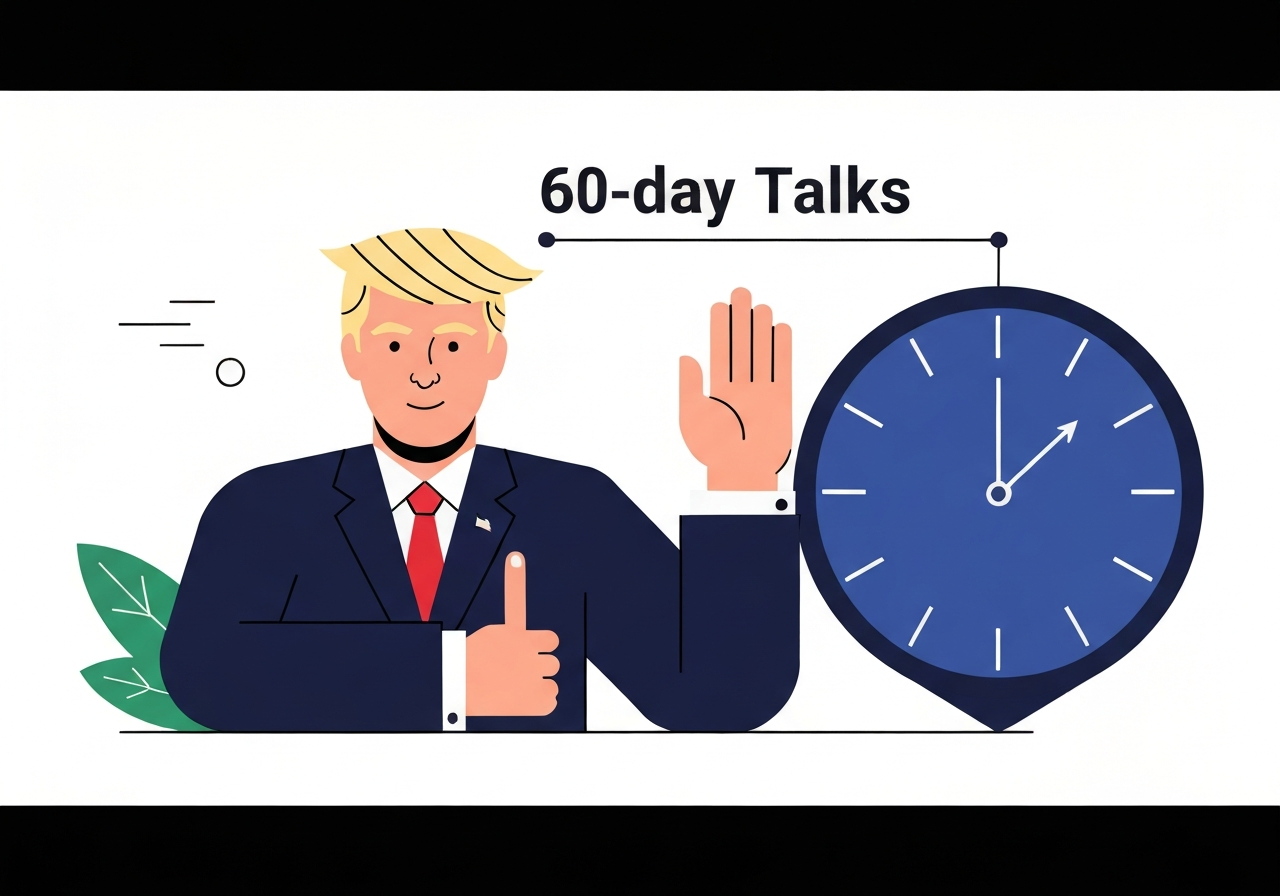
President Donald Trump signed a 14-point interim agreement at the Palace of Versailles this week that ends active hostilities with Iran and reopens the Strait of Hormuz. The accord halts a U.S.-led maritime blockade and lifts sanctions while opening a 60-day negotiation window, to be held in the Swiss Alps starting Friday, to conclude a more detailed final pact. Tehran hailed the memorandum as a major win; U.S. officials say the short-term deal prevents an immediate global economic shock. Many experts and critics warn key disputes were deferred and that tougher talks lie ahead.
Key Takeaways
- The memorandum contains 14 points and restores free passage through the Strait of Hormuz for the 60-day duration of the talks.
- Trump signed the agreement at the Palace of Versailles after acknowledging some original military goals—such as ending Iran’s ballistic missile program—were not achieved.
- The interim document runs roughly two pages and addresses shipping, frozen assets, and funds for reconstruction; by contrast, the 2015 U.S.-Iran nuclear accord was 18 pages and focused narrowly on nuclear limits.
- U.S. Central Command announced that the maritime blockade on Iranian ports was lifted and that U.S. forces will no longer impede transit, according to a CENTCOM post.
- The U.S. committed to terminating various sanctions and to working with partners to establish a $300 billion redevelopment fund for Iran, though officials denied direct U.S. cash contributions.
- Negotiators now have a 60-day window in the Swiss Alps to finalize a more comprehensive agreement covering outstanding issues including missiles, regional proxies, verification and long-term guarantees.
- Political reactions were sharply divided: Iran’s leadership framed the outcome as a victory, while several U.S. Republicans called the deal a strategic setback.
Background
The immediate crisis began after the U.S. and Israel took military action around Feb. 28, prompting Iran to throttle the Strait of Hormuz, a critical sea lane for global oil shipments. That disruption intensified commodity market anxiety and pushed global leaders to press for a rapid de-escalation to avoid widespread economic fallout. The 2015 Obama-era nuclear deal focused on nuclear restrictions and monitoring; it became a point of domestic contention and was later abandoned by Trump-era policies.
Over months of intense diplomacy and battlefield pressure, negotiators worked toward a short-term framework that would stop active fighting and reopen shipping lanes while buying time for a more exhaustive settlement. Stakeholders include Washington and Tehran, regional Gulf states and Oman, and international economic actors wary of renewed trade shocks. Domestic political pressures in the U.S. and Iran shaped negotiators’ red lines, leaving several contentious topics to be negotiated in the coming weeks.
Main Event
On Wednesday at the Palace of Versailles, Trump signed a compact that U.S. officials described as a means to avert what he called an “economic catastrophe” for the global economy. The memo pledged that Iran would not pursue nuclear weapons and that enriched uranium stocks would be diluted or otherwise managed according to a mutually agreed mechanism—though timing and specifics were left open. The White House distributed the text to media after a brief delay reported to be at Iran’s request.
The document also requires a halt to fighting in Lebanon, specifically citing hostilities involving Hezbollah, and commits to reinstating maritime traffic through Iranian coastal waters. CENTCOM posted that U.S. forces lifted the blockade and ceased enforcement actions at sea, allowing vessels to enter and exit Iranian ports. Trump and senior aides framed the deal as an operational and diplomatic success that stabilized global markets.
Iranian officials, including Parliamentary Speaker Mohammad Bagher Ghalibaf, celebrated the agreement as evidence that Tehran resisted U.S. and Israeli objectives at the outset of the war. State-controlled Iranian media amplified that narrative, presenting the memorandum as a diplomatic victory for Iran’s negotiating team. Iran’s Supreme Leader Mojtaba Khamenei said the forthcoming in-person talks would not amount to capitulation and warned against excessive U.S. demands.
In Washington, critics argued the interim pact favors Tehran. Senate Minority Leader Chuck Schumer said the U.S. delivered concessions without securing key aims, while other Republican senators labeled the accord a foreign policy failure. Vice President JD Vance, who will lead the U.S. negotiating team, insisted the final talks must prevent the Strait of Hormuz from being used as a recurring choke point and stop Iranian sponsorship of regional instability.
Analysis & Implications
Strategically, the interim memorandum buys immediate de-escalation and a resumption of commercial shipping — outcomes with clear near-term economic benefits. By lifting enforcement of the naval blockade and promising sanctions relief, the agreement reduces the immediate risk of energy-price shocks and supply-chain dislocations tied to Gulf transit disruptions. Markets and insurers are likely to react positively in the short run as shipping routes normalize.
Politically, the deal shifts difficult bargaining points into the 60-day negotiation window, where they may prove harder to reconcile. Key unresolved issues—ballistic missiles, verification mechanisms, the scope and governance of reconstruction funds, and long-term sanctions architecture—remain core sources of contention. Critics argue that with sanctions relief already on the table, U.S. leverage is diminished, limiting what negotiators can credibly demand.
Regionally, Gulf states and U.S. partners will press for guarantees that Iran will not resume disruptive behavior once formal negotiations conclude. Oman and other Gulf countries are expected to take part in discussions over future shipping arrangements, but the memorandum provides no ironclad long-term guarantees. If the final talks fail, the temporary reopening of the Strait could be reversed, reintroducing acute economic and security risks.
Economically, the proposed $300 billion redevelopment fund—if established with sufficient oversight—could accelerate reconstruction but would also raise questions about governance, diversion of resources to proxy groups, and long-term strategic effects. The lack of clarity about who will finance the fund and under what conditions adds uncertainty about how reconstruction aid will be monitored and conditioned.
Comparison & Data
| Item | 2015 Nuclear Deal | 2026 Interim Memorandum |
|---|---|---|
| Length | 18 pages | ~2 pages, 14 points |
| Primary focus | Nuclear program limits and verification | Ceasefire, shipping, assets, reconstruction |
| Duration guaranteed | Multi-year technical provisions | 60 days for free passage and talks |
| Sanctions | Sanctions relief tied to nuclear steps | Commitment to terminate types of sanctions; details deferred |
The comparison highlights that the 2015 agreement was comprehensive and technically detailed, while the current memorandum is a short, politically negotiated document designed to stop immediate hostilities and create space for deeper negotiations. That difference explains why many technical verification measures remain to be resolved during the Swiss talks.
Reactions & Quotes
Domestic U.S. political reactions polarized immediately. Supporters emphasized de-escalation; opponents said the memorandum conceded too much without guarantees.
What the President has achieved on the battlefield and at the negotiating table is nothing short of remarkable and will strengthen American security for many years to come.
Olivia Wales, White House spokeswoman
The White House framed the signing as a strategic success that prevented broader economic fallout and preserved U.S. options. The spokeswoman’s comment was offered as the administration sought to rebut critics who said core goals had been surrendered.
Americans got almost nothing we wanted and needed, and Trump gave away the store. The Iranians took him to the cleaners.
Senate Minority Leader Chuck Schumer
Senate Democrats and Republican critics described the memorandum as imbalanced. Schumer’s statement summarized opposition concerns that the terms favor Tehran and erode U.S. leverage.
It was the American president who, out of desperation, sought a deal. The in-person negotiations will not mean acceptance of the enemy’s position.
Mojtaba Khamenei, Iran’s Supreme Leader
Iranian leaders portrayed the agreement as vindication and emphasized that future talks will be held from a position of national dignity. Tehran’s rhetoric suggests it will resist concessions perceived as undermining deterrence or sovereignty.
Unconfirmed
- Exact text of some “gentleman’s agreements” referenced by U.S. officials has not been publicly verified and the specific commitments remain unclear.
- Precise funding sources and governance arrangements for the proposed $300 billion redevelopment fund have not been confirmed; U.S. officials denied direct U.S. treasury contributions but public details are sparse.
- Details on the mechanism and timetable for diluting Iran’s enriched uranium stockpile were not fully specified in the circulated text and remain to be negotiated.
Bottom Line
The interim memorandum signed by President Trump halts active confrontation and reopens critical maritime routes, delivering immediate economic relief and buying diplomatic space. However, it defers many hard choices into a compressed 60-day negotiation window where reduced leverage and competing regional interests could complicate outcomes.
Success in the Swiss talks will depend on concrete verification measures, credible financing and oversight of reconstruction aid, and regional buy-in for maritime guarantees. If negotiators manage those elements, the memorandum could evolve into a stable, enforceable settlement; failure would risk a return to instability and renewed economic pain for global markets.
Sources
- NBC News — Media / reporting (primary article summarizing the agreement and reactions)