
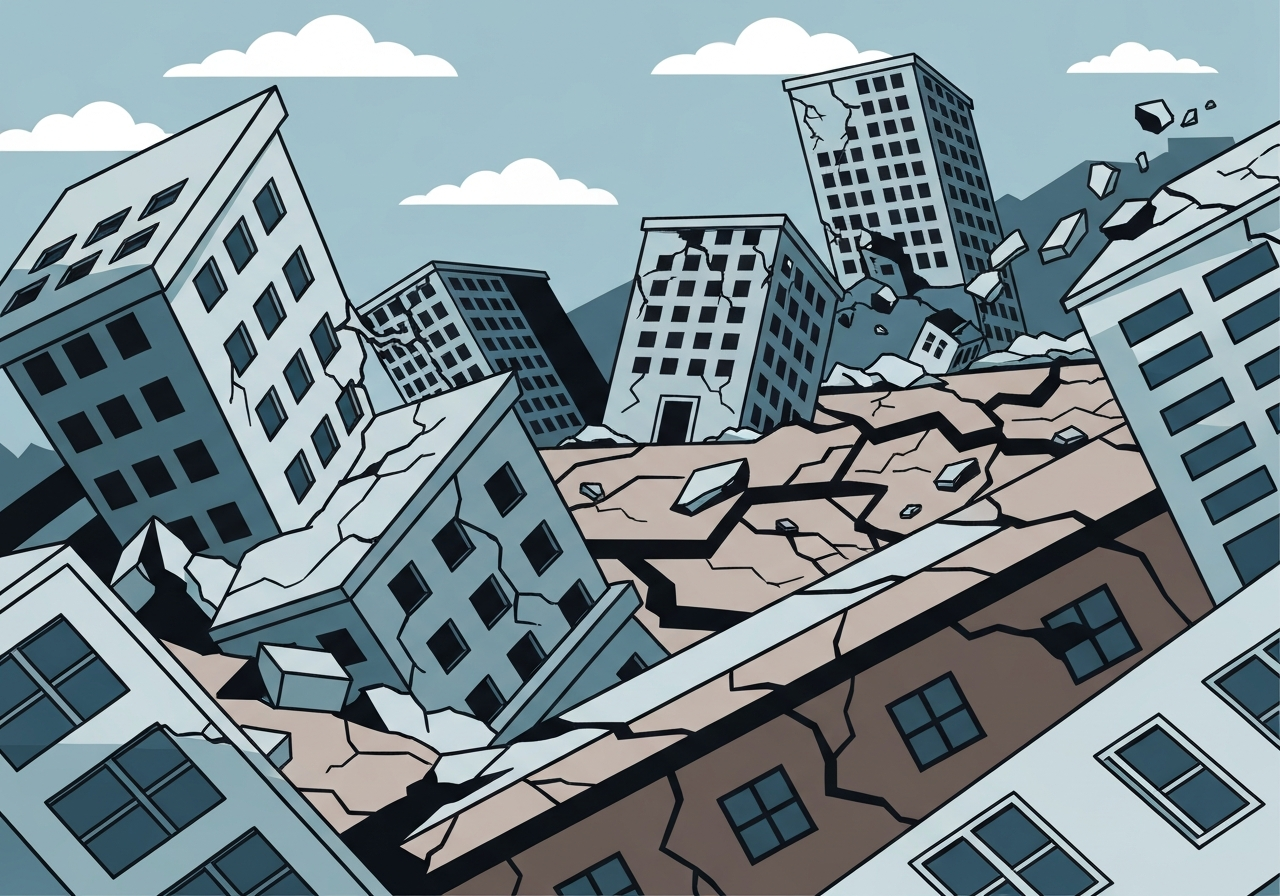
Lead: Two powerful earthquakes struck Venezuela’s northern coast on June 24, 2026, registering magnitudes 7.2 and 7.5 just 40 seconds apart, causing widespread damage and prompting an immediate state of emergency. Acting President Delcy Rodríguez announced at least 32 dead and roughly 700 injured, with officials warning casualties are likely to rise as rescue teams search collapsed buildings in Caracas, La Guaira and other coastal areas. Airports and major transport hubs were temporarily shut, while power outages and ruptured infrastructure complicated early response efforts.
Key Takeaways
- Two quakes struck within 40 seconds: a 7.2 tremor followed by a 7.5 event off Venezuela’s northern coast on June 24, 2026, recorded by the US Geological Survey as the country’s strongest in more than a century.
- Human toll: Acting President Delcy Rodríguez reported at least 32 fatalities and about 700 injured; authorities say the number may increase as search-and-rescue continues in damaged urban areas.
- Urban damage concentrated around Caracas and La Guaira: up to 15 buildings collapsed in La Guaira, and multiple partial or total collapses were reported in San Bernardino, Pinto Salinas and El Paraiso in Caracas.
- Major infrastructure impacts: Simon Bolivar International Airport in Maiquetia was closed after interior damage and scenes of panic; widespread power outages were reported across affected regions.
- Notable building failures: Hotel Eduard in Macuto — an eight-floor, 106-room waterfront hotel — largely collapsed, with video evidence showing severe structural destruction.
- Oil sector: Initial reporting by Reuters indicates most critical oil facilities were not in the hardest-hit areas; companies are accounting for staff while assessing plant and refinery conditions.
- International response: The United States pledged to send search-and-rescue teams and humanitarian supplies; US officials said embassy staff were accounted for.
- Seismic context: USGS described the 7.5 tremor as Venezuela’s largest in over 100 years; the 1900 magnitude-7.7 event remains the country’s largest recorded quake.
Background
Venezuela sits along active tectonic boundaries in the Caribbean region, where shallow, near-coast earthquakes can cause severe damage to population centers. The USGS characterized the June 24 sequence as unusually large for the area: the 7.5 event is the strongest recorded in Venezuela in more than a century, with the 1900 magnitude-7.7 quake previously holding that distinction.
Decades of underinvestment in infrastructure and a building stock that includes many older, unreinforced masonry structures have increased vulnerability. Engineers told news outlets that buildings constructed before modern seismic codes — many dating to the mid-20th century or earlier — tend to perform poorly under large ground motions, elevating collapse risk and resultant casualties.
The affected coastal states, including La Guaira and parts of the Caracas metropolitan area, combine dense population, tourism assets and critical transport facilities. Simon Bolivar International Airport and port infrastructure in La Guaira are regional lifelines; temporary closures and damage will complicate relief logistics in the coming days.
Main Event
According to seismic data and contemporaneous reporting, a magnitude 7.2 tremor struck off Venezuela’s northern coast and was followed 40 seconds later by a 7.5 event centered nearby. The two shocks were shallow and struck close to populated coastal areas, amplifying the destructive effect on surface structures. Videos and eyewitness accounts showed interiors collapsing, ceilings shedding dust, and people fleeing into the streets in pajamas and nightwear.
In La Guaira state, officials reported extensive damage along the waterfront and in towns such as Catia La Mar and Macuto. Jorge Rodriguez, president of the National Assembly, said up to 15 buildings had collapsed in La Guaira. Verified video showed Hotel Eduard in Macuto reduced to rubble, with only portions of the entrance remaining intact.
Caracas neighborhoods including San Bernardino, Pinto Salinas and El Paraiso reported partial and total building collapses. Municipal authorities described active search-and-rescue operations, with police, civil protection teams and local volunteers attempting to locate survivors amid unstable rubble and disrupted utilities. Emergency vehicles lined streets near collapse sites while neighbors and rescuers used ropes and manual shovels to probe for trapped residents.
Simon Bolivar International Airport in Maiquetia experienced interior damage and chaotic scenes as travelers ran through dust-filled terminals; operations were suspended. Power outages and telecommunications disruptions complicated coordination, forcing many residents to congregate outdoors overnight. Government authorities declared a state of emergency to free resources for response and recovery efforts.
Analysis & Implications
Short-term: The immediate priority is search-and-rescue and stabilizing damaged structures. Shallow, large-magnitude quakes close to shore generate intense shaking that disproportionately affects low-rise masonry buildings common in Venezuela’s older neighborhoods. The combination of aftershocks and damaged infrastructure will slow rescue operations and increase risk to responders and survivors.
Medium-term: Widespread power and water outages, road damage and interruptions to airport and port operations will hamper relief distribution, medical evacuations and fuel flows. Initial industry reporting suggests major oil facilities were not directly destroyed, but extended power loss and logistical bottlenecks could reduce crude output and complicate export operations until electricity and transport links are restored.
Political and humanitarian implications: Venezuela was already confronting economic and humanitarian challenges before the quakes. A large natural disaster risks deepening shortages of medical supplies, clean water and shelter, and could intensify political pressure on interim authorities and international partners to coordinate a sizable relief effort. International offers of assistance raise logistical and diplomatic questions about how aid will be delivered under current political arrangements.
Long-term resilience: The disaster underscores the need for seismic-strengthening of vulnerable building stocks, improved emergency communications, and investment in resilient infrastructure. Retrofitting critical public buildings and enforcing modern construction codes will be essential to reduce future loss of life in a seismically active region.
Comparison & Data
| Event | Date | Magnitude | Notes |
|---|---|---|---|
| Venezuela (historic) | 1900 | 7.7 | Largest recorded Venezuelan quake prior to 2026; offshore northern coast. |
| Venezuela (foreshock) | June 24, 2026 | 7.2 | Struck 40 seconds before the 7.5 event; listed among the country’s largest quakes. |
| Venezuela (mainshock) | June 24, 2026 | 7.5 | Described by USGS as the strongest in more than a century; shallow, near-populated coast. |
Context: The USGS classification of the 7.5 event as the largest in over a century situates the sequence among the most consequential seismic episodes in Venezuela’s modern history. Because the earthquakes were shallow and near urban centers, structural damage was outsized compared with magnitudes alone.
Reactions & Quotes
Official and public responses were immediate, combining offers of international assistance with on-the-ground emergency action.
“The U.S. will be sending search and rescue teams, medical and humanitarian supplies and other resources in the crucial first days after this tragic natural disaster.”
U.S. State Department official
Context: US officials said embassy personnel were accounted for and pledged rapid assistance while coordinating with Venezuelan interim authorities and partner organizations for delivery and deployment.
“It felt like nothing that I have ever felt before.”
Noris Soto, Caracas resident (eyewitness)
Context: Residents reported prolonged shaking and scenes of panic; many evacuated buildings immediately and gathered outdoors amid aftershocks and power losses.
“The scene was like a horror movie.”
Caracas resident (survivor)
Context: Witnesses described collapsing walls, falling ceilings and dangerous rubble fields; local rescue teams and neighbors coordinated urgent extraction efforts where possible.
Unconfirmed
- Final casualty figures remain preliminary; official tallies are expected to change as search-and-rescue teams complete operations in collapsed structures.
- Comprehensive assessments of damage to oil facilities, refineries and long-term crude output are incomplete; early reports indicate most critical oil sites were not in the hardest-hit zones but power and logistics disruptions could affect production.
- Some political claims circulating in social media and early commentaries about prior military operations or leadership changes are not independently verified; those assertions remain unconfirmed.
Bottom Line
The June 24, 2026, seismic sequence — a 7.2 foreshock followed 40 seconds later by a 7.5 mainshock — produced severe, concentrated damage across Venezuela’s northern coast, with particularly acute impacts in La Guaira and parts of the Caracas metro area. Immediate priorities are life-saving search-and-rescue, stabilizing damaged buildings and restoring critical services while helping displaced residents with shelter, medical care and basic needs.
Beyond the emergency phase, Venezuela faces a costly recovery and reconstruction challenge that will test both domestic capacity and the willingness of international partners to deliver coordinated assistance amid existing political and economic strains. The disaster also reasserts the long-term need for seismic-resistant construction, resilient infrastructure investments and improved emergency preparedness across the region.