
Lead
Two powerful earthquakes struck Venezuela on the evening of 24 June, the US Geological Survey reported: an initial 7.2-magnitude shock centred near San Felipe was followed 39 seconds later by a 7.5-magnitude mainshock. The twin tremors caused multiple building collapses in Caracas, major infrastructure damage including partial roof failures at Maiquetía international airport, and prompted an immediate state of emergency declaration by acting President Delcy Rodríguez. Early reports describe widespread power outages, more than 20 aftershocks, mass evacuations and urgent rescue operations; the full scale of casualties and structural damage remains under assessment.
Key takeaways
- Two main shocks: a 7.2-magnitude quake was followed 39 seconds later by a 7.5-magnitude event, both recorded on 24 June (USGS).
- USGS probabilities after the second mainshock include a 44% chance of more than 10,000 fatalities and a 30% chance of more than 100,000 fatalities, indicating high risk of major casualties and damage.
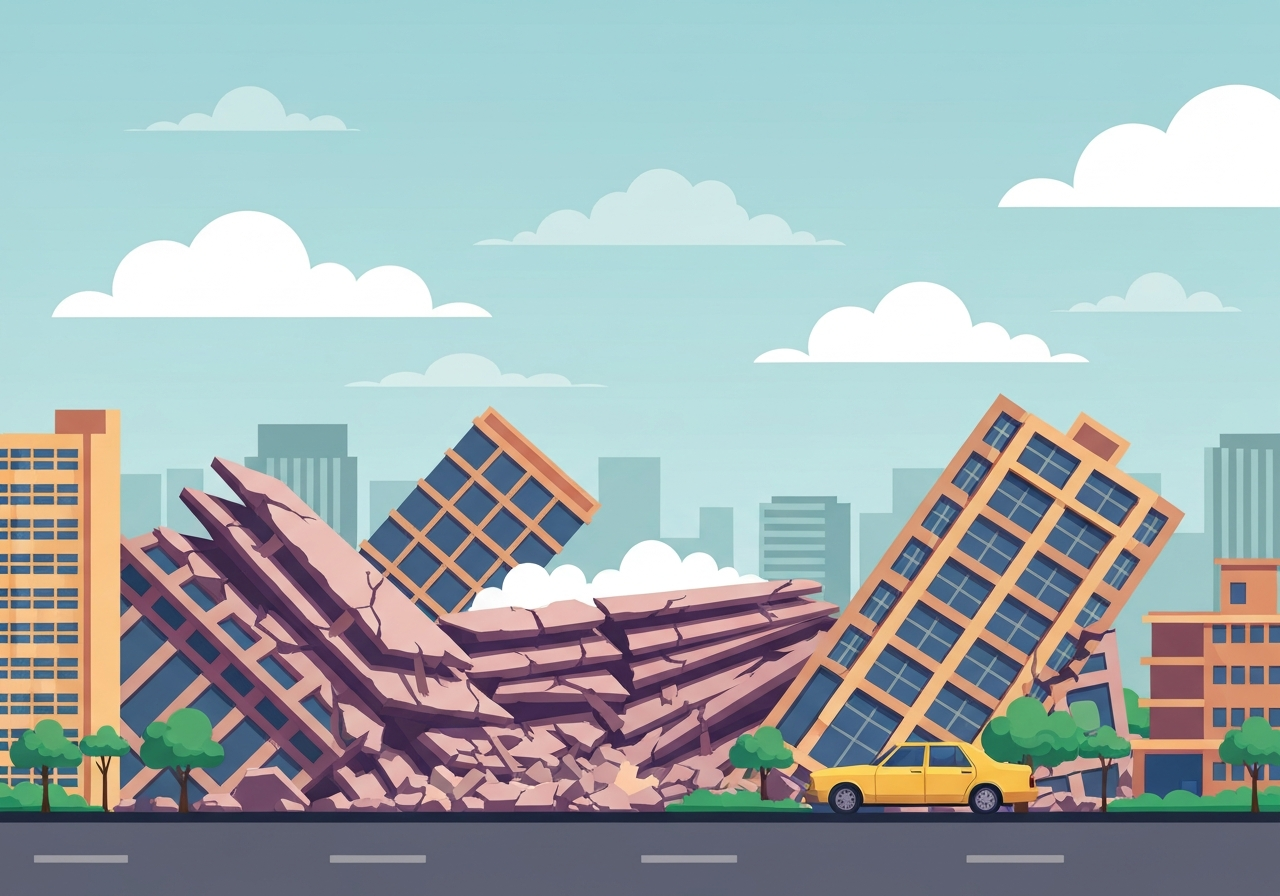
- Caracas saw multiple building failures, with at least two structures reported completely collapsed in the Chacao municipality; local teams have rescued 18 people and over 500 emergency workers are deployed on site.
- Maiquetía international airport was closed after sections of the ceiling collapsed and corridors were filled with dust; metro and suburban train services have been suspended and schools cancelled for the rest of the week.
- More than 20 aftershocks were recorded in the hours after the main events, complicating rescue and safety operations across the northern coastal states including La Guaira, Aragua, Carabobo and Falcón.
- International assistance offers: the United States announced plans to send search-and-rescue teams and humanitarian supplies; El Salvador offered 50 tonnes of equipment and 300 rescuers; Ecuador and other regional governments also pledged aid.
- Acting President Delcy Rodríguez declared a state of emergency and assigned a military general to coordinate response operations; interior minister Diosdado Cabello urged residents to leave unsafe buildings and reported precautionary fuel cut-offs to reduce fire risk.
Background
Venezuela lies along the northern edge of the South American plate and the Caribbean plate boundary, a region capable of producing large earthquakes, though catastrophic events of this scale are relatively infrequent in recent decades. The country’s densely populated coastal corridor, including the capital Caracas and surrounding suburbs, concentrates population and infrastructure in areas vulnerable to strong shaking and secondary hazards such as building collapse and fires.
Politically, the country is operating under an interim government led by acting President Delcy Rodríguez since January, when her predecessor Nicolás Maduro was detained by US authorities and taken to New York to face drug-trafficking charges. That context has already been shaping the nation’s emergency-management arrangements and international coordination following the quakes.
Main event
The sequence began at 18:04 local time on 24 June, when a 7.2-magnitude event struck near San Felipe in Yaracuy state; 39 seconds later the USGS recorded a stronger 7.5-magnitude shock. Residents across northern Venezuela reported violent shaking; footage and eyewitness accounts show items falling, windows shattering and people fleeing into the streets as power and communications faltered.
Caracas experienced multiple structural failures. In the Chacao municipality the mayor reported two buildings had entirely collapsed and that crews had pulled at least 18 people alive from rubble, while hundreds of emergency responders searched for others. In multiple neighbourhoods, residents were heard calling for help under debris and teams were focused on extracting survivors amid continuing aftershocks.
Maiquetía international airport, serving Caracas, was closed after parts of the ceiling were reported to have collapsed and passengers fled through dust-filled terminals. Authorities also suspended metro and train services as a safety precaution, and schools were cancelled for the remainder of the week to reduce risk while inspections proceed.
Analysis & implications
Humanitarian impact: The USGS probability estimates point to a substantial risk of large-scale casualties and infrastructure loss. If those projections materialize, Venezuela will require immediate surge capacity for search-and-rescue, field medical care, shelter and water, with needs likely concentrated in Caracas and along the northern coastal states.
Infrastructure and services: Damage to key transport hubs like Maiquetía and interruptions to metro and fuel supplies will constrain relief movement and logistics in the short term. Power outages and communications disruptions further complicate situational awareness and hamper both local response and external aid coordination.
Political and institutional challenges: The interim government’s control and recent changes in national leadership could affect international channeling of assistance and on-the-ground coordination. Offers of help from the United States, regional neighbours and multilateral agencies will need rapid, trusted mechanisms to move personnel and material where they are most needed.
Economic consequences: Beyond the immediate humanitarian toll, the quakes may inflict damage on private housing, commercial buildings and any nearby oil and port facilities, with potential implications for domestic supply chains and exports. Reconstruction expenses will place additional strain on Venezuela’s already stretched public finances.
Comparison & data
| Event | Magnitude | Time (local) | USGS probability notes |
|---|---|---|---|
| First shock (San Felipe) | 7.2 | 18:04, 24 June | Initial mainshock |
| Second mainshock | 7.5 | 18:04:39, 24 June | USGS: high probability of major casualties; 44% >10,000, 30% >100,000 (reported) |
Context: The intensity and near-simultaneity of the two large shocks dramatically increased stress on buildings and infrastructure compared with a single event of similar size. The USGS probability estimates—if confirmed—place this among the most consequential seismic disasters Venezuela has faced in recent decades.
Reactions & quotes
“The two major earthquakes that just hit the great people of Venezuela are both massive in scale and have left a devastating number of deaths,”
Donald Trump (post on Truth Social)
Context: The former US president posted on a social platform offering US readiness to assist; US agencies and the State Department have said they stand ready to deploy search-and-rescue teams and humanitarian supplies, while working with Venezuelan authorities.
“I declare a state of emergency and ask for unity as we face this crisis,”
Acting President Delcy Rodríguez
Context: Rodríguez spoke on state television flanked by senior officials and said a general would lead the emergency response. She offered condolences to victims but did not provide national fatality numbers in the address.
“In Chacao, no one is alone, and we won’t move from here until every resident is rescued,”
Gustavo Duque Saez, Mayor of Chacao
Context: The mayor reported two total collapses in his municipality, the rescue of 18 people and more than 500 emergency personnel on the scene coordinating searches and aid distribution at local squares.
Unconfirmed
- Exact national fatality and injury counts remain unconfirmed; official tallies have not been published at the time of reporting.
- Reports of at least one death in San Bernardino are preliminary and not yet verified by national authorities.
- Claims about the total number of collapsed or structurally compromised buildings across Caracas are still being compiled and may change as inspections continue.
Bottom line
The twin earthquakes of 24 June constitute a major disaster for Venezuela, with severe immediate humanitarian needs concentrated in Caracas and the northern coastal states. International offers of rescue teams and supplies are arriving or being prepared, but effective delivery will depend on secure, coordinated channels and rapid damage assessment to prioritise the most urgent locations.
In the days ahead, authorities and responders will need to stabilise damaged structures, restore critical services, and set up shelters while search-and-rescue operations continue under the risk of further aftershocks. Reliable, verified casualty and damage reports will determine the scale of long-term recovery and reconstruction required.
Sources
- BBC News (live coverage) — media/press live reporting and on-the-ground journalism.
- US Geological Survey (USGS) — official seismic data and probabilistic impact estimates.
- Agence France-Presse (AFP) — international news agency reporting on aftershocks and government statements.
- U.S. Department of State — official statements on US assistance and disaster-response coordination.