
Lead
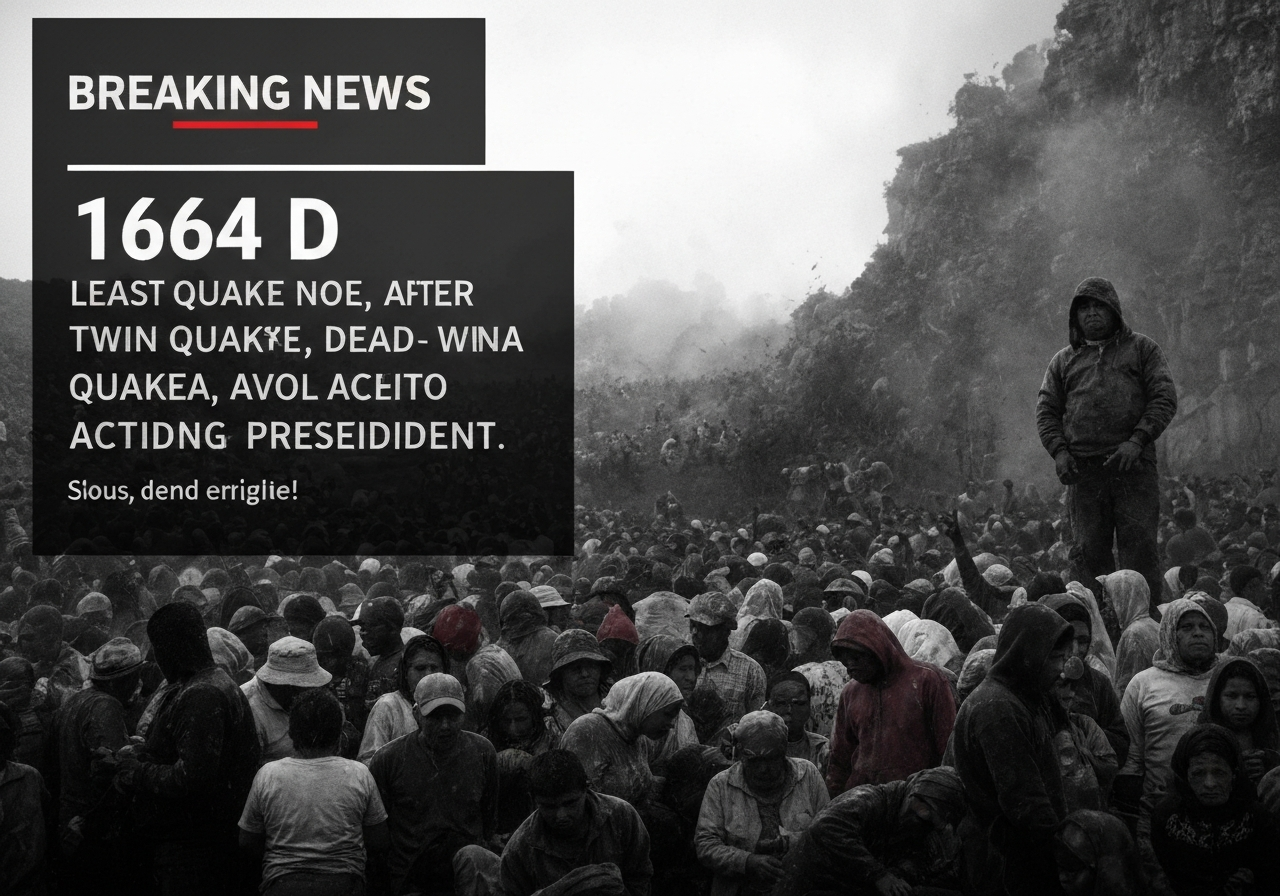
On June 24, 2026, two back-to-back earthquakes — a 7.2 foreshock followed 39 seconds later by a 7.5 mainshock — struck Venezuela’s northern coast, killing at least 164 people and injuring 971, acting President Delcy Rodríguez said. The worst damage is concentrated in the coastal state of La Guaira, which has been declared a disaster zone and includes the heavily damaged Simón Bolívar International Airport. Rescue teams, national authorities and international partners have mobilized search-and-rescue and relief operations while aftershocks and infrastructure failures are complicating the response. Authorities warn the toll is likely to rise as crews continue to search collapsed buildings and reach cut-off communities.
Key Takeaways
- Death toll: Acting President Delcy Rodríguez reported at least 164 dead and 971 injured after the twin quakes on June 24, 2026; officials expect numbers to increase as searches continue.
- Quake details: A 7.2 magnitude event was followed 39 seconds later by a 7.5 magnitude rupture, intensifying shaking across a broad area of northern Venezuela.
- Worst-hit area: La Guaira state has been declared a disaster zone; numerous apartment blocks and a waterfront hotel in Macuto were reduced to rubble.
- Critical infrastructure: Simón Bolívar International Airport and major seaport facilities sustained damage; metro and rail services in Caracas remain suspended and the airport is closed.
- Humanitarian response: International teams from the US, Mexico and several European countries are deploying specialists; the IFRC unlocked immediate funds and the UN called for urgent relief coordination.
- Basic services disrupted: Widespread power cuts, interrupted water and gas services, and degraded internet/telephone connectivity are hampering rescue and family reunification efforts.
- Domestic measures: Schools and courts suspended activities; some public buildings are serving as donation points and shelters; authorities requested face masks and drinking water for rescue crews.
Background
Venezuela has been coping with protracted economic and political turmoil for years, including an exodus of millions of citizens and strained public services. That preexisting fragility means the country’s capacity to absorb a major natural disaster is limited, with hospitals, emergency logistics and local government resources already operating under pressure. The populated Caracas metropolitan area sits atop deep sedimentary deposits that can amplify ground shaking; seismologists noted the rupture propagated toward Caracas, increasing the intensity of shaking in the valley.
The northern Venezuelan coastal corridor contains key transport and energy infrastructure, including the Simón Bolívar International Airport and major port facilities in La Guaira. Damage to those assets can quickly complicate relief flows and the movement of international assistance. Nonstate humanitarian actors and diaspora networks have previously played a role in crisis response, and they are mobilizing again to connect missing peoples and coordinate donations.
Main Event
The sequence began late on the evening of June 24, 2026, with a 7.2 magnitude event that was quickly followed by a larger 7.5 quake 39 seconds later. Buildings across Caracas and coastal towns were rocked, with multi-story apartment blocks collapsing in La Guaira and parts of Caracas. Witnesses described streets strewn with debris, large cracks in building facades and scenes of people sleeping outdoors in fear of aftershocks.
Local residents and rescue crews worked through the night using hand tools and heavy machinery to reach people trapped under rubble; neighbors joined improvised search efforts where official teams had not yet arrived. Authorities reported at least 25 deaths in the capital Caracas as part of the nationwide tally and said dozens more remain missing or trapped. The state of La Guaira was formally declared a disaster zone to prioritize emergency operations and resource allocation.
Emergency services struggled with damaged roads, intermittent communications and localised power outages. The government announced coordination with international institutions, including a proposed initial assistance fund of USD 200 million discussed with the International Monetary Fund. Several countries dispatched rescue and medical teams; the United States said it was deploying imagery and assets to assess coastal damage and had sent search-and-rescue personnel.
Analysis & Implications
Immediate implications are primarily humanitarian: thousands are displaced, injured or cut off from services, and urgent needs include trauma care, shelter, safe water and sanitation. Given Venezuela’s pre-existing economic constraints, rebuilding and long-term recovery will strain national budgets and likely require substantial international support. The announced preliminary IMF coordination and IFRC funds address initial needs but are not sufficient for medium-term reconstruction and social protection demands.
Disruption to the Simón Bolívar International Airport and port infrastructure may hamper inbound aid and slow the return of normal commerce. If air and sea links remain impaired, relief delivery will rely on overland logistics through routes that may be congested or damaged. Energy exports and exploration projects could face short-term interruptions, though the extent will depend on inspection of oil-field facilities and export terminals.
Politically, the disaster presents both risks and openings: it can intensify public scrutiny of local and national authorities over preparedness and response; conversely, effective coordination with neutral humanitarian actors could improve access for civilians and open channels for aid. The continuity of communications and transparency in damage reporting will be critical; restrictions on internet and media access can hamper family reunification and impede accountability.
Comparison & Data
| Metric | Value |
|---|---|
| Foreshock magnitude | 7.2 |
| Mainshock magnitude | 7.5 |
| Time difference | 39 seconds |
| Confirmed deaths | 164 |
| Confirmed injured | 971 |
| Hardest hit state | La Guaira (disaster zone) |
The paired events rank among the strongest in the region in over a century and are larger than many recent regional quakes that produced limited structural collapse. The close timing and directional rupture toward Caracas help explain intense shaking at distances greater than 160 km from the epicenter. Comparisons with past Venezuelan earthquakes underline that urban density, building age and local soil conditions heavily influence casualty counts.
Reactions & Quotes
People are still trapped; many families are waiting for news and rescuers continue to pull survivors from rubble.
Edury Orellana, La Guaira resident
Orellana lost his home but said his family escaped; his testimony illustrates both the human toll and the role of neighbors in initial search efforts.
We are coordinating urgent search-and-rescue support and emergency relief for survivors; international solidarity is coming in.
Tom Fletcher, UN emergency relief chief
UN officials emphasized rapid mobilization and the need for international resources to supplement national response while ensuring protection and humanitarian principles guide assistance.
Our rescuers and medical teams are departing in solidarity to assess needs and support Venezuelan authorities on the ground.
Claudia Sheinbaum, President of Mexico
Mexico confirmed deployment of Defense Secretariat personnel and health staff to assist search-and-rescue operations and initial medical needs assessments.
Unconfirmed
- Final casualty and missing-person figures: national tallies are evolving; numbers cited by authorities are preliminary and expected to rise.
- Extent of long-term damage to oil export infrastructure and whether energy shipments will be interrupted for weeks remain unclear.
- Comprehensive mapping of communications blackouts and which websites or services remain blocked is incomplete and under verification.
Bottom Line
The twin earthquakes on June 24, 2026 have produced a fast-moving humanitarian crisis concentrated in La Guaira and parts of Caracas, with at least 164 dead and nearly 1,000 injured. Immediate priorities are search-and-rescue, medical care, shelter and restoring communications to help families locate loved ones. International support is arriving, but the scale of damage and Venezuela’s preexisting economic limits mean recovery will require sustained assistance and careful coordination among national authorities, UN agencies and humanitarian partners.
For readers: expect official casualty and damage figures to be updated in the coming days; prioritize verified channels for donation and family-tracing requests and follow guidance from local authorities about aftershocks, gas safety and shelter sites.
Sources
- CNN (news report, live updates)
- International Federation of Red Cross and Red Crescent Societies (IFRC, humanitarian organisation)
- UN Office for the Coordination of Humanitarian Affairs (UN OCHA, UN humanitarian coordination)
- Presidencia de la República de México (official statement on aid deployment)