
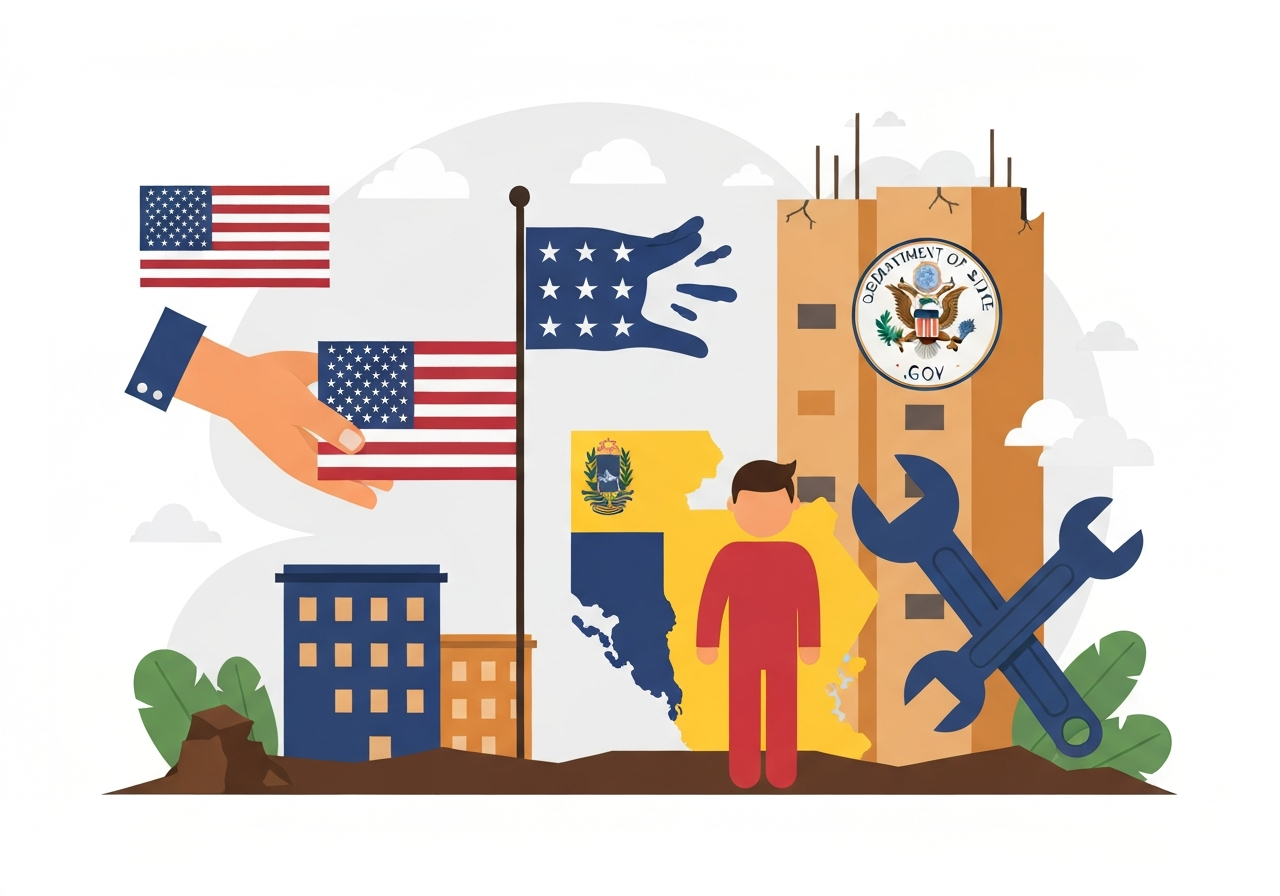
Who: The U.S. Department of State’s web page titled “Responding to Venezuela Earthquakes.” When: accessed on . Where: the official state.gov domain. What happened: visitors encountered a technical error preventing access to the page and any official statement. Result: the interruption limits public access to the State Department’s account of U.S. diplomatic or humanitarian activity related to recent earthquakes in Venezuela.
- The State Department page at the provided URL returned an on-screen message: “We’re sorry, this site is currently experiencing technical difficulties. Please try again in a few moments.” and a server note reading “Exception: forbidden.”
- The access attempt was made on , and the site response indicates an HTTP-level access restriction rather than a clear content removal.
- No official statement text was retrievable from the linked page at time of access; the outage blocks direct verification of any claims that may have been posted there.
- Alternative official channels for U.S. disaster diplomacy and assistance typically include the U.S. Embassy in Caracas (where functional), the State Department press office, and USAID/OFDA updates.
- When government web pages are unavailable, timely verification requires cross-checking multiple sources: agency social channels, official press briefings, and recognized international organizations.
Background
The U.S. Department of State often posts short summaries or statements when natural disasters affect foreign countries, outlining diplomatic outreach, offers of assistance, and coordination with U.S. agencies such as USAID. Those posts serve both a public-record function and a diplomatic signaling role; they let foreign partners, domestic stakeholders, and international media know how the U.S. is responding. Venezuela has experienced seismic events in recent years that prompted regional and international attention; when such events occur, U.S. agencies generally coordinate via established humanitarian channels.
Web publishing interruptions to official pages can stem from routine maintenance, configuration errors, access-control settings, or deliberate restrictions. A server-side “forbidden” response (commonly reflected as an HTTP 403) normally indicates the server rejected the request for that resource rather than returning a missing-file error. For readers and researchers, an inaccessible official posting complicates verification of offers, timelines, and precise policy wording at the critical moment after an emergency.
Main Event
During a routine access attempt on , the State Department URL supplied by the user displayed a site-level error message and an “Exception: forbidden” notice instead of a policy statement or update. The visible message apologized for technical difficulties and instructed users to retry later; no alternative link or archived copy was presented on that page. Because the page itself is blocked, any content that may have been intended for public release is not available via that direct source at this time.
The immediate operational effect is twofold: first, journalists and civil-society monitors cannot cite the page as confirmation of the U.S. posture or offers; second, Venezuelan authorities, regional partners, and humanitarian actors cannot rely on that posting for coordination cues. In situations where public messaging matters (for fundraising, logistics, or diplomatic signaling), the absence of an official online record introduces uncertainty into how other actors perceive the U.S. response.
On the ground, humanitarian coordination typically proceeds through channels that do not depend solely on a single webpage: embassy cables, direct communications between agencies, and in-country interlocutors. However, for transparency and archival purposes, an accessible public statement remains important. The current unavailability therefore has reputational and informational consequences, even if operational aid or offers continue through other channels.
Analysis & Implications
First, the outage highlights the difference between operational activity and public communication. U.S. agencies may already be coordinating assistance via USAID or existing diplomatic contacts even if a website statement is unavailable. Absence of a web post does not necessarily imply absence of action, but it does raise questions about how visible that action will be to international and domestic audiences.
Second, the nature of the server response — an access-denied exception — suggests a configuration or permission issue rather than routine maintenance that typically returns an explanatory banner. If the restriction is unintended, it may be remedied quickly; if it is deliberate (for reasons such as legal review or redaction), stakeholders will need alternative confirmations from press offices or agency spokespeople.
Third, from a transparency perspective, the interruption can affect media narratives and third-party analyses. Reporters and humanitarian monitors rely on archival statements to establish timelines and attribution of assistance. A missing or delayed public message can create information gaps that other parties may fill with speculation unless agencies proactively publish through other official outlets.
Comparison & Data
| Typical Public Channel | Expected Content | Status (at access) |
|---|---|---|
| State Department web statement | Diplomatic posture, offers of assistance, contact points | Inaccessible (“technical difficulties” / “Exception: forbidden”) |
| USAID / OFDA updates | Operational assistance details, funding, in-country partners | Check USAID channels for active updates |
This simplified comparison shows that while a single public page can be down, the wider apparatus for U.S. disaster response includes multiple channels. Verifying the full picture requires checking agency press releases, social media accounts of official entities, and statements from regional partners.
Reactions & Quotes
We’re sorry, this site is currently experiencing technical difficulties. Please try again in a few moments.
U.S. Department of State — page response
Exception: forbidden
Server response / page error
Because no formal statement was retrievable from the page, no additional official quotations from State Department personnel were available for inclusion. Readers should consult the State Department press office and USAID for formal remarks.
Unconfirmed
- Whether the State Department page originally contained a detailed public statement about specific U.S. assistance offers to Venezuela; the page content could not be retrieved.
- The reason for the “Exception: forbidden” response — whether technical misconfiguration, temporary maintenance, legal review, or intentional restriction — is not confirmed.
- Any exact timelines, funding amounts, or operational commitments that may have been intended for publication on the inaccessible page remain unverified.
Bottom Line
The State Department’s “Responding to Venezuela Earthquakes” page was inaccessible at the time of access on , showing a technical error and an access-denied exception. That outage prevents direct citation of any official wording that might have been posted there, though it does not necessarily indicate a lack of U.S. operational involvement on the ground.
For verified, timely information: monitor the State Department press office, the official U.S. Embassy or consulate channels relevant to Venezuela, USAID/OFDA updates, and reputable international organizations. If you rely on the State Department page for research or reporting, seek confirmation via press contacts and archived records if the page remains unavailable.
Sources
- U.S. Department of State — official (page returned technical error at time of access)
- USAID / OFDA — official U.S. humanitarian assistance office (reference for operational roles)
- Organization of American States (OAS) — regional organization (reference for regional coordination norms)