
Lead
Indian security agencies are investigating an explosion that struck the old quarters of New Delhi on Monday, killing at least eight people and wounding others near the Red Fort. The blast occurred during the evening rush near a subway access point, and officials have said they are treating it as a possible terrorist attack while keeping all avenues open. Prime Minister Narendra Modi, who was on an official visit to Bhutan, vowed that those responsible would be held to account. Police early on filed a case invoking sections of the Unlawful Activities (Prevention) Act as lab work and forensic searches continued.
Key Takeaways
- At least eight people were killed in an explosion in New Delhi’s old city near the Red Fort on Monday; several others were reported injured.
- Police said the device detonated near a busy subway entrance in the evening rush, raising concern about civilian-targeted violence.
- Investigators have invoked the Unlawful Activities (Prevention) Act in the case and described the probe as at a preliminary stage.
- Prime Minister Narendra Modi said the “conspirators” would be brought to justice and pledged a full investigation.
- Authorities announced arrests in a separate operation linked to an “interstate and transnational terror module,” seizing more than 6,000 pounds of suspected bomb-making material and weapons reportedly tied to Jaish-e-Mohammed.
- Interior Minister Amit Shah said investigators were pursuing “all angles,” and he convened senior police officers to review forensic results.
- The blast is the deadliest in the capital since a 2011 briefcase bombing at a court that killed over a dozen people, raising fears of renewed escalation in a tense region.
Background
India and Pakistan have long accused each other of sponsoring or hosting militant groups that carry out cross-border attacks; New Delhi frequently points to sanctuaries across the border when investigations identify Pakistan-linked groups. The disputed Kashmir region remains a persistent flashpoint: a deadly terror attack earlier this year in Kashmir killed 26 people and prompted days of exchanges and heightened rhetoric between the two governments. Those events sharpened New Delhi’s stance, with officials warning they may treat further serious terrorism as an act of war.
Major Indian cities have been comparatively secure in recent years, making an explosion in crowded, historic Old Delhi unusually alarming for everyday commuters and tourists. Indian authorities have used the Unlawful Activities (Prevention) Act in several recent investigations; the law expands investigative powers and has been central to cases the government classifies as terrorism. Various security agencies — national and local police, forensic laboratories and intelligence branches — are typical stakeholders in such probes, balancing urgent public-safety measures with legal and diplomatic considerations.
Main Event
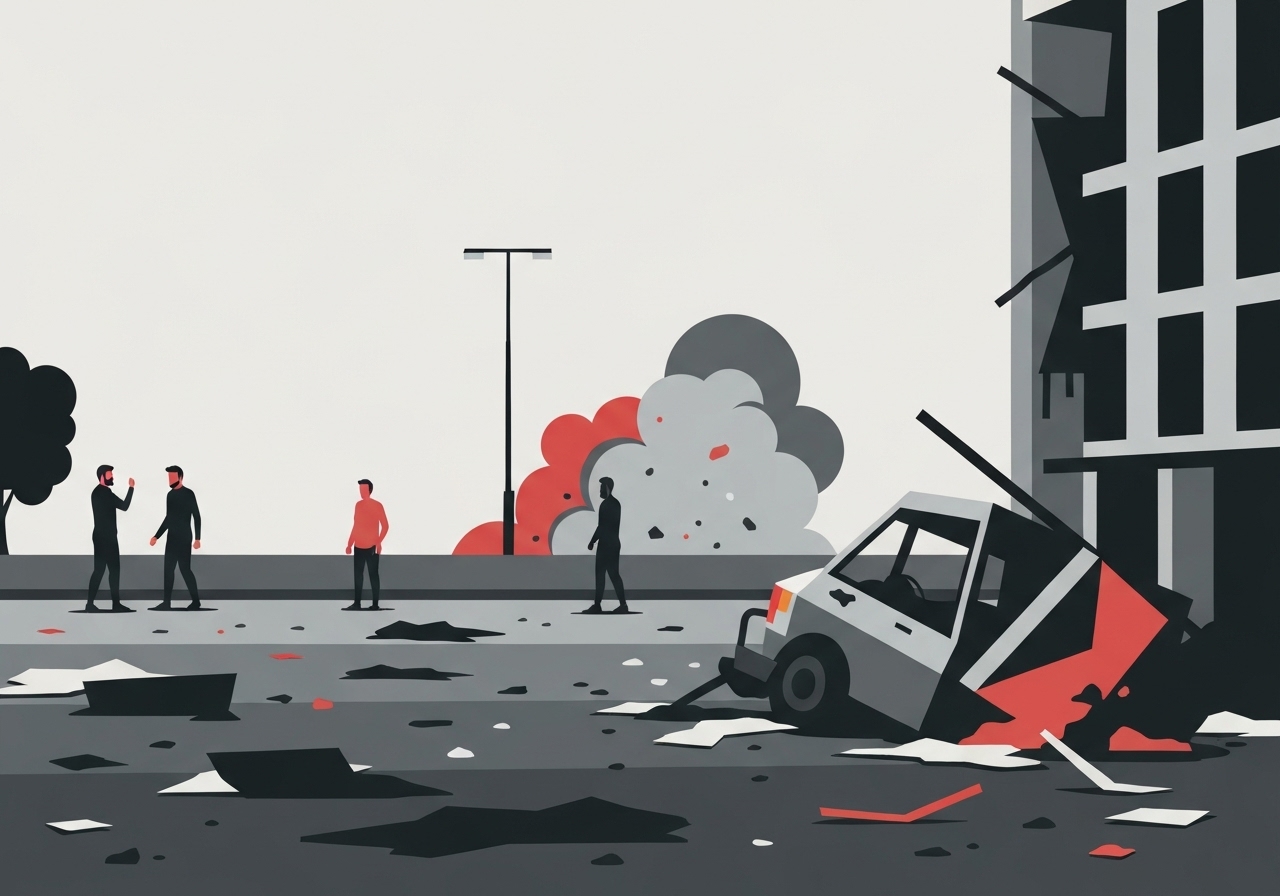
The blast occurred near the Red Fort’s perimeter and an adjacent subway station during a busy evening period, according to officials on the scene. Witnesses described a primary large explosion followed by several smaller detonations near vehicles, and emergency responders worked to secure the area and assist the injured. Authorities reported at least eight fatalities; rescue teams shifted victims to nearby hospitals while forensic teams collected fragments and other evidence for lab analysis.
Senior New Delhi police official Raja Banthia told reporters the investigation had been registered under provisions of the Unlawful Activities (Prevention) Act and remained at an early stage, with samples sent for laboratory testing. Interior Minister Amit Shah visited injured people and convened a meeting of senior officers to review the probe’s progress and forensic findings. The government also said police operations conducted on the same day had uncovered an “interstate and transnational terror module,” with a separate set of arrests and seizures of explosives and components.
Police in Jammu and Kashmir reported following leads from the valley to towns outside Delhi, detaining several suspects and confiscating what they characterized as over 6,000 pounds of material usable in bomb-making, including explosives, chemicals, circuits and remote-control devices. Authorities have not formally confirmed a direct link between those seizures and the Red Fort blast, but local and national agencies are coordinating evidence and interview leads as they work to establish motive and responsibility.
On the ground, the blast disrupted bazaars and historic-visitor routes in Old Delhi, a densely populated area that funnels shoppers and commuters through narrow lanes. Eyewitness accounts described a scene of shock and emergency response amid damaged vehicles and debris that investigators are now cataloguing to reconstruct the sequence of events.
Analysis & Implications
If investigators substantiate that the explosion was a deliberate terrorist attack, the political and security consequences could be substantial. New Delhi has in recent months linked several violent incidents to cross-border militant outfits, and formal attribution to a Pakistan-based group could revive diplomatic tensions and military posturing between the two countries. Such an outcome would likely prompt further arrests, increased border security measures and intensified counterterror operations across multiple states.
Domestically, the government’s invocation of the Unlawful Activities (Prevention) Act signals an intent to treat the incident as more than a routine criminal case, with wider investigative powers and possible preventive detentions. That approach may reassure some citizens and political constituencies demanding firm action, while civil liberties advocates could press back if broad enforcement follows without clear public evidence. The balance between rapid security measures and legal safeguards will be an immediate policy flashpoint.
The timing and location of the blast — in a crowded, historically significant part of the capital — also carry symbolic weight. Attacks in such public spaces can degrade everyday perceptions of safety, affect tourism and commerce in Old Delhi, and drive calls for visible security increases at markets and transport hubs. Internationally, major powers with ties to both New Delhi and Islamabad will likely monitor developments closely and may urge restraint until forensic conclusions are published.
Comparison & Data
| Incident | Date | Location | Deaths | Notes |
|---|---|---|---|---|
| Red Fort blast | Monday (reported Nov. 11, 2025) | Old Delhi, near Red Fort | At least 8 | Under investigation; UAPA sections applied; forensic tests pending |
| 2011 court briefcase bombing | 2011 | Delhi court gates | Over a dozen | One of the deadliest in the capital in recent decades |
| Kashmir attack (spring 2025) | Spring 2025 | Restive Kashmir region | 26 | Led to days of clashes between India and Pakistan; raised tensions |
The table places the recent explosion in the context of other major incidents that shaped Indian security policy and public perception. Analysts will compare casualty counts, location profiles and claimed responsibility (if any) to assess whether this blast represents an escalation in urban targeting or a distinct criminal act. For now, laboratory results and investigative disclosures remain the key datasets that will determine next steps.
Reactions & Quotes
Top political leaders and security officials spoke early, signaling both a determination to find perpetrators and caution about premature attribution. Prime Minister Narendra Modi addressed the matter from Bhutan and emphasized swift action against those responsible.
“The conspirators behind this will not be spared.”
Prime Minister Narendra Modi
Interior Minister Amit Shah visited injured people and said investigators were exploring multiple leads; he also called a briefing with senior police to review lab results. A senior New Delhi police official framed the inquiry as initial and procedural while confirming use of anti-terror provisions.
“The investigation is in a very preliminary stage.”
Raja Banthia, New Delhi police official
Explainer / Glossary
Unconfirmed
- No authoritative public confirmation yet links the Red Fort blast directly to Jaish-e-Mohammed despite contemporaneous seizures and arrests described by police.
- Reports tying the explosion to the separately seized “interstate and transnational” module remain unverified pending forensic matches and formal charging decisions.
- Any suggestion that a foreign state directly sponsored the attack has not been substantiated in public disclosures and remains unproven.
Bottom Line
The explosion in Old Delhi that killed at least eight people has been treated by officials as a potential terrorist incident, prompting an intensive, multi-agency inquiry and the use of anti-terror legal provisions. Early police actions, including arrests and large confiscations of suspected bomb-making materials elsewhere, add to investigators’ leads but do not replace forensic confirmation tying suspects to the blast.
What to watch next: forensic lab results, formal charges if prosecutors proceed under UAPA, and any official claim of responsibility. The way New Delhi balances quick security measures with the need for transparent evidence and legal process will shape both domestic public confidence and international diplomatic responses in the coming days.
Sources
- The New York Times — news media report with on-the-ground reporting and official statements
- Reuters — international news agency (photo and related coverage)
- Agence France-Presse (AFP) — news agency (photo and reporting cited)