
Lead
On Saturday, Iranian forces reversed a brief reopening of the Strait of Hormuz and opened fire on at least one tanker attempting to transit the waterway, saying they will keep controls in place while a U.S. naval blockade of Iranian ports continues. The British United Kingdom Maritime Trade Operations centre reported the tanker and its crew were safe; other trackers said multiple vessels, including an Indian-flagged supertanker carrying roughly 2 million barrels of Iraqi oil, were forced to turn back. The move elevated tensions at a vital oil chokepoint that handles about 20% of global crude flows and came amid ongoing diplomatic shuttle diplomacy aimed at reaching a deal before an April 22 ceasefire deadline. Pakistani and other mediators say talks toward a U.S.-Iran agreement are continuing despite the maritime flare-up.
Key takeaways
- Iran’s joint military command announced that “control of the Strait of Hormuz has returned” to tighter military management and that transit will be restricted so long as the U.S. blockade of Iranian ports remains in effect.
- The U.K. Maritime Trade Operations centre reported two Iranian Revolutionary Guard gunboats fired on a tanker; the vessel and crew were reported safe, and TankerTrackers.com recorded ships turning back, including an Indian-flagged supertanker reportedly carrying 2 million barrels of Iraqi oil.
- The U.S. naval blockade, ordered April 13, has prompted the U.S. Central Command to say 23 ships have been forced to reverse course near Iranian ports since enforcement began.
- About 20% of the world’s oil moves through the Strait of Hormuz; renewed restrictions risk tightening already strained global energy supplies and could push prices higher.
- Casualties from the wider regional fighting reported so far include at least 3,000 dead in Iran, nearly 2,300 in Lebanon, 23 in Israel, more than a dozen in Gulf Arab states and 13 U.S. service members.
- Diplomatic channels remain active: Pakistan, Turkey and Qatar are among intermediaries, and officials say a follow-up round of U.S.-Iran talks is expected ahead of the April 22 deadline.
Background
The Strait of Hormuz is a narrow maritime passage at the mouth of the Persian Gulf through which roughly one-fifth of the world’s oil shipments transit. Control over or disruptions in the strait have outsized economic consequences because major exporters rely on the channel to reach global markets. Historically, Iran has leveraged the strait in regional standoffs; past incidents have included mine attacks, seizures of tankers and warnings to foreign navies.
Tensions escalated after U.S. and allied strikes and a seven-week conflict that produced heavy casualties across the region. On April 13 the United States ordered a naval blockade of Iranian ports as part of pressure to secure concessions from Tehran. Iran briefly said on Friday that commercial traffic could resume under coordination and toll arrangements, but reversed course Saturday after Washington signaled the blockade would remain until a wider deal addressing Iran’s nuclear program and other demands is secured.
Main event
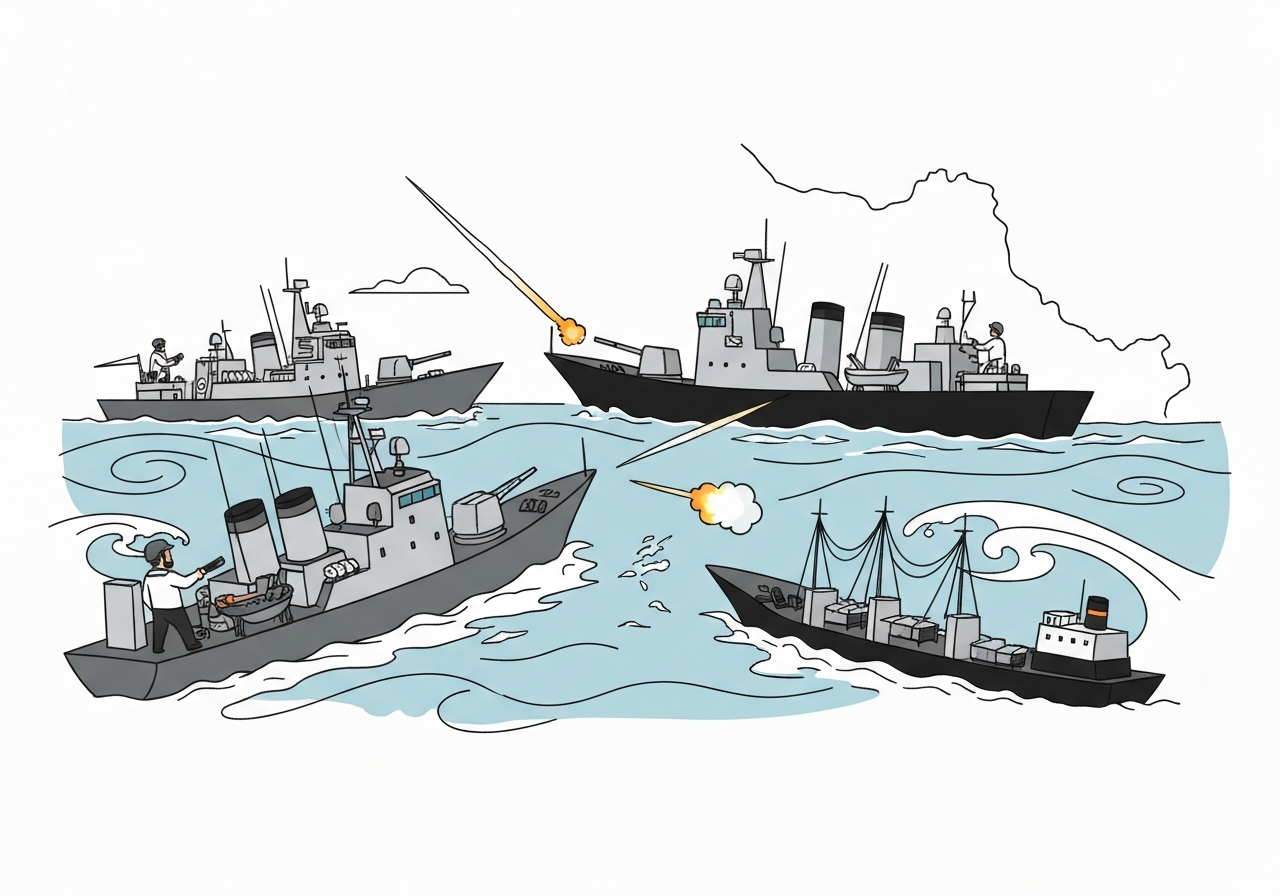
On Saturday morning Iran’s joint military command said the strait was again under strict armed-forces supervision and that any violating vessel would be targeted. Hours later the U.K. Maritime Trade Operations centre reported that two Revolutionary Guard gunboats fired on a tanker transiting the channel; the centre said the ship and crew were safe but did not identify the vessel or destination. TankerTrackers.com and other vessel-tracking services reported multiple ships turned around, including an Indian-flagged supertanker loaded with about 2 million barrels of Iraqi crude.
India summoned Iran’s ambassador in New Delhi to register concern after two Indian-flagged vessels were forced to reverse course, India’s External Affairs Ministry said. New Delhi urged Iranian authorities to resume facilitation of India-bound traffic. In parallel, the U.S. Central Command reiterated that U.S. forces were enforcing the blockade, and said 23 ships had been turned back since the blockade began on April 13.
Iran’s Revolutionary Guard and state media framed the move as a response to what Tehran calls a violation of the ceasefire by the U.S. naval blockade, while Iranian leadership— including Supreme Leader Ayatollah Mojtaba Khamenei—offered defiant public statements celebrating the armed forces’ readiness. Tehran’s national security council said it was reviewing new U.S. proposals delivered via intermediaries but insisted any reopening would depend on the blockade being lifted and guarantees of lasting peace.
Analysis & implications
The reclosure of the strait highlights how quickly limited naval actions can widen into broader economic and strategic shocks. With about 20% of global oil transiting the channel, any sustained interruption would reduce available supply and likely push benchmark crude prices higher, exacerbating inflationary and growth pressures worldwide. Markets may react immediately to shipping disruptions even if physical shortages do not materialize right away.
Strategically, Iran’s decision ties maritime access to the broader political dispute with the United States and the regional war that has produced thousands of casualties. By asserting control and imposing transit rules—such as issuing transit certificates and tolls—Iran seeks tools of leverage short of open, sustained confrontation. For the U.S. and allies, enforcing a blockade while avoiding direct escalation remains a fraught balancing act; miscalculation at sea could create an incident that spins into wider military engagement.
Diplomatically, mediators report progress but also acknowledge deep gaps. Pakistani and Turkish channels are active, and Pakistani officials say U.S.-Iran talks are moving forward ahead of an April 22 deadline. Yet Iranian statements demanding the U.S. abandon “excessive demands” signal continuing mistrust. A negotiated settlement that addresses nuclear, maritime and regional security concerns would be necessary to secure persistent freedom of navigation.
Comparison & data
| Metric | Current/Reported |
|---|---|
| Share of world oil via Hormuz | ~20% |
| Ships turned back (U.S. claim) | 23 since April 13 |
| Reported wartime deaths (regional) | Iran: ≥3,000; Lebanon: ~2,300; Israel: 23; Gulf states: >12; U.S. service members: 13 |
The table underlines why control of the strait is geopolitically consequential. Even temporary restrictions ripple through freight schedules, insurance rates and commodity markets. Observers note that state-directed tolling and transit certificates would add bureaucratic friction and raise costs for shippers even if physical passage remains intermittently allowed.
Reactions & quotes
Officials and organizations offered sharply divergent framings of the incident and its causes.
“Control of the Strait of Hormuz has returned to its previous state … under strict management and control of the armed forces.”
Iran joint military command (statement)
The Iranian statement framed the move as restoration of security and an assertion of sovereignty in response to what Tehran calls violations of the ceasefire by the U.S. blockade. Iranian spokespeople emphasized the right to collect transit data and impose tolls for authorized commercial traffic.
“We have very good conversations going on. They can’t blackmail us.”
U.S. President Donald Trump (remarks)
President Trump reiterated that Washington would maintain the blockade until a deal addressing Iran’s nuclear program and other U.S. demands is reached, adding that talks were underway. U.S. officials frame the blockade as leverage to secure a durable agreement and to deter further attacks on commercial shipping.
“We are deeply concerned at the shooting incident and have conveyed our views to the Iranian ambassador.”
India External Affairs Ministry (statement)
India’s summons of Iran’s envoy followed reports of Indian-flagged ships reversing course. New Delhi stressed the economic and humanitarian stakes of uninterrupted fuel shipments to meet domestic needs.
Unconfirmed
- The precise identity and destination of the tanker fired upon have not been independently confirmed beyond U.K. and tracker reports.
- Details of the new U.S. proposals reportedly delivered via intermediaries were not disclosed publicly and remain unverified.
- The extent to which Iran intends to enforce tolls, certificates and a fixed transit route over the long term is not yet confirmed and could change with further diplomacy.
Bottom line
The weekend’s reversal — from conditional reopening to renewed closure and reported gunboat fire on a tanker — underscores how fragile maritime access through the Strait of Hormuz has become amid the wider regional conflict. Economically, even limited interruptions threaten to tighten global oil supplies and lift prices, while politically the episode ties shipping access directly to larger U.S.-Iran negotiations.
Diplomats report ongoing engagement and say talks continue ahead of the April 22 deadline, but trust between the parties remains thin. For markets and policymakers, the near-term outlook depends on whether intermediaries can secure concrete concessions that lead to a durable end to the blockade and restored, predictable navigation rules through Hormuz.