
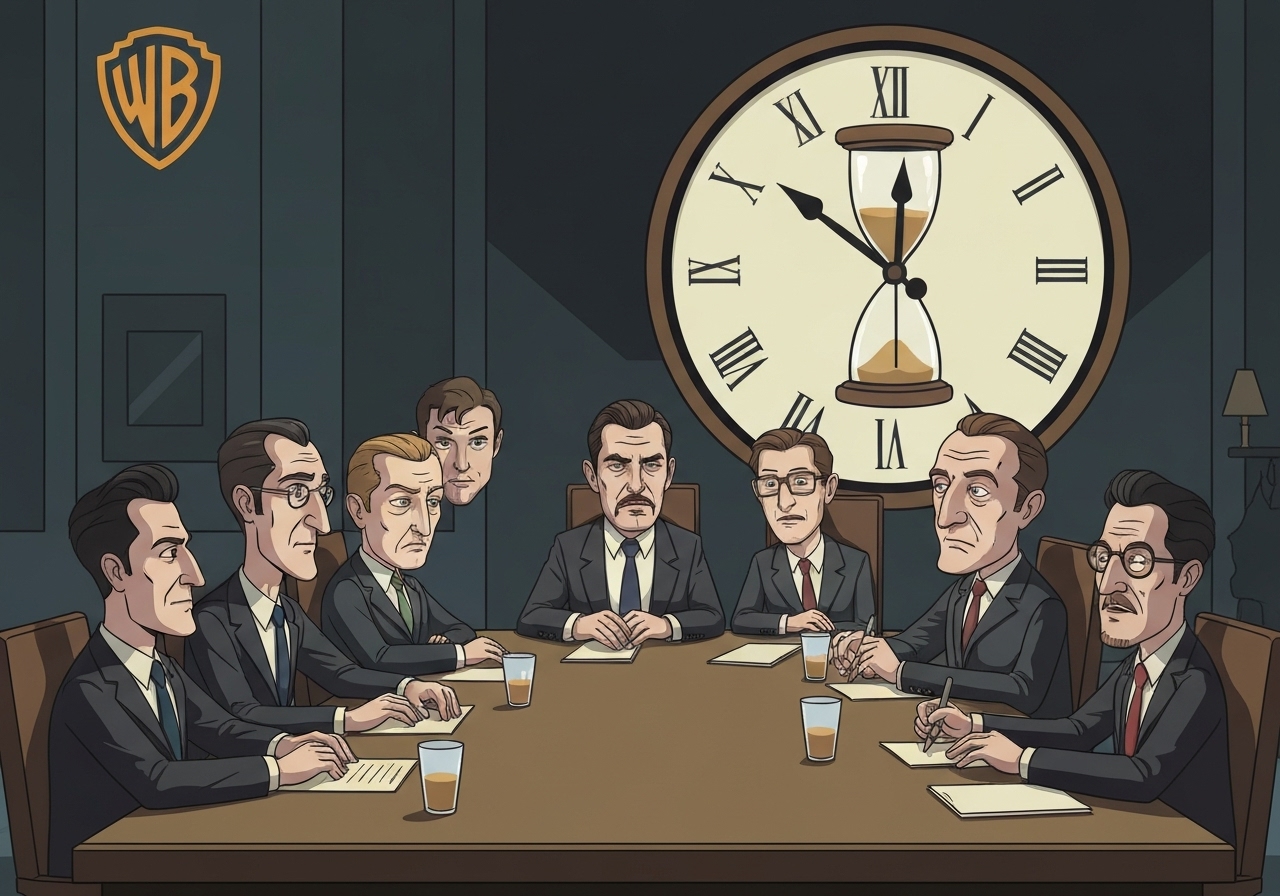
Who: Paramount, Skydance Corp., Comcast and Netflix are preparing final proposals for Warner Bros. Discovery. When: bids converged around the Nov. 19–20, 2025 deadline. Where: the process is taking place through private negotiations and advisor-led pitch rounds in New York and Los Angeles. What: Comcast and Netflix have prioritized the film-and-TV library while Paramount is prepared to offer for the entire company, including cable channels such as CNN, TNT and Cartoon Network. Result: bidders are trying to sharpen distinguishing terms and avoid overpaying as the final offers are assembled.
Key Takeaways
- Deadline and timing: Final bids were concentrated around Nov. 19–20, 2025 as suitors put finishing touches on proposals reported by market outlets.
- Principal bidders: Paramount (with Skydance), Comcast and Netflix are named as active suitors, each pursuing different slices of Warner Bros. Discovery.
- Asset focus split: Comcast and Netflix are most focused on the studio’s film and TV library, including titles from The Sopranos to Bugs Bunny.
- Scope of Paramount bid: Paramount is willing to buy the whole company, explicitly including cable networks such as CNN, TNT and Cartoon Network.
- Strategic trade-offs: Bidders are balancing content control, distribution scale and price risk to avoid overpaying for long-tail rights.
- Regulatory and financing considerations: Any transaction that includes national news or significant cable-satellite operations may draw regulatory scrutiny and complex financing terms.
Background
Warner Bros. Discovery traces its current shape to the combination of legacy studios and cable networks built over decades; the company’s library and channels are among the industry’s most valuable content assets. The firm’s catalog spans premium drama series and long-running animated franchises, which generate both direct viewer engagement and recurring licensing revenue. In recent years streaming competition and shifting ad dollars have pressured legacy media models, prompting strategic reviews and asset sales across the sector.
The current bid process reflects broader consolidation dynamics: streamers and cable owners are hungry for exclusive content and back catalogs to fill global platforms and licensing windows. At the same time, the presence of large linear networks—especially a national news channel—adds complexity for buyers who must weigh carriage contracts, advertising revenue and potential regulatory hurdles. Financial advisers and investment banks are coordinating proposals, valuation models and deal structures as rival suitors finalize terms.
Main Event
As the Nov. 19–20, 2025 deadline approached, each suitor refined its pitch to emphasize different strategic priorities. Comcast and Netflix concentrated bids on the film-and-TV library, aiming to secure long-term streaming and licensing advantages tied to marquee franchises and back-catalog titles. Those assets include renowned series and characters ranging from The Sopranos to Bugs Bunny, which retain strong licensing value across platforms and regions.
Paramount, by contrast, prepared an offer for the whole of Warner Bros. Discovery, including cable properties such as CNN, TNT and Cartoon Network. That scope signals a willingness to assume linear-TV revenue streams and contractual obligations alongside the studio business, and suggests Paramount believes integration could deliver cross-platform ad and distribution synergies.
Skydance Corp. has been named alongside Paramount in market coverage, reflecting a possible partnership or backstop financing role in a full-company bid. Comcast’s interest is consistent with its prior strategy of consolidating content for Peacock and its broader distribution network, while Netflix’s focus on library assets aligns with its library-driven content acquisition approach rather than taking on linear-TV operations.
Across bidders, advisors sought to differentiate deals by structure — for example, asset carve-outs, licensing guarantees, takeover of certain liabilities, or joint-venture options — rather than competing purely on headline price. That approach is intended to give buyers ways to capture value without committing to full-balance-sheet integration that could raise debt loads or regulatory flags.
Analysis & Implications
Market impact: control of Warner’s library would shift bargaining power in global licensing markets, changing how streaming platforms and broadcasters negotiate windows and exclusivity. A buyer focused on library ownership can monetize titles through tiered licensing, regional exclusives and remake/sequel pipelines, increasing long-term recurring revenue potential.
Regulatory risk: any transaction that includes a major news outlet or dominant regional distribution assets may face heightened regulatory review. Authorities often scrutinize media concentration where news reach, advertising markets or carriage leverage could be materially affected. Buyers weighing full-company bids must consider the timeline and uncertainty associated with approvals.
Financial considerations: bidders must reconcile the asset’s long-tail value against near-term cash needs and debt capacity. Overpaying for evergreen content could suppress returns, while carving out only the library may be cheaper but leave buyers exposed to licensing disputes or ongoing network liabilities. Investors will watch deal financing, break fees, and contingent-value mechanisms closely.
Industry ripple effects: the winning structure—full takeover versus library-only—will influence future M&A behavior. A library sale could accelerate vertical integration by streamers; a full-company acquisition could trigger further consolidation among distributors seeking scale in advertising and live programming.
Comparison & Data
| Bidder | Primary Target | Notes |
|---|---|---|
| Paramount (with Skydance) | Entire company | Willing to purchase linear channels including CNN, TNT, Cartoon Network |
| Comcast | Film & TV library | Seeks content for Peacock and distribution synergies |
| Netflix | Film & TV library | Library acquisition to strengthen streaming catalog |
The table summarizes each suitor’s publicly reported emphasis. Buyers face trade-offs between scope, price and integration risk: whole-company bids add revenues and liabilities, while library purchases concentrate on long-term licensing value without the burden of linear operations.
Reactions & Quotes
Company governance and investor groups signaled that the board’s priority is a disciplined sale process focused on shareholder value and thorough review of any binding offers.
“The board remains focused on evaluating proposals that maximize shareholder value and preserve long-term strategic options.”
Warner Bros. Discovery (official statement)
Industry observers noted that acquiring Warner’s library could materially reshape competitive dynamics among streamers and broadcasters.
“Control of a catalog this deep would be transformational for a streaming service’s content strategy and licensing leverage.”
Industry analyst (market commentary)
Unconfirmed
- Exact bid amounts and valuation metrics have not been publicly disclosed and remain unconfirmed at the time of reporting.
- Final deal structure—whether a full-company sale, asset carve-out, joint venture, or breakup—is not yet confirmed.
- Any regulatory rulings or conditions that may be imposed on a transaction have not been determined.
Bottom Line
The approaching Nov. 19–20, 2025 bid deadline compressed a high-stakes decision for suitors weighing content ownership against financial and regulatory risks. Comcast and Netflix aimed for the valuable film and TV library to shore up streaming catalogs, while Paramount’s willingness to buy the whole company signals a bet on combining linear ad revenue and studio assets.
Which path wins—library-only or full takeover—will shape licensing dynamics, platform competition and potential regulatory scrutiny. Investors and competitors should watch financing terms, any breakup provisions, and regulator comments closely in the coming weeks to gauge the deal’s ultimate structure and market ramifications.