
Lead
On Nov. 23, 2025, Israeli forces struck the southern suburbs of Beirut — the first Israeli strike on the capital since June — saying it killed Hezbollah chief of staff Haytham Tabtabai. Lebanon’s Health Ministry reported five dead and 25 wounded in the Dahiyeh/Haret Hreik strike. Israel framed the attack as a preventive measure against Hezbollah’s rearmament, while Lebanese officials warned the strike risks renewed escalation days before a scheduled papal visit.
Key Takeaways
- On Nov. 23, 2025, an Israeli strike hit Beirut’s southern suburb of Dahiyeh/Haret Hreik, killing five people and wounding 25, per Lebanon’s Health Ministry.
- Israel says the strike killed Haytham Tabtabai, described as Hezbollah’s chief of staff and leader of the Radwan special forces unit.
- Tabtabai was designated a terrorist by the U.S. in 2016 and had a reported $5 million reward for information linking him to militant operations in Syria and Yemen.
- Israeli officials said the attack is the first on Beirut since June and aimed to prevent Hezbollah from rearming nearly a year after the last Israel–Hezbollah war.
- Hezbollah has not issued an immediate confirmation; a senior party official said leadership is “studying the matter” and warned of possible broader reprisals.
- Lebanon’s president condemned the strike and called on the international community to intervene to halt attacks on Lebanon.
- The 2023 Israel–Hezbollah conflict killed more than 4,000 people in Lebanon, caused roughly $11 billion in damage (World Bank estimate), and left 127 dead in Israel, including 80 soldiers.
Background
The Israel–Hezbollah front has been volatile since the wider regional escalation that began Oct. 8, 2023, after Hamas’s attack on southern Israel and Hezbollah’s subsequent rocket fire. That conflict included intense Israeli bombardment of Lebanon and a ground invasion that, according to multiple assessments, severely degraded Hezbollah’s leadership and infrastructure.
In the months since the ceasefire one year ago, Israel has repeatedly accused Hezbollah of rebuilding military capacities in southern Lebanon; Lebanese authorities and the government deny that the Lebanese state tolerates such rearmament. International actors, including the United States, have urged de-escalation while pressing Lebanon to disarm nonstate armed groups, a politically sensitive and logistically difficult proposition.
Hezbollah’s organization includes specialized units such as the Radwan special forces, which Israeli officials have singled out as central to any renewed combat capability. Leadership losses in 2024 — including the killing of Ibrahim Aqil in September 2024 — have reshaped command lines and prompted both sides to claim deterrence or justification for further strikes.
Main Event
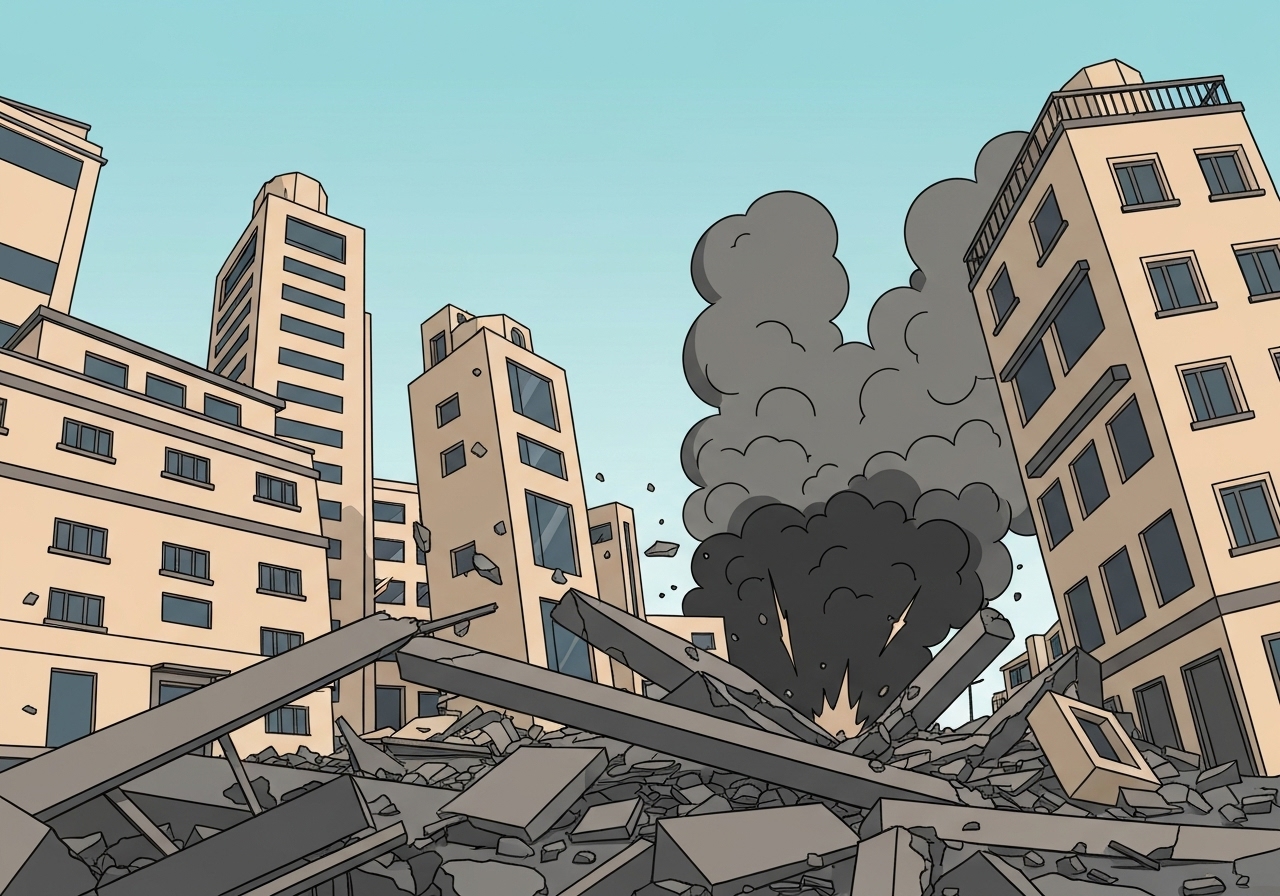
Shortly after dawn on Nov. 23, 2025, an airstrike struck an apartment block in the Haret Hreik area of Dahiyeh, a mainly residential district in Beirut’s southern suburbs. Local video and photos showed damage centered on an upper floor of an apartment building, smoke over the neighborhood, and crowds gathering as emergency crews responded.
Lebanese authorities reported five fatalities and 25 wounded. Witnesses described gunfire as crowds were dispersed and said an Israeli drone was visible near the scene. The Lebanese military secured the area, and state media reported cordons around the strike site.
Israel’s military statement identified the main target as Haytham Tabtabai, saying he commanded major Hezbollah units and had worked to restore combat readiness. Government spokespeople framed the strike as enforcement of the ceasefire terms and as a warning that rebuilding of offensive capabilities would not be tolerated.
Hezbollah’s immediate official reaction was limited. Mahmoud Qamati, deputy chair of Hezbollah’s political council, told journalists that a senior militant may have been killed and that leadership would decide on a response, warning the strike could open the door to wider assaults across Lebanon.
Analysis & Implications
Strategically, the strike signals Israel’s continued willingness to conduct targeted operations inside Lebanon when it judges high-value militant leaders are present. By naming Tabtabai, Israel communicates both tactical intent — to degrade command-and-control — and a political message aimed at deterring rapid reconstitution of units tied to the 2023 war.
The hit complicates Lebanon’s fragile internal politics. President Joseph Aoun condemned the strike and appealed for international intervention, while Beirut’s civilian population, particularly in the southern suburbs, faces renewed insecurity. The attack arrives amid Lebanese government statements committing to disarmament of nonstate actors, but political and operational barriers make immediate progress unlikely.
Regionally, the strike raises escalation risk. Hezbollah’s warning that leadership will “study” responses leaves open a range of options from measured retaliatory strikes to more substantial cross-border exchanges. Any broader fighting would risk drawing in regional patrons and further strain humanitarian conditions in southern Lebanon and adjacent Israeli border communities.
Diplomatically, the question of prior notification to allies remains salient. Israel’s government said decisions are independent; a government spokesperson declined to say whether the United States was informed in advance. If allies were not informed, that could complicate coordination on de-escalation and risk miscommunication at higher diplomatic levels.
Comparison & Data
| Metric | Lebanon (2023 war) | Israel (2023 war) |
|---|---|---|
| Deaths | More than 4,000 (including hundreds of civilians) | 127 (including 80 soldiers) |
| Estimated damage | About $11 billion (World Bank) | — |
| Recent Beirut strike (Nov. 23, 2025) | 5 killed, 25 wounded | Target claimed: Haytham Tabtabai |
The table places the Nov. 23 strike in the context of the 2023 war’s toll and economic damage. While the recent strike’s human toll is smaller, the political ramifications are disproportionate: targeted killings of senior figures tend to reshape deterrence calculations and can prompt asymmetric responses.
Reactions & Quotes
Israeli officials justified the operation as defensive and preventative; Defense Minister Israel Katz framed the strike as necessary to protect northern Israeli communities from renewed threats.
“We will continue to act forcefully to prevent any threat to the residents of the north and the state of Israel.”
Israel Katz, Israeli Defense Minister
A senior Hezbollah political official said leadership was weighing options, signaling both reserve in public rhetoric and potential for retaliatory steps.
“Hezbollah’s leadership is studying the matter of response and will take the appropriate decision.”
Mahmoud Qamati, Hezbollah deputy political council chair
Local representatives in the affected neighborhood emphasized civilian harm and denied overt military presence at the strike site, underscoring the human cost for residents.
“This is definitely a civilian area and void of any military presence, especially the neighborhood where we stand.”
Ali Ammar, Hezbollah parliamentarian
Unconfirmed
- Independent confirmation that Haytham Tabtabai was killed has not yet been provided by Hezbollah or third-party verification teams.
- Whether the apartment struck hosted any Hezbollah operational facilities or personnel beyond the Israeli claim remains unverified.
- It is not confirmed whether Israel informed the United States or other allies before carrying out the strike.
Bottom Line
The Nov. 23, 2025 strike in Beirut marks a significant narrowing of geographic restraint since last year’s hostilities, reflecting Israel’s focus on degrading senior Hezbollah leadership it judges to be rebuilding military capacity. While the immediate human toll reported is limited relative to the 2023 conflict, the political and security implications are large: the killing of a named senior figure reshapes deterrence and raises the probability of tit-for-tat escalation.
Key questions to watch in the coming days include whether Hezbollah confirms Tabtabai’s death, the nature and timing of any retaliation, and how regional and international actors — particularly the United States, United Nations, and European states — respond to calls for intervention or mediation. For Lebanese civilians in the south of Beirut, the strike renews acute fears of instability during an already fragile recovery period.