
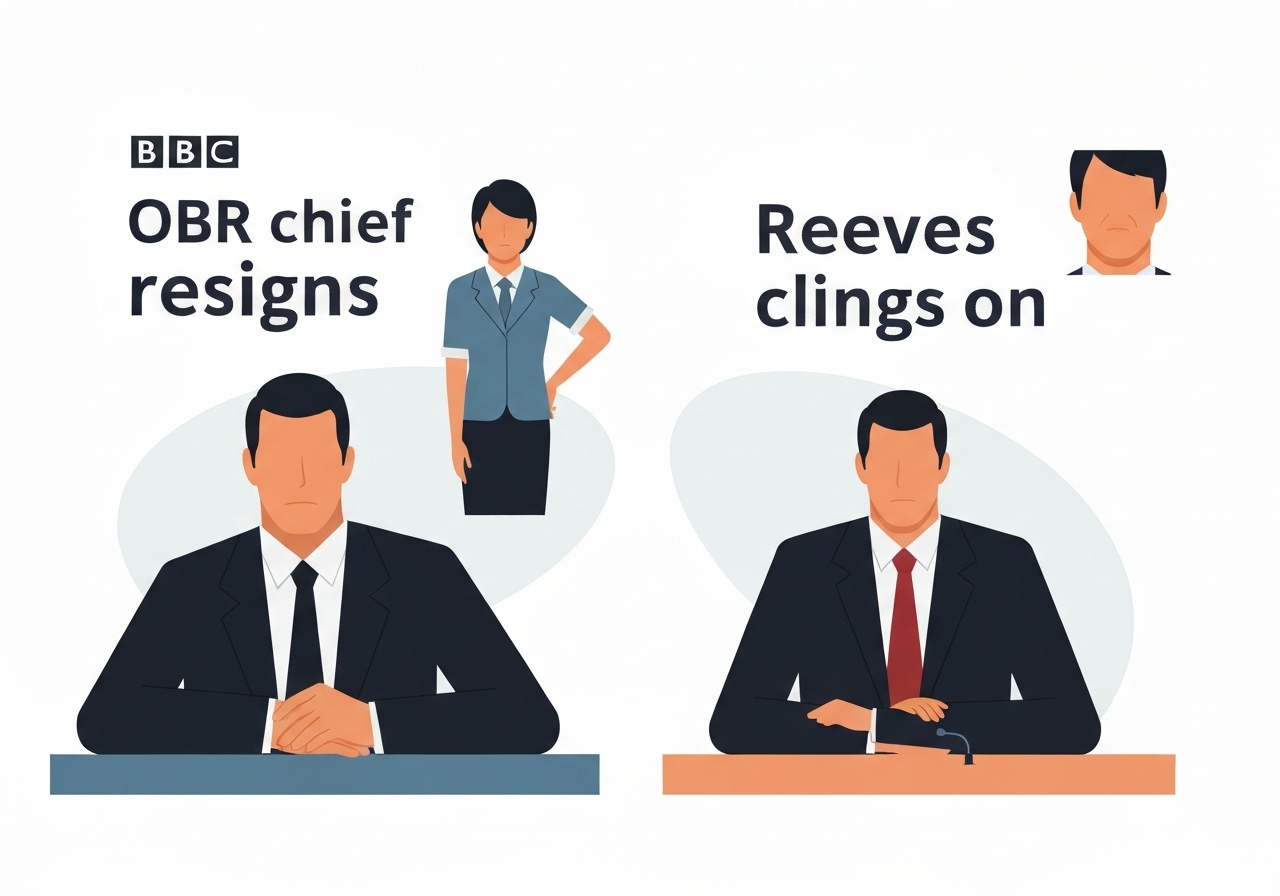
Lead
Four hours ago the head of the Office for Budget Responsibility, Richard Hughes, resigned after a review found procedural failures that allowed an early leak of budget material. The decision follows findings that the same weaknesses had permitted early access to the Spring Statement and raised concerns that other fiscal releases might have been compromised. The resignation removes Mr Hughes from a scheduled Treasury committee appearance and intensifies scrutiny of Chancellor Rachel Reeves. National front pages today reflect both the resignation and wider political fallout.
Key Takeaways
- Richard Hughes resigned as OBR chair following a review that identified failures enabling an early Budget leak; the review said similar lapses affected the Spring Statement.
- Hughes will no longer give evidence to the Treasury committee after stepping down, changing parliamentary plans for scrutiny.
- Major national newspapers — including the Financial Times, The Times, The Guardian and Daily Mail — led with the OBR exit and differing takes on Chancellor Rachel Reeves.
- The Daily Telegraph and other titles stress Reeves remains under political pressure and may face further criticism despite Hughes’ departure.
- Separate front‑page stories included an exemption for council flats worth over £2m from a new property tax, and cultural and criminal news such as Kylie Minogue at the Fashion Awards and an arrest at Stansted.
- Labour leader Sir Keir Starmer publicly defended the chancellor but stopped short of unqualified backing, according to front‑page summaries.
Background
The Office for Budget Responsibility (OBR) is the independent fiscal watchdog that provides forecasts and checks on government fiscal policy. Its independence and credibility hinge on strict procedures to protect sensitive forecasts until official publication. In recent months the OBR and the Treasury have clashed over messaging about the public finances, culminating in a timeline published by the watchdog that, according to it, challenged some of the Treasury’s public claims.
That tension intensified after an accidental early release of Budget materials. A subsequent internal review found procedural failures that allowed premature access to confidential material, and judged the lapse serious enough to describe it as the worst failure in the OBR’s history. The review raised questions about whether other fiscal documents had been similarly exposed.
Main Event
Chair Richard Hughes offered his resignation after the review’s conclusions were made public. The move means he will not appear before the Treasury committee as previously scheduled, a development several papers noted as sparing the chancellor further immediate parliamentary scrutiny. The Financial Times led with the resignation and linked it directly to the review’s findings.
Coverage across titles diverged sharply in tone. The Daily Telegraph framed the story as a partial reprieve for Chancellor Rachel Reeves, saying Hughes’ exit ‘silenced’ the OBR chair and could lessen direct criticism of her. The Daily Mail cast Hughes as a ‘fall guy’ who had exposed fault lines in the chancellor’s fiscal claims, while the i and the Times reported that relations between the watchdog and the Treasury had broken down.
The Guardian and The Independent noted that ministers had hoped Hughes’ departure would draw a line under the Budget controversy, but both outlets stressed Reeves remains under pressure politically. Some government sources quoted in tabloid coverage described the chancellor as politically damaged, language echoed in several front pages.
Analysis & Implications
The resignation carries immediate procedural and political consequences. Procedurally, the OBR will need an interim leadership arrangement and likely a review of internal safeguards to prevent another premature disclosure. Rebuilding confidence will require demonstrable changes to access controls and publication protocols.
Politically, the event complicates the chancellor’s position. Even though Hughes stepped down, newspapers and opposition figures interpret the episode as part of a broader row over whether ministers accurately represented the scale of the so‑called ‘Budget black hole’. That narrative risks sustained media attention and parliamentary interrogations of Treasury decision‑making.
For markets and fiscal planning the episode raises separate concerns. If independent forecasts or timelines are seen as vulnerable, investors and public bodies may demand clearer assurances about data integrity. The government will face pressure to show the fiscal forecasting process is robust and that remedial steps are in place to prevent future leaks.
Internationally, the story has limited direct economic impact but it can influence perceptions of the UK’s fiscal governance. Allied governments and market watchers routinely monitor the credibility of fiscal institutions; repeated procedural lapses could weigh on confidence even if short‑term market effects are modest.
Comparison & Data
| Newspaper | Lead Angle | Tone |
|---|---|---|
| Financial Times | OBR chair resigns after review | Analytical |
| The Times | Public rebuke preceded exit | Critical |
| Daily Telegraph | Hughes silenced; Reeves clings on | Sympathetic to govt |
| Daily Mail | Hughes as ‘fall guy’ for Reeves | Hostile |
The table summarises front‑page frames across major titles to show differences in emphasis rather than complete editorial positions. These snapshots reflect editorial choices about which elements to foreground — procedural failure, personal accountability, political rescue, or systemic concerns — and help explain why public reaction is fragmented. The divergence also signals likely lines of scrutiny in parliamentary questioning and media follow‑up.
Reactions & Quotes
Officials and commentators reacted quickly; below are representative short excerpts and context.
“I take full responsibility for the failures identified in the review.”
Richard Hughes, outgoing OBR chair
This brief statement accompanied Hughes’ resignation and was reported across outlets as an acceptance of personal responsibility for procedural lapses that led to the early release.
“Ministers hope this draws a line under the chaos, but pressure remains on the chancellor.”
Government insider (reported)
Cabinet sources quoted in several papers framed the resignation as a potential stabiliser for the government, while acknowledging political risk to the chancellor’s standing.
“We did not mislead anyone.”
Sir Keir Starmer, Labour leader (reported)
Labour’s leader publicly defended the chancellor to a degree but rejected claims his party had misled the public about fiscal forecasts, a line emphasised by some outlets covering the row over briefings.
Unconfirmed
- Reports that Richard Hughes could have survived the leak if not for other conflicts with the Treasury are based on unnamed sources and remain unverified.
- Tabloid claims that Chancellor Reeves is politically ‘radioactive’ reflect quoted insider views and are not a factual judgment of her future prospects.
- Any assertion that other Budgets were definitely compromised beyond the Spring Statement remains unproven until further forensic review is published.
Bottom Line
Richard Hughes’ resignation is a consequential development for the OBR and for the chancellor. It removes an immediate witness from scheduled parliamentary scrutiny but does not erase the underlying questions about procedural weaknesses and inter‑institutional tensions. The government now faces two tasks: demonstrating immediate fixes to OBR safeguards and managing the political fallout that front pages show is likely to continue.
For readers, the core issues to watch are forthcoming steps from the OBR to tighten controls, any ministerial disclosures about internal communications with the watchdog, and whether parliamentary inquiry resumes with new witnesses or a refreshed mandate. Media coverage will remain a key factor shaping public perception of how serious the failure was and whether accountability extends beyond the chair.
Sources
- BBC News (news organisation) — original round‑up of national front pages and events.
- Financial Times (press) — lead reporting on OBR resignation and review findings.
- The Daily Telegraph (press) — front‑page framing of Reeves and OBR developments.
- The Guardian (press) — coverage of political response and ministerial hopes to ‘draw a line’.
- The Times (press) — reporting on strained relations between OBR and Treasury.
- The Independent (press) — analysis of the ‘Budget black hole’ debate and Labour briefings row.