
Lead
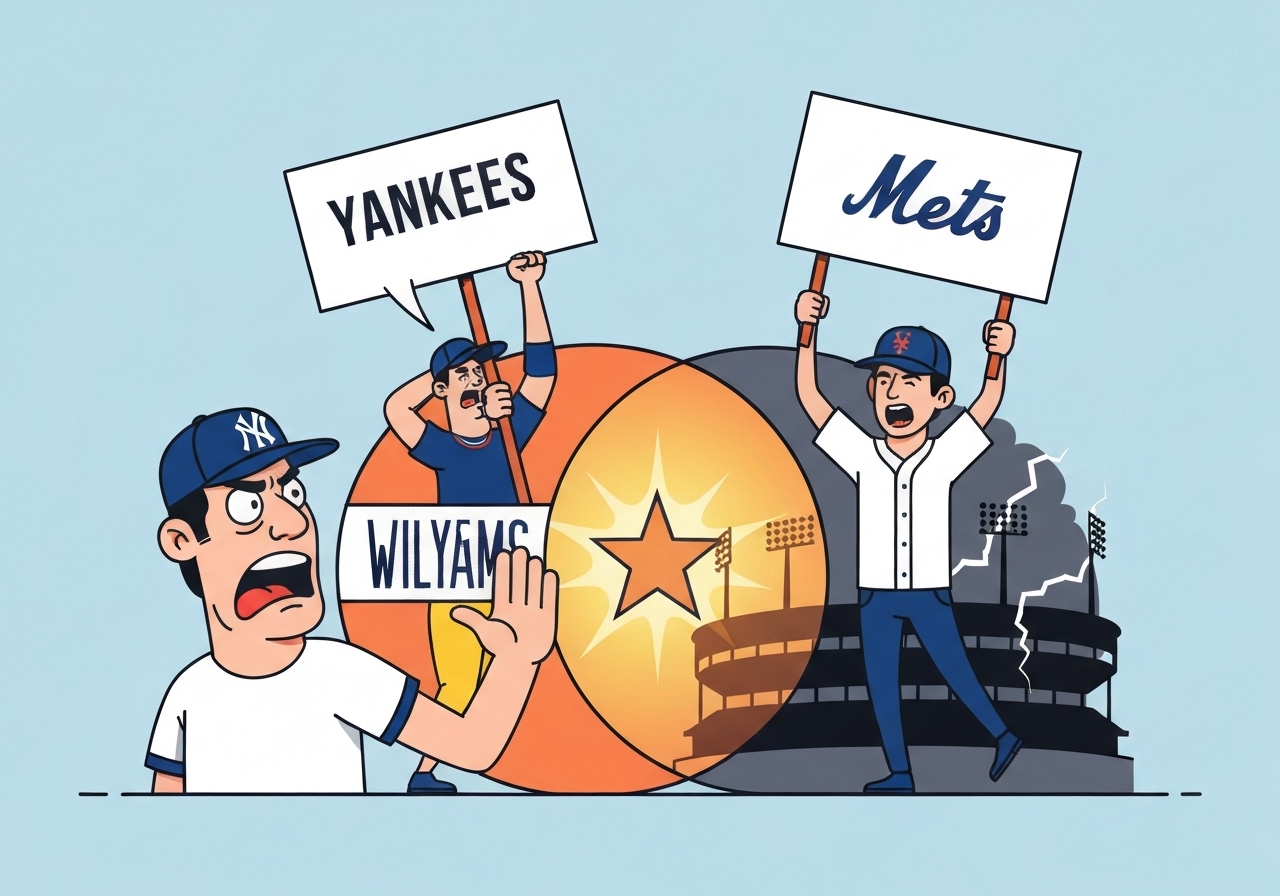
Devin Williams agreed to a three-year, $51 million deal with the New York Mets on Monday night after a season that mixed early struggles with a late surge. The left-handed reliever arrived in New York this spring amid unusual attention over a beard and the Yankees’ facial-hair policy, then endured a rough start that included a 9.00 ERA in April and the loss of his closer’s role. He closed the year with a career-worst 4.79 ERA but finished with elite chase, whiff and strikeout rates and a postseason standing ovation. Those underlying measures — not surface ERA — help explain why the Mets opted to sign him and why Yankees fans shouldn’t automatically celebrate his departure.
Key Takeaways
- Contract: Williams signed a three-year, $51 million contract with the New York Mets (agreement announced Monday night).
- Early season struggles: He posted a 9.00 ERA in April and finished 2025 with a 4.79 ERA, his highest full-season mark.
- Underlying performance: Williams finished 2025 in the 97th percentile or better in chase rate, whiff rate and strikeout rate.
- Strand-rate anomaly: His 2025 strand rate was 55 percent versus the reliever average of 71.8 percent and his pre-2025 career mark of 81.8 percent.
- Luck vs skill: Among qualified relievers, he had the largest gap between ERA and FIP in 2025, suggesting bad sequencing or a few costly outings inflated his ERA.
- Pitch shape change: Statcast-tracked metrics show his fastball and changeup lost some induced vertical break in 2025, coinciding with higher exit velocities and hard-hit and barrel rates.
- Mets’ bullpen context: If New York re-signs Edwin Díaz, pairing him with Williams could produce one of MLB’s top late-inning duos.
- Yankees roster moves: New York added David Bednar at the deadline and also has Camilo Doval, Jake Bird and Fernando Cruz as high-leverage options moving into 2026.
Background
Williams established himself as an elite strikeout reliever after debuting with the Milwaukee Brewers in 2019, building a multi-year track record of missing bats and closing games. That history made his 2025 season a notable outlier: while his peripheral metrics remained excellent, several surface numbers — particularly ERA and strand rate — diverged sharply from his career norms. In the modern evaluation era, teams emphasize those peripherals and predictive metrics over traditional ERA when setting long-term contracts for relievers.
His arrival at the Yankees’ spring training complex in February drew attention beyond performance. Sporting a full beard — a visible departure from the franchise’s customary grooming expectations — Williams became a focal point in Tampa, Florida, amid a club policy debate that owner Hal Steinbrenner amended. The off-field noise amplified scrutiny of an on-field slow start, intensifying fan reaction in New York.
Main Event
Williams’ 2025 campaign began poorly: a 9.00 ERA in April prompted manager Aaron Boone to remove him from the closer’s role after results and trust with runners on base eroded. Over the full season, Williams’ 4.79 ERA ranked higher than his usual standards, and only 11 qualified relievers posted worse ERAs. Yet through the year he continued to miss bats at an elite rate, and by October his performance and demeanor earned an appreciative postseason reception.
Statcast and other advanced tools show two strands to Williams’ year. On one hand, his swing-and-miss and chase numbers placed him among the game’s best; on the other, the pitches lost some induced vertical break, making the fastball and changeup somewhat straighter. That change coincided with the highest average exit velocity, hard-hit rate and barrel rate of his career, suggesting that contact quality drove some of the ERA increase.
Another notable datapoint: Williams’ strand rate collapsed to 55 percent in 2025 while the reliever average was 71.8 percent and his career pre-2025 level stood at 81.8 percent. Strand rate tends to regress toward a pitcher’s mean, and a return to historical norms would be expected to lower his ERA even if other elements remained constant. Additionally, Williams exhibited the largest gap between ERA and FIP among relievers, a pattern consistent with a few high-leverage failures inflating traditional results.
Analysis & Implications
Teams making long-term reliever investments look beyond ERA to predictive metrics such as FIP, strikeout and walk rates, and pitch movement. Dylan Cease’s recent $210 million contract after a 4.55 ERA and Ryan Helsley’s $28 million deal following a 7.20 ERA are recent precedents showing front offices buy skill indicators over surface outcomes. Williams’ elite chase and whiff rates place him in the same evaluative frame: front offices view the ability to miss bats as a durable asset.
Williams’ strand-rate collapse and the ERA–FIP gap point to bad sequencing and poor luck rather than a wholesale loss of ability. If those are transitory, the Mets could be buying a rebound candidate at a price that reflects a short-term dip rather than long-term decline. That makes the three-year, $51 million commitment less surprising when seen as a calculated buy-low move.
Still, the observed loss of induced vertical break in his primary offerings is a genuine concern. Straighter fastballs and changeups can lead to harder contact if hitters square them up. The Mets’ analytics and pitching coaches will need to prioritize either mechanical adjustments or pitch-plan changes to restore vertical movement and reduce the quality of contact.
Comparison & Data
| Metric | Williams (2025) | Career pre-2025 | Reliever avg (2025) |
|---|---|---|---|
| Season ERA | 4.79 | — | — |
| April ERA (2025) | 9.00 | — | — |
| Strand Rate | 55% | 81.8% | 71.8% |
| Chase / Whiff / K percentiles | 97th+ percentile | — | — |
| Market comparables | Signed for $51M (3 yrs) | Dylan Cease: $210M | Ryan Helsley: $28M |
Context: strand rate typically regresses toward a player’s norm; Williams’ prior 81.8 percent suggests 2025’s 55 percent was an extreme outlier. The ERA–FIP gap also signals that a handful of poor outings may have disproportionately worsened his ERA. Comparing contract amounts emphasizes how teams are willing to invest when peripherals, not ERA, indicate continued skill.
Reactions & Quotes
“I’ve grown to love being here. I love the city. I love taking the train to the field every day.”
Devin Williams (October)
Williams’ remark in October underscored how comfortable he had become in New York despite a rocky regular season. That sentiment helps explain why another franchise valued both his on-field skills and reported clubhouse fit.
“The stuff was comparable … I felt like the results should be there, and they weren’t. So we had to keep just trying to figure out what it is.”
Matt Blake, Yankees pitching coach (September)
Yankees pitching coach Matt Blake’s assessment framed the team’s frustrations: elite raw stuff but mismatched outcomes. Coaches and front offices often split on whether such gaps are fixable via mechanics and sequencing or signal deeper decline.
Unconfirmed
- Whether the reduced induced vertical break on Williams’ fastball and changeup is a permanent mechanical issue or something fixable with re-tuning — still under review.
- Whether the Mets will re-sign Edwin Díaz; links between signing Williams and any Díaz decision remain speculative.
- How much Williams’ 2025 strand-rate collapse reflects sequencing vs. injury or an underlying physical change — not definitively established.
Bottom Line
The headline that the Yankees “got rid” of a bad-season reliever misses how modern front offices price pitching. Williams’ 2025 ERA rose chiefly because of poor strand rate, a few costly outings, and some loss of pitch movement — factors that, in isolation, do not negate his long-term value as a high-end swing-and-miss arm. The Mets’ three-year, $51 million deal should be read as a buy-low investment in a historically elite reliever rather than a sure-fire gamble.
For Yankees fans, the practical takeaway is that New York’s bullpen choices matter more than one roster exit. The club added David Bednar and carried high-upside arms such as Camilo Doval, Jake Bird and Fernando Cruz into 2026 planning; whether those moves offset Williams’ departure will depend on command improvements and how the front office approaches the late-inning market. In short, celebrate prudently: the raw talent Williams exhibited in 2025 still carries value, and the Mets’ bet could pay off.