
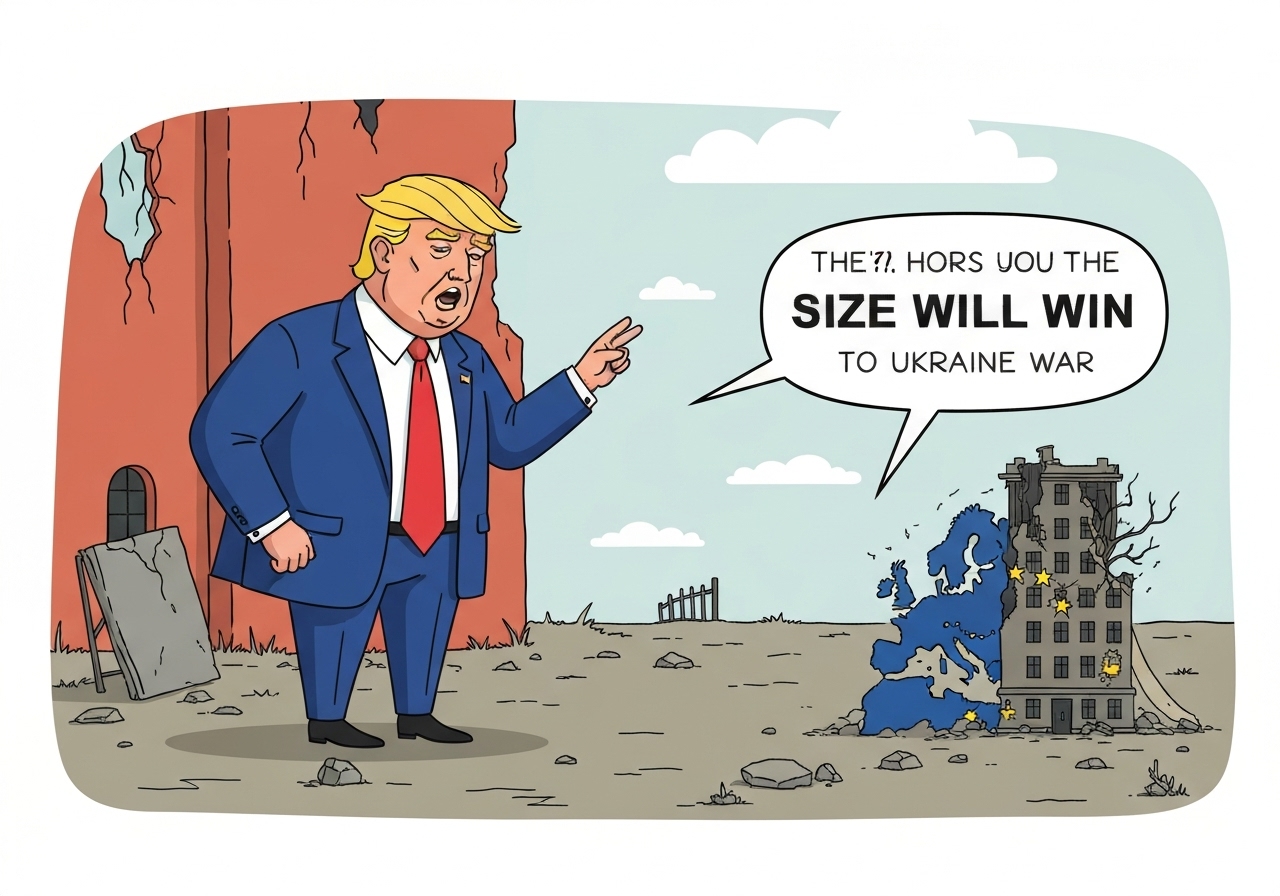
In a Politico interview published on Dec. 9, 2025, President Donald Trump described Europe as “decaying” and argued that larger states would prevail in the conflict over Ukraine, deepening a rift with mainstream European leaders. His remarks came days after a U.S. strategy paper signaled that the United States should not be expected to guarantee the continent’s security, and after a separate U.S. peace plan published last month drew criticism for echoing Kremlin demands. Mr. Trump also pressed President Volodymyr Zelensky of Ukraine to accept elements of a U.S. cease-fire proposal, saying Ukrainian forces were losing and urging Mr. Zelensky to read the plan. European leaders — and Kyiv — responded by reiterating resistance to territorial concessions, widening diplomatic tensions across the Atlantic.
Key takeaways
- President Trump called Europe “decaying” in a Politico interview on Dec. 9, 2025, intensifying tensions with EU and NATO leaders.
- A U.S. strategy document issued days earlier suggested the United States should not be the automatic guarantor of European security.
- Mr. Trump said Ukraine’s army was losing and urged President Zelensky to consider U.S. cease-fire proposals; Zelensky has rejected land-for-peace terms.
- Leaders of Britain, France and Germany met Mr. Zelensky in London on Dec. 8, 2025, to offer backing and discuss alternative cease-fire frameworks.
- The American peace plan published last month includes elements similar to Kremlin demands, prompting alarm in many European capitals.
- Mr. Trump accused Mr. Zelensky of not reading the new U.S. draft, saying “a lot of people are dying” and urging prompt review.
- European officials view the U.S. comments and the strategy document as a potential shift in burden-sharing and deterrence posture.
Background
The remarks come amid growing disagreement between the White House and many European governments over how to end Russia’s full-scale invasion of Ukraine, which began in February 2022. Since then, Western support for Kyiv has included weapons, sanctions on Russia and diplomatic efforts to produce negotiated outcomes. NATO allies have emphasized Ukraine’s right to determine its borders and resisted any formula that would formalize territorial losses.
In late 2025 the U.S. published a strategy paper that, according to multiple accounts, signals a reassessment of America’s role in guaranteeing European security. Separately, a U.S. peace proposal released last month recommended concessions that some analysts and European officials say mirror Kremlin priorities. Those documents and Mr. Trump’s public comments must be read against a year of partisan debate in Washington over foreign commitments, fiscal pressures and differing threat assessments.
Main event
On Dec. 9, 2025, in a long interview with Politico, Mr. Trump described Europe as “decaying” and questioned traditional transatlantic arrangements. He argued that demographic and territorial size matter in conflicts and suggested Ukraine should consider compromises to end the war sooner. The interview included pointed language about allied capacity and willingness to sustain a prolonged confrontation with Russia.
The remarks followed a Dec. 8 meeting in London where the prime ministers and presidents of the United Kingdom, France and Germany met President Zelensky to reaffirm support and explore alternative cease-fire proposals. After that meeting Mr. Zelensky publicly restated Ukraine’s firm opposition to handing over territory to Russia — a central red line for Kyiv and a key disagreement with the U.S. draft plan.
Mr. Trump also told Politico that Mr. Zelensky had not read the latest U.S. draft and that it “would be nice if he would read it,” adding that many people are dying and that urgency should shape Kyiv’s response. The president characterized parts of the American proposal as realistic and hinted that concessions on territory might be necessary to end the fighting.
Analysis & implications
Politically, the interview underscores an intensifying transatlantic divide. European capitals interpret Mr. Trump’s language and the administration’s strategy document as a potential retrenchment of U.S. security guarantees, which could pressure NATO members to re-evaluate defense spending and regional plans. Even if U.S. policy does not formally change, the perception of diminished U.S. commitment can alter alliance behavior and accelerate burden-sharing debates.
For Ukraine, the immediate implication is diplomatic strain: public pressure from a leading external actor to accept compromises undermines Kyiv’s negotiating leverage and domestic political consensus against territorial concessions. If European backers perceive Washington shifting toward accommodation with Moscow, they may be forced into harder choices about military aid and diplomatic coordination.
Strategically, proposals that mirror Kremlin positions risk legitimizing gains Russia seeks to consolidate. That outcome would reshape the security architecture in Europe, potentially prompting new alignments, arms spending increases, and renewed emphasis on hardening defenses in countries bordering Russia. Economic implications include renewed sanctions debates, trade uncertainties, and shifts in energy diplomacy tied to security calculations.
Comparison & data
| Issue | U.S. draft (published) | Kremlin position | Ukraine position |
|---|---|---|---|
| Territorial concessions | Proposals reportedly allow territorial compromises to secure a cease-fire | Seeks recognition of gains and buffer zones | Firm refusal to cede sovereign territory |
| Security guarantees | Suggests alternative security arrangements, less binding U.S. guarantee | Demands recognition and security arrangements favorable to Russia | Seeks NATO-grade protections and restoration of borders |
| International monitoring | Includes multinational mechanisms for cease-fire verification | Prefers limited, Russia-influenced monitoring | Insists on robust, impartial verification |
The table summarizes differences among the three positions. While the U.S. draft aims to offer a diplomatic pathway, critics note overlap with Kremlin objectives on territorial and security questions. Ukraine and many European governments remain aligned on preserving territorial integrity and resisting terms that institutionalize Russian gains.
Reactions & quotes
European officials and analysts quickly reacted, underscoring the diplomatic fallout. Their statements highlight concern about cohesion within NATO and the influence of U.S. rhetoric on Kyiv’s bargaining stance.
“These comments risk eroding trust among allies at a moment when unity matters most,”
Senior EU diplomat (paraphrased)
The EU diplomat’s remark followed discussions in Brussels about deterrence and burden-sharing. European capitals expressed unease that public U.S. pressure on Kyiv could shift the negotiating balance.
“It would be nice if he would read it. A lot of people are dying,”
President Donald Trump (Politico interview)
The president’s line framed his appeal to President Zelensky as urgent and humanitarian while also signaling a willingness to press Kyiv toward compromise. U.S. policymakers are split on how much to press publicly versus behind closed doors.
“Ukraine will not voluntarily hand over territory as the price of silence,”
Ukrainian official (paraphrased)
Kyiv’s officials reiterated that any deal must respect sovereignty and domestic political constraints. Their position has shaped European support and informed alternative cease-fire proposals discussed in London.
Unconfirmed
- Whether President Zelensky has actually read the most recent U.S. draft: Mr. Trump asserted he had not, but Kyiv has not publicly confirmed that claim.
- The precise degree to which elements of the U.S. draft were coordinated with or requested by Moscow remains unclear based on currently available public documents.
- How far the U.S. strategy paper represents a formal policy shift versus rhetorical positioning is still being assessed by allied capitals.
Bottom line
President Trump’s comments on Dec. 9, 2025, and the administration’s recent documents have created a diplomatic ripple that extends from Washington to Kyiv and across European capitals. The immediate practical effect is greater strain on transatlantic coordination at a moment when unified support for Ukraine has been a cornerstone of Western policy since 2022.
Outcomes will depend on follow-up actions: whether Washington clarifies its stance, whether European states intensify coordinated support for Kyiv, and whether Kyiv is willing to consider mediated proposals without accepting territorial loss. For observers, the key indicator to watch is not rhetoric alone but concrete policy moves — aid packages, treaty language, and alliance consultations — over the coming weeks.
Sources
- The New York Times (news report)
- Politico (interview publication)
- The White House (official statements and strategy documents)