
Lead
Philip Rivers, who rejoined the Indianapolis Colts this week after five years away from the NFL, emerged as a possible starter following the Dec. 7 game in which quarterback Daniel Jones suffered a ruptured Achilles in Jacksonville. Rivers watched the injury live and was contacted by Colts head coach Shane Steichen; after consulting family and advisers he agreed to return. The Colts placed Jones on injured reserve and are evaluating backup Riley Leonard, who has a right knee issue but planned to practice Wednesday. The team says a final decision on whether Rivers would start on Sunday depends on how Rivers performs in practice and how Leonard’s knee responds.
Key Takeaways
- Philip Rivers rejoined the Colts this week, five years after retiring following a 17-season NFL career and eight Pro Bowl selections.
- Daniel Jones suffered a ruptured Achilles on Dec. 7 against the Jacksonville Jaguars and was placed on injured reserve this week.
- Riley Leonard, the Colts’ backup, is managing a right knee issue but planned to practice on Wednesday and reported feeling good.
- Coach Shane Steichen, who worked with Rivers in Los Angeles and served as interim offensive coordinator in 2019, reached out to Rivers the day of the injury.
- Rivers is a 2026 Pro Football Hall of Fame semifinalist; rejoining an active roster would restart the five-year waiting clock and push eligibility to 2031.
- Colts’ decision on Sunday’s starter will be determined after end-of-week practices and depends on Rivers’ physical readiness and Leonard’s recovery.
Background
The Colts entered the Dec. 7 game with Daniel Jones as their starting quarterback; Jones’ ruptured Achilles immediately removed him from the roster and forced Indianapolis to reassess depth at the position. Riley Leonard, acquired and developed this season as the primary backup, has been dealing with a right knee issue that limited him after the injury occurred. The Colts’ offensive scheme remains heavily influenced by Shane Steichen’s play-calling and terminology, a continuity that made Rivers a logical short-term target because of their prior work together.
Philip Rivers retired after the 2019 season and has since been involved in coaching at the high school level and training NFL draft prospects, keeping him close to the game. Steichen coached Rivers for six seasons when both were with the Chargers, which means Rivers is familiar with much of the current system and can potentially accelerate the Colts’ midweek preparations. The organization’s move to bring back a veteran passer underscores the limited margin for error late in the NFL regular season when injuries hit a depth chart.
Main Event
Rivers watched Jones’ injury live and was contacted by Steichen later the same day; that conversation opened the door to a potential return. After discussing the opportunity with his wife and family and seeking advice from trusted associates, Rivers called the Colts on Tuesday morning with a positive response. Coaches described Rivers’ arrival as energetic and familiar, with the veteran reengaging in position meetings and practice work on Wednesday.
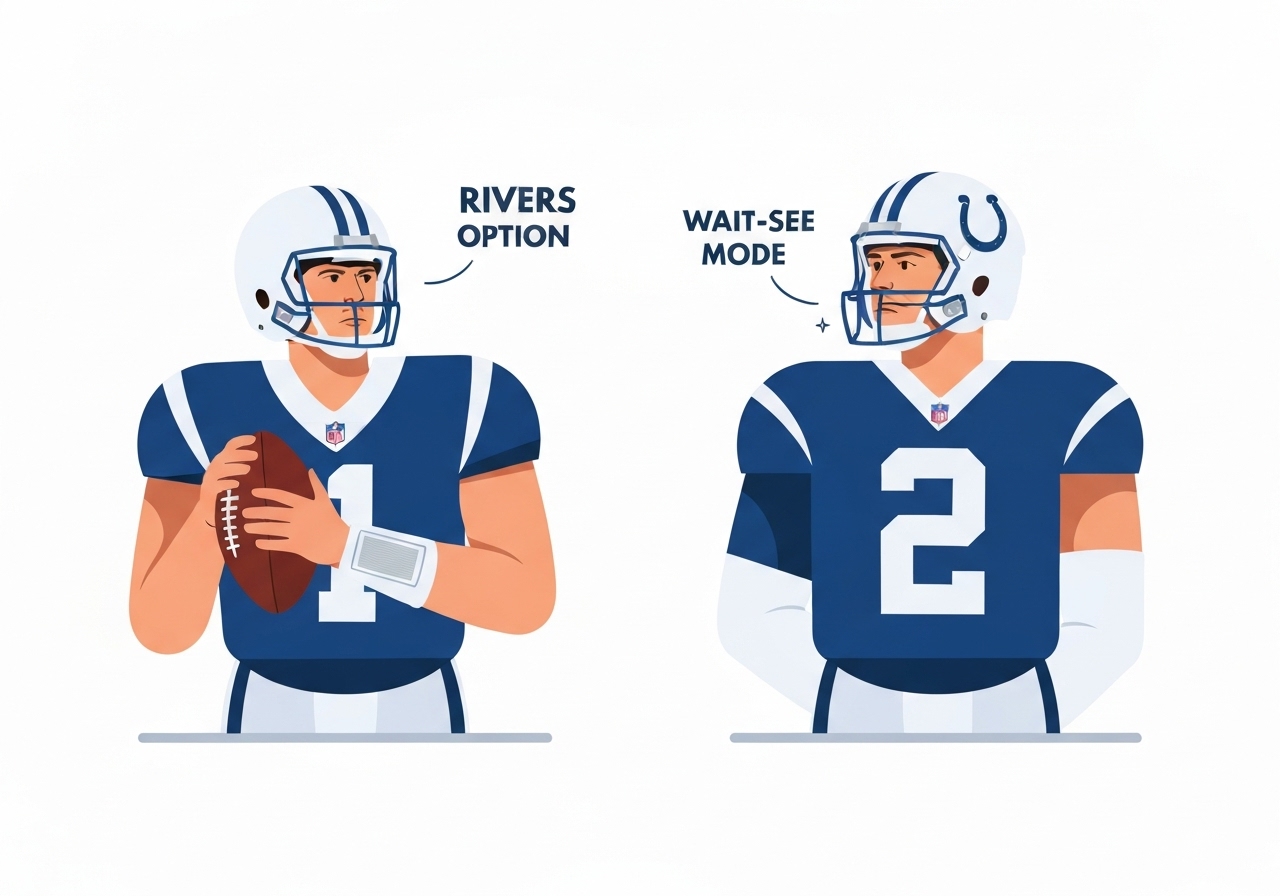
Leonard’s knee issue has improved enough that he intended to practice on Wednesday and reported feeling good, leading the Colts to adopt a wait-and-see posture rather than an abrupt roster move. Steichen emphasized the team will evaluate Rivers and Leonard through the week and make a decision at the end of the practice window: “We’ll see how the week goes,” he said, adding that Rivers’ own assessment of pain and readiness will factor into any starter designation.
Rivers noted that the offensive verbiage and call structure are still highly recognizable to him, an advantage compared with bringing in a quarterback unfamiliar with the system on short notice. He acknowledged the physical hurdles of returning after five years away but said he feels good and is taking preparations one day at a time. The Colts have not announced a formal change to the active roster as of Wednesday.
Analysis & Implications
Short-term, the Colts face a classic roster-management dilemma: trust a recovering young backup who has been playing this season, or prioritize a veteran with immediate system familiarity but who has not played in five years. Rivers’ knowledge of Steichen’s scheme reduces the playbook learning curve and could produce fewer mental errors than a newly signed midweek free agent. That familiarity may be particularly valuable in late-game decision-making and pre-snap checks where chemistry and cadence matter.
From a physical standpoint, Rivers must overcome questions about pocket speed, reactive processing and the conditioning demands of an NFL game at age 42 and after a multi-year absence from competitive play. The Colts medical and coaching staffs will evaluate game-speed reps during the week; if Rivers shows crisp timing, the team may favor the experience he brings. Conversely, committing to Rivers long term could complicate the Colts’ quarterback succession planning, particularly if Riley Leonard demonstrates full recovery and continued development.
There are also roster and career implications beyond Sunday. Rivers is a 2026 Pro Football Hall of Fame semifinalist; signing back on to an active roster would reset his five-year waiting period and delay eligibility until 2031. Rivers said Hall of Fame timing was not a factor in his decision to return, but the outcome will matter to his long-term legacy and could influence public perception if the stint is brief or symbolic. For the Colts, short-term rostering choices may affect draft planning and offseason development priorities if they must reorient around a veteran presence.
Comparison & Data
| Year | Rivers status | Relevant note |
|---|---|---|
| 2019 | Rivers’ last active NFL season | Chargers; Steichen served as interim OC |
| 2020–2024 | Retired; coaching/training | Worked with high school players and prospects |
| Dec. 7, 2025 | Jones ruptured Achilles | Injury vs. Jacksonville Jaguars; Jones placed on IR |
| Dec. 10, 2025 | Rivers rejoined Colts | Evaluated for possible start; Leonard managing knee |
The table highlights the timeline that led to Rivers’ return and situates the decision against the Colts’ immediate roster needs. While past performance and schematic continuity favor Rivers in short-prep scenarios, the physical and roster consequences remain the decisive variables.
Reactions & Quotes
“I saw the injury live,” Rivers said, describing his first reaction to Daniel Jones’ Achilles tear and why he considered stepping in.
Philip Rivers / Quarterback
“I said, ‘What do you think?’ He said, ‘Dadgummit, let’s freaking go,'” Steichen recounted of Rivers’ reply when asked about returning.
Shane Steichen / Colts head coach
“We’ll see how the week goes. We’ll get to the end of the week and make that decision,” Steichen said, stressing that practice evaluation will determine Sunday’s starter.
Shane Steichen / Colts head coach
Unconfirmed
- Whether Rivers will be named the starter on Sunday remains undecided and is contingent on end-of-week practice evaluations.
- Internal medical details about Rivers’ conditioning and long-term durability after a five-year absence have not been publicly released.
- Any roster moves beyond a short-term signing—such as extension plans or guaranteed contract language—have not been confirmed by the team.
Bottom Line
The Colts have taken a pragmatic approach: re-sign a veteran with deep familiarity with the offense while allowing the week’s practice window to determine readiness. Rivers offers a low-risk, potentially high-reward option for a club suddenly short at quarterback, but his age and time away introduce measurable uncertainty about his ability to perform at game speed.
Expect the team to announce a decision after final practice sessions later this week; Colts leadership must weigh immediate competitiveness against the development trajectory of Riley Leonard and the longer-term roster implications. For fans and evaluators, the key metrics to watch will be Rivers’ live practice reps, his mobility under pressure, and Leonard’s response to increased work as he recovers.
Sources
- ESPN (Media report: Stephen Holder — original coverage)