
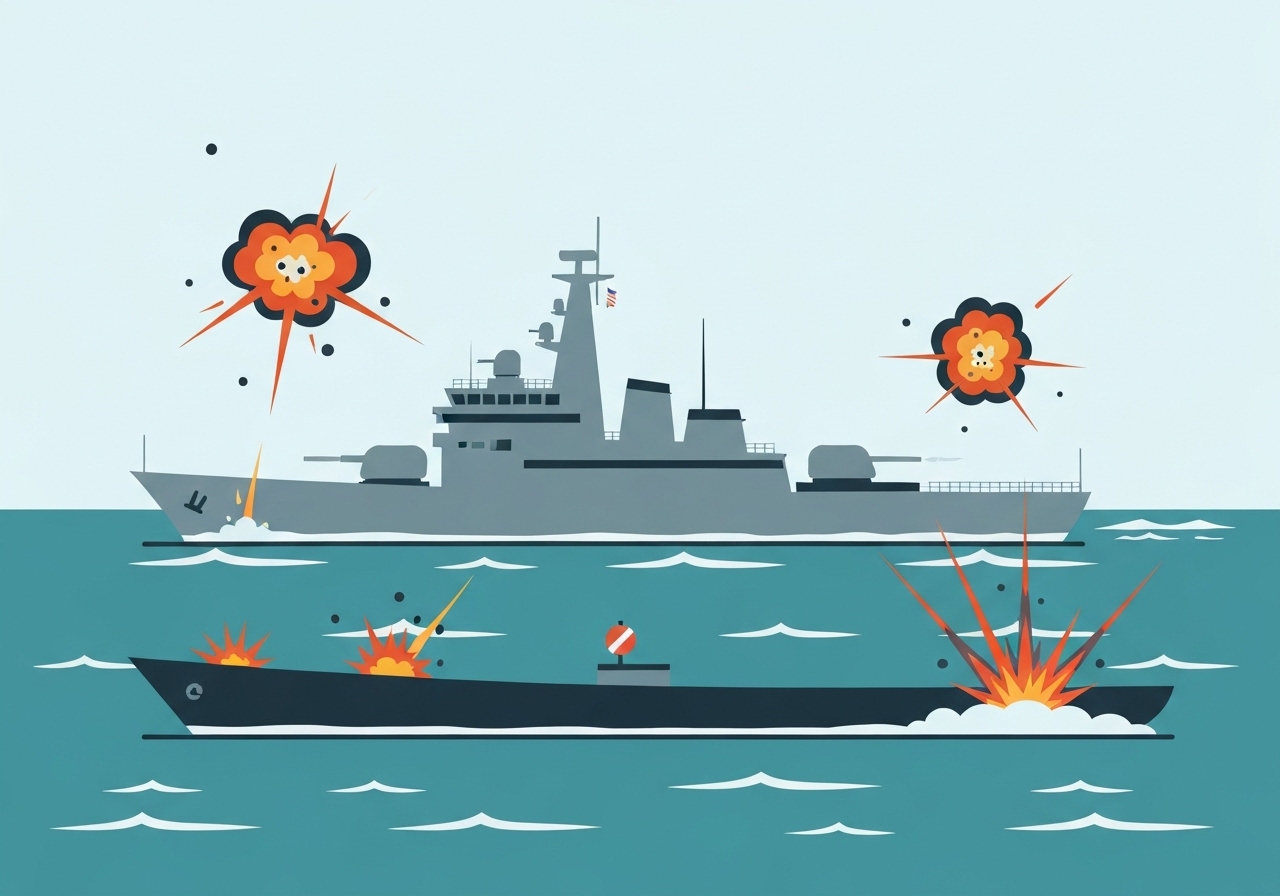
Lead: The US Southern Command said it carried out strikes on three vessels in the Pacific that it accused of drug trafficking, reporting eight people killed. The action, announced on social media within hours of the strikes, forms part of a broader campaign the US links to transnational narcotics networks. Officials said the boats were moving along known trafficking routes; footage released by the command shows the engagements. The strikes follow months of intensified US operations in the Pacific and Caribbean tied to a wider policy aimed at disrupting illicit maritime flows.
Key Takeaways
- The US military says three boats were struck in the Pacific and that eight people were killed in the engagements.
- Southern Command published video of the strikes, asserting the vessels were “transiting along known narco‑trafficking routes.”
- Officials say more than 20 vessels have been targeted across the Pacific and Caribbean in recent months, with at least 90 reported deaths linked to those operations.
- The actions are part of a Trump administration escalation criticizing Venezuela for allegedly facilitating drug flows to the United States.
- Thousands of US troops and the aircraft carrier USS Gerald R. Ford have been positioned within striking distance of Venezuela amid heightened tensions.
- On 10 December, US forces seized an oil tanker off Venezuela, alleging it carried sanctioned oil tied to Iran and illicit networks.
- Some legal experts warn the strikes could raise questions under the laws of armed conflict; regional governments have voiced concern about sovereignty and maritime law.
Background
The strikes come against a backdrop of intensified US pressure on Venezuela and a broader regional effort to disrupt drug trafficking by sea. Washington has repeatedly accused elements linked to Venezuela of facilitating narcotics shipments bound for the United States; Caracas denies those charges and has accused the US of seeking to seize its resources. Over recent months, US military assets — including thousands of troops and the carrier USS Gerald R. Ford — have been deployed closer to Venezuelan waters in what officials describe as deterrent and interdiction postures.
Concurrently, the Trump administration has pursued diplomatic and economic measures to isolate President Nicolás Maduro’s government, while publicly linking drug interdiction to national security. US forces carried out a high‑profile seizure on 10 December of an oil tanker the administration said was moving sanctioned Venezuelan and Iranian oil, a move labeled “international piracy” by Venezuela’s foreign minister. Those developments have sharpened regional tensions and placed maritime interdiction operations under close scrutiny from allies, neighbouring states and legal scholars.
Main Event
According to Southern Command, the three vessels were struck after being identified on routes the military characterises as commonly used by narcotics traffickers. The command released video it said depicted the engagements; it stated the boats were “engaged in narco‑trafficking.” The strikes occurred in the Pacific Ocean, though the command’s public summary did not disclose exact coordinates in its initial post.
US statements said eight people died as a result of the strikes. Southern Command framed the action as an interdiction in support of US counter‑narcotics objectives, and it emphasized efforts to target illicit maritime logistics rather than state vessels. Officials have not, in early statements, provided detailed identification of the vessels’ operators or clear evidence tying the specific boats to a larger organised crime group.
These strikes mirror a pattern in recent months: more than 20 vessels reportedly targeted across the Pacific and Caribbean, with at least 90 fatalities linked to those operations. That tally has prompted both domestic debate in the US and criticism from countries in the region, some of which express alarm at the use of lethal force at sea and potential violations of international law. The US has argued the measures are necessary to disrupt networks that deliver significant quantities of narcotics to American markets.
Analysis & Implications
The operational pattern signals a notable shift toward more assertive maritime interdiction by US forces in international waters. If sustained, this posture could disrupt trafficking routes temporarily, but analysts caution that traffickers frequently adapt by changing routes, modes of shipment, or using smaller, less conspicuous vessels. The net impact on drug availability and cartel revenues depends on follow‑on law enforcement, regional cooperation and demand reduction inside consumer countries.
Legal implications are central to the controversy. Under customary international law and the law of armed conflict, use of lethal force at sea carries strict thresholds — including clear evidence of hostile intent or imminent threat. Several experts cited in media reports have suggested some strikes may test or exceed those thresholds, potentially exposing the US to legal and diplomatic challenges if investigations find violations of maritime or human‑rights norms.
Diplomatically, the strikes risk further straining US relations with Venezuela and could complicate ties with other Latin American governments sensitive to sovereignty and civilian harm. Caracas has framed recent US actions as aggressive and has aggressively defended its territorial rights and resources. For US domestic politics, the campaign aligns with a narrative of taking decisive action against drugs and criminal networks, which has both supporters and critics.
Comparison & Data
| Period/Incident | Region | Vessels Struck | Reported Fatalities |
|---|---|---|---|
| This incident | Pacific Ocean | 3 | 8 |
| Recent months (combined) | Pacific & Caribbean | >20 | ≥90 |
| Notable related action | Off Venezuela (10 Dec) | 1 tanker seized | 0 (seizure reported) |
The table summarizes public figures disclosed by US officials and reported in news coverage: three vessels struck in this reported engagement, contributing to a broader tally exceeding 20 interdictions and roughly 90 deaths in recent months. Those aggregated numbers are drawn from official statements and media aggregation; differences in reporting standards and classification (seizure vs. strike) mean totals should be treated as estimates pending independent verification.
Reactions & Quotes
“These vessels were transiting known narco‑trafficking routes and were engaged in narco‑trafficking,”
US Southern Command (official statement)
Southern Command used its public post to characterise the engagements as interdictions against drug trafficking. The statement accompanied video the command said documented the strikes and framed the actions as part of sustained counter‑narcotics operations.
“This is international piracy,”
Yvan Gil, Venezuelan Foreign Minister
Venezuela’s foreign minister responded to recent US seizures and operations by denouncing them as unlawful and politically motivated. Caracas has linked these maritime actions to a broader US campaign it says targets Venezuelan sovereignty and resources.
“Strikes of this type raise serious questions under international law and require transparent investigation,”
International legal expert (academic)
Legal scholars consulted in public reporting have said that lethal force at sea must meet stringent legal standards; they have urged independent review of incidents to establish facts about targets, warnings given, and proportionality.
Unconfirmed
- Whether the struck vessels were definitively transporting narcotics at the moment of engagement has not been independently verified.
- Specific identities, nationalities or affiliations of the people killed have not been publicly confirmed by independent authorities.
- Precise locations and chain of custody for any seized contraband or material evidence have not been released for external review.
Bottom Line
The US military says the strikes eliminated three vessels it believes were part of narcotics networks, resulting in eight deaths, and released video to support its account. These actions form part of a markedly more aggressive US posture at sea that aims to interdict maritime drug flows but also raises legal and diplomatic questions. Transparency about evidence, independent investigation into incidents and regional diplomatic engagement will shape whether the short‑term tactical effects translate into sustainable disruption of trafficking networks.
Observers should watch for follow‑up reporting on forensic evidence from the strikes, statements from coastal and flag states, and any formal inquiries by international bodies. How the administration balances interdiction, legal constraints and regional diplomacy will determine both the immediate effectiveness of these operations and their longer‑term consequences for US relations in Latin America.