
Lead
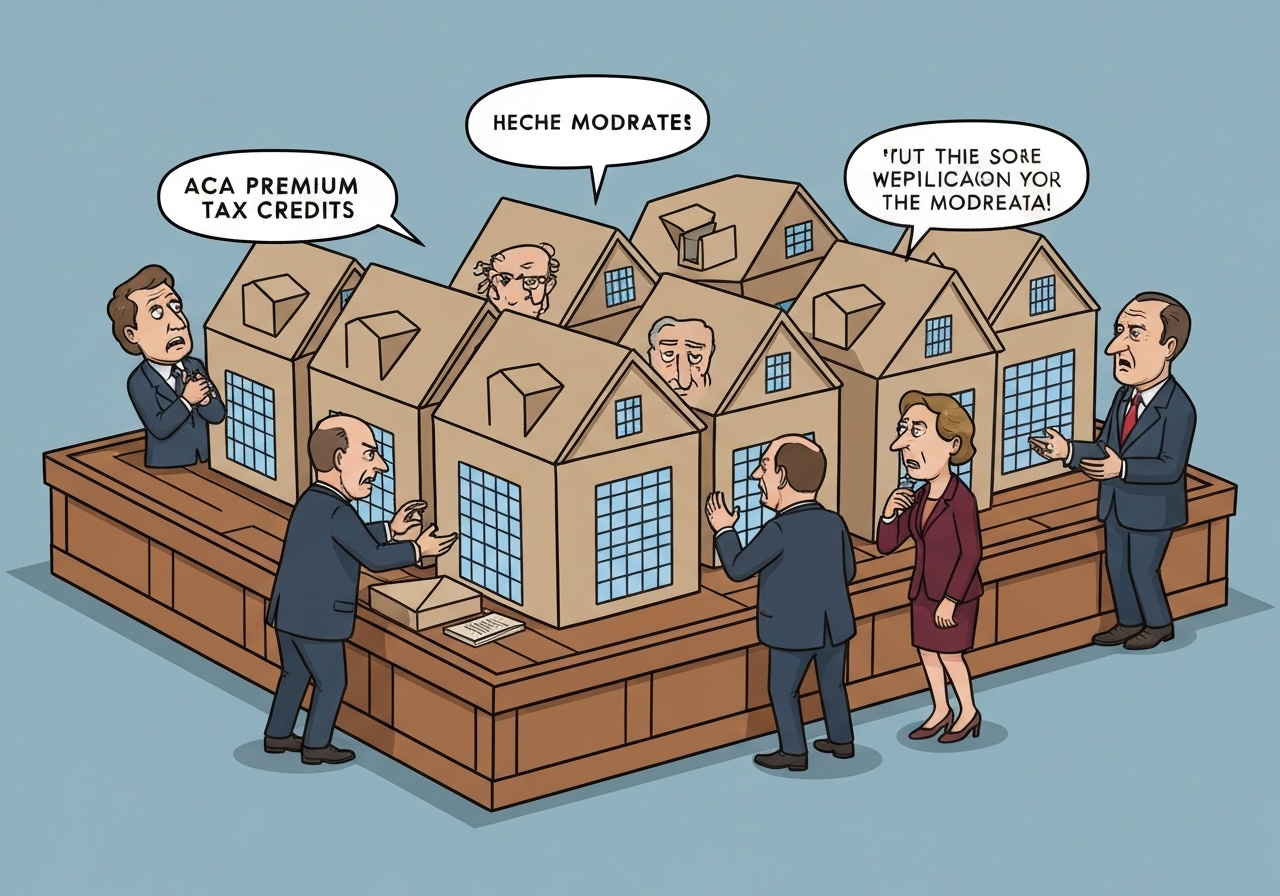
Washington — On Dec. 16, 2025, House GOP leaders advanced a party health-care package to the floor but declined to allow a vote this week on extending enhanced Affordable Care Act premium tax credits that expire Dec. 31. Moderate Republicans pushed late Tuesday for amendments to preserve subsidies for more than 20 million Americans who buy coverage on ACA marketplaces, but the House Rules Committee blocked several of those changes. With the bill expected on the floor Wednesday, moderates warned the decision risks sudden premium increases and political fallout for Republicans.
Key Takeaways
- The enhanced ACA premium tax credits lapse on Dec. 31, 2025; more than 20 million marketplace enrollees could face higher premiums in January.
- The House Rules Committee blocked several amendment requests from moderate Republicans on Dec. 16, 2025, and advanced a GOP health-care bill without an extension.
- House leadership moved the GOP plan to the floor late Tuesday; a floor vote was expected Wednesday, Dec. 17, 2025.
- Moderates say bipartisan discharge petitions could force votes—but a petition requires 218 signatures and a seven-legislative-day wait to reach the floor.
- House Minority Leader Hakeem Jeffries urged Republicans to back a Democratic discharge petition that would extend credits for three years; it needs four GOP votes to succeed.
- Several Republicans, including Rep. Kevin Kiley and Rep. Brian Fitzpatrick, signaled discomfort with offering no extension at all.
Background
The premium tax credits at issue are the enhanced subsidies that were expanded in 2021 as a temporary measure to lower premiums for people who buy insurance on Affordable Care Act marketplaces. Those enhancements are scheduled to expire Dec. 31, 2025, returning subsidy rules and cost-sharing to pre-expansion levels for many enrollees. Congressional disagreement over whether to extend the subsidies — and for how long or with what reforms — has persisted for months, making the end-of-year calendar a focal point for last-minute maneuvering.
Republican leadership released a party health-care package last week that does not include an extension of the enhanced tax credits, prompting a cohort of GOP moderates to seek amendments they argued would prevent sharp premium increases. Democrats have pushed for a multi-year extension without changes, while some Republicans want reforms or shorter extensions. The House calendar, procedural requirements such as the discharge petition waiting period, and the chamber’s final session days this year have narrowed lawmakers’ options.
Main Event
On Dec. 16, the House Rules Committee met to consider amendments to the GOP package; moderates had been working to attach one- or two-year extension language with reforms. Committee members ultimately voted to block several of those amendment requests, leading moderates to accuse leadership of shutting down debate. The committee then advanced the underlying bill to the floor late Tuesday evening.
Speaker Mike Johnson told reporters Tuesday morning that leadership had searched for a way to relieve pressure on the issue but that a path had not materialized. After a tense conference meeting with moderates, Johnson acknowledged there were ‘‘ideas on the table’’ that could be explored but did not offer a commitment to allow amendment votes this week.
“We looked for a way to try to allow for that pressure-release valve, and it just was not to be,”
Speaker Mike Johnson
Republican moderates reacted with visible anger and frustration. Rep. Mike Lawler of New York told reporters he was furious for constituents who could face higher premiums and called the decision a major misstep. Rep. Kevin Kiley said the hastily assembled GOP package was unlikely to become law and did not solve the immediate problem facing roughly 22 million people, a figure mentioned by lawmakers as the upper estimate of marketplace enrollees who benefit from the enhanced credits.
“I am pissed for the American people. This is absolute bulls–t,”
Rep. Mike Lawler (R–NY)
Rep. Brian Fitzpatrick of Pennsylvania warned during the Rules Committee meeting that failing to extend the credits at all could be worse than an imperfect extension. Meanwhile, House Democrats signaled they could pursue discharge petitions to force votes, and Minority Leader Hakeem Jeffries urged Republicans to provide the votes to pass a three-year Democratic extension without reforms.
Analysis & Implications
Politically, the choice to block amendment votes places GOP leaders between competing pressures: satisfying conservative priorities on limiting spending and reforms versus mitigating voter pain from potential premium spikes. Moderates argue the latter risk will have immediate electoral consequences in districts where constituents rely on marketplace subsidies. If premiums rise significantly in January, Democrats are likely to use that outcome as a campaign issue in 2026.
Legislatively, the practical routes to an extension are constrained. A bipartisan discharge petition to force a vote needs 218 signatures and then seven legislative days before it can be called up, a timeframe that is short given the House’s limited remaining calendar this year. A Democratic-backed discharge petition for a three-year extension would need four Republican votes to succeed; at least one GOP member has not ruled out supporting such an effort, but no definitive cross-party coalition has formed.
Economically, restoring subsidies to pre-expansion levels could raise premiums for many marketplace enrollees, particularly those in lower- and middle-income brackets who benefited most from the enhanced credits. Exact premium changes will vary by state, plan, and individual income, but insurers and consumer groups have warned of material cost increases if subsidies are not extended. That outcome would increase pressure on members of Congress to find a post-holiday legislative fix.
Comparison & Data
| Item | Now | If enhancements lapse |
|---|---|---|
| Effective deadline | Dec. 31, 2025 | Jan. 1, 2026 |
| People potentially affected | 20+ million marketplace enrollees | 20+ million marketplace enrollees |
| Legislative path | Committee advance; no amendment votes | Bipartisan or Democratic discharge petition; 7-legislative-day wait |
The table above summarizes the immediate timeline and procedural constraints. While the headcount of affected enrollees is commonly reported as more than 20 million, actual exposure to premium increases depends on state-by-state plan offerings and whether insurers adjust rates for 2026 before January. Policymakers and analysts will watch insurer filings and state regulators in coming weeks for early signals of rate shifts.
Reactions & Quotes
Party leaders and rank-and-file members offered sharply different takes on the committee decision. Before the Rules Committee vote, Speaker Johnson characterized the situation as constrained by competing options and available procedural choices, framing the issue as unresolved rather than abandoned.
“There’s some ideas on the table that could work,”
Speaker Mike Johnson
Moderates expressed blunt frustration about the political and material consequences for constituents. Rep. Mike Lawler used stark language after a GOP conference meeting to underscore his anger about what he called a failure to act before the deadline.
“This is a tremendous mistake not to address the expiring tax credits,”
Rep. Mike Lawler (R–NY)
Rep. Brian Fitzpatrick pressed for a pragmatic approach, arguing an imperfect extension could be preferable to letting subsidies lapse entirely. Minority Leader Hakeem Jeffries urged cross-party cooperation to protect enrollees ahead of the January deadline.
Unconfirmed
- Specific legislative text of any “ideas on the table” Johnson referenced has not been released and its details remain unverified.
- It is not yet confirmed whether a bipartisan discharge petition will reach the 218-signature threshold in time to avert premium changes on Jan. 1, 2026.
- Individual Republican commitments to support a Democratic three-year extension remain fluid; public declarations are limited and some lawmakers have only said they are considering options.
Bottom Line
The House’s refusal this week to permit votes on extending enhanced ACA premium tax credits leaves a significant policy and political question unresolved as the Dec. 31 deadline approaches. More than 20 million marketplace enrollees face the prospect of higher premiums in January unless Congress acts or insurers and states take mitigating steps.
Procedural hurdles — including the discharge petition waiting period and the chamber’s limited remaining session days — narrow near-term options. Expect intense end-of-year negotiations and possible last-minute maneuvers; for now, the most immediate consequence is uncertainty for consumers and a new point of contention within the Republican caucus.
Sources
- CBS News (news media)
- House Rules Committee (official committee site)
- Congress.gov — Discharge Petition Procedure (official congressional resource)