
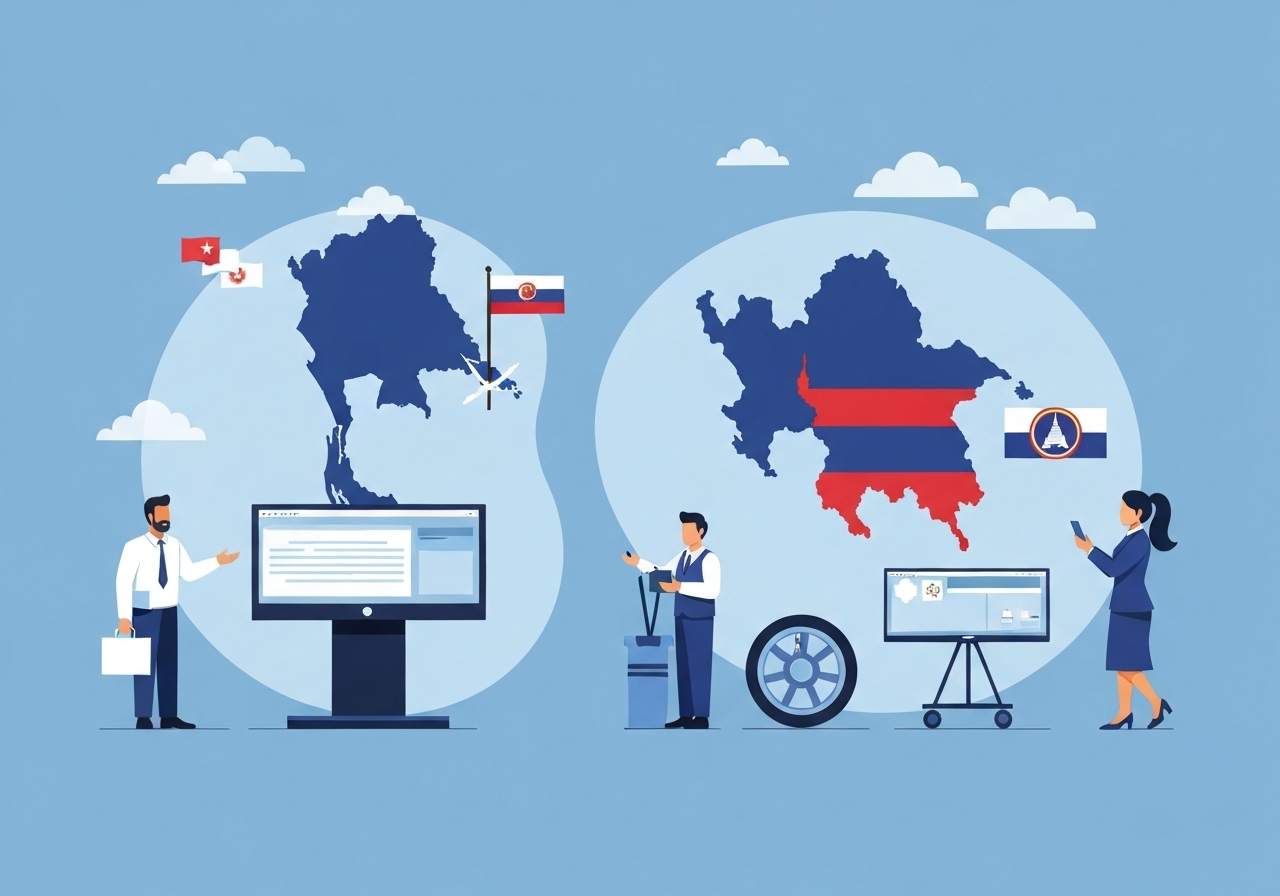
Lead: Senior diplomats from Southeast Asia convene in Kuala Lumpur on Monday aiming to halt renewed deadly border clashes between Thailand and Cambodia. The fighting, which resumed on 8 December, has killed at least 41 people and displaced close to one million residents near the 800km (500-mile) frontier. The meeting seeks to rebuild a ceasefire first brokered in July when Malaysia chaired Asean and US President Donald Trump helped mediate. Both capitals have accused the other of initiating the latest hostilities, and mediators hope talks will secure a durable halt to the violence.
Key Takeaways
- At least 41 people have been reported killed in the latest rounds of clashes along the Thailand–Cambodia border.
- Close to one million people have been displaced from communities near the roughly 800km (500-mile) shared border.
- Diplomats meet in Kuala Lumpur on Monday to seek revival of a July ceasefire brokered when Malaysia chaired Asean and with involvement from US President Donald Trump.
- This is the first formal meeting between Thai and Cambodian officials since fighting resumed on 8 December.
- Both sides have blamed each other for igniting the fresh exchanges of artillery and, in Thailand’s case, reported air strikes targeting positions across the border.
- Malaysia’s Prime Minister Anwar Ibrahim described himself as “cautiously optimistic” about the meeting’s prospects for progress.
- The United States and China have both engaged diplomatically: US Secretary of State Marco Rubio signalled hope of a ceasefire by Monday or Tuesday, and China reiterated a constructive mediating role via envoy Deng Xijun.
Background
The Thailand–Cambodia border dispute has deep historical roots tied to colonial-era boundary demarcations after the French occupation of Cambodia, a process that left some lines contested for more than a century. Periodic armed incidents and localised flare-ups have occurred repeatedly, typically around strategically and symbolically sensitive sites. ASEAN, led by Malaysia as chair earlier in the year, brokered a ceasefire in July in talks that involved high-level international engagement, including US participation.
Push-and-pull dynamics among regional powers have shaped mediation efforts: member states of Asean traditionally prefer quiet diplomacy and consensus-based solutions, while external actors like the US and China have each offered support for de-escalation—sometimes with different emphases. Local populations along the frontier have seen repeated disruption to livelihoods and access to services; humanitarian agencies report mass displacement when artillery and aircraft strike populated areas. The renewed violence beginning 8 December marked a sharp escalation that prompted the current diplomatic push.
Main Event
Diplomatic delegations arrived in Kuala Lumpur for talks scheduled on Monday, where the stated goal is to reinstate and strengthen the July ceasefire accord. Malaysian Prime Minister Anwar Ibrahim — who presided over the July signing — has publicly urged the parties to secure peace and presented facts to frame negotiations. Both Thailand and Cambodia have framed the meeting as a crucial opportunity, but each has emphasised preconditions: Thailand has demanded a Cambodian declaration of ceasefire and a “genuine and sustained” cessation of hostilities.
Since 8 December, exchanges of artillery along stretches of the 800km border intensified, and Thailand has reported air strikes aimed at Cambodian positions. Both governments have issued statements blaming the other for initiating attacks, producing a contested narrative on battlefield responsibility. Humanitarian organisations on the ground describe chaotic population movements, with close to one million people displaced from frontier communities and local services overwhelmed in several provinces.
International actors have supplemented Asean’s mediation. Washington has engaged via high-level phone diplomacy, with US Secretary of State Marco Rubio urging rapid progress toward a renewed ceasefire. Beijing sent its special envoy for Asian affairs, Deng Xijun, to Phnom Penh and issued a statement that China would continue to play a constructive role in facilitating dialogue between the two capitals. The multiplicity of mediators increases diplomatic options but also complicates alignment on terms acceptable to both sides.
Analysis & Implications
The immediate priority is humanitarian: halting fire to allow relief convoys and restore basic services for nearly a million displaced people. If the Kuala Lumpur meeting can yield a clear, verifiable ceasefire mechanism with international monitoring or third-party guarantees, it could create breathing space for civilians and relieve pressure on hospitals and shelters. However, without robust implementation measures, past ceasefires have proved fragile and subject to rapid collapse.
Politically, a durable de-escalation would strengthen Asean’s diplomatic credentials and Malaysia’s role as chair that brokered the July accord. Conversely, failure could expose limits of regional mechanisms and invite deeper external involvement from major powers seeking influence. That could shift the dispute from a bilateral border incident to a broader geopolitical contest over influence in mainland Southeast Asia.
Economically, prolonged instability along such an extensive border threatens cross-border trade, agricultural seasons, and investor confidence in bordering provinces. Displacement on the scale reported will magnify fiscal and social burdens on local administrations and national budgets, with longer-term reconstruction costs if infrastructure and livelihoods are damaged. The risk of incidents spreading or drawing in irregular forces could complicate pacification and recovery efforts.
Comparison & Data
| Metric | Recent figure | Context |
|---|---|---|
| Reported deaths | At least 41 | Clashes since fighting resumed on 8 December |
| Displaced persons | Close to 1,000,000 | Civilian evacuations from frontier districts |
| Border length affected | Approximately 800 km (500 miles) | Multiple flashpoints along the shared frontier |
The table summarises verified figures cited by officials and reporting to date. These numbers indicate both the human cost and the geographic scale of the crisis; the breadth of the affected border complicates monitoring and humanitarian access. Historical ceasefires negotiated in July provide a reference point, but past agreements have not always stopped intermittent exchanges of fire.
Reactions & Quotes
Officials and analysts offered measured responses as the meeting convened. Each quote below is presented with brief context.
“I am cautiously optimistic” about the prospects for progress in Kuala Lumpur.
Anwar Ibrahim, Malaysian Prime Minister (statement at press briefing)
Anwar framed Malaysia’s role as facilitator and urged both sides to prioritise peace and civilian protection.
“We hope a new ceasefire can be reached by Monday or Tuesday.”
Marco Rubio, US Secretary of State (phone call with Thai counterpart)
Rubio signalled US engagement and a tight diplomatic timeline, encouraging rapid progress toward a new truce.
“China will continue to play a constructive role in facilitating dialogue between Cambodia and Thailand.”
Beijing statement following envoy Deng Xijun’s visit to Phnom Penh
China positioned itself as a supportive mediator, reiterating calls for dialogue and regional stability.
Unconfirmed
- Specific battlefield responsibility for every reported artillery strike is disputed; independent verification remains limited in some frontline sectors.
- Claims of air strikes by Thailand on identified Cambodian military positions have been reported by both sides; full documentary evidence has not been independently published.
Bottom Line
The Kuala Lumpur meeting presents the clearest immediate opportunity to halt an escalation that has already killed dozens and displaced nearly a million people. Past ceasefires show that agreements alone are insufficient; durable cessation will require verifiable mechanisms, humanitarian access and follow-up monitoring. Regional credibility for Asean and the humanitarian toll on border communities both hinge on whether negotiators convert intent into enforceable steps on the ground.
If mediators secure a ceasefire with clear verification and obligations, short-term relief and a pathway to longer negotiations become feasible. If talks stall or produce only vague commitments, the risk is renewed fighting, deeper displacement and a widening diplomatic footprint from external powers. Observers should watch for the meeting’s language on monitoring, timelines for troop de-escalation, and immediate steps for humanitarian relief.