
Lead
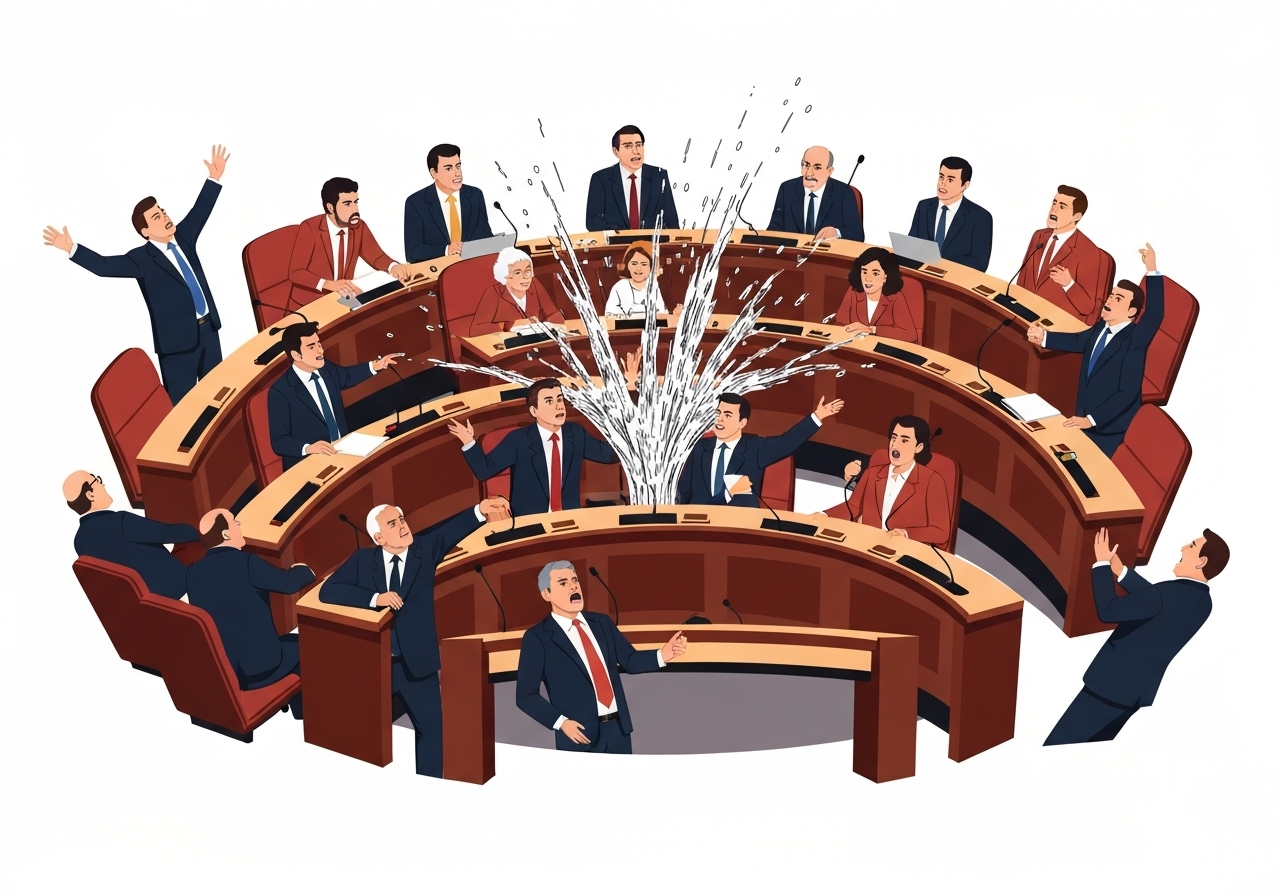
Brazil’s lower house of Congress descended into disorder on Tuesday as conservative deputies pushed a bill that would sharply reduce the prison term of former president Jair Bolsonaro. Police removed a left-wing lawmaker who tried to disrupt the session and footage showed scuffles as security restored order. The move follows Bolsonaro beginning a 27-year jail term in November after Supreme Court rulings linked him to a plot around the 2022 election. The proposed law would shorten sentences for coup-related offences and could free dozens detained after the January 2023 attacks on government buildings.
Key takeaways
- Congress session turned chaotic on Tuesday amid debate over a bill to cut Bolsonaro’s sentence; police forcibly removed lawmaker Glauber Braga during the clash.
- Bolsonaro began serving a 27-year sentence in November after convictions tied to a coup plot and an alleged awareness of a murder plot against Luiz Inácio Lula da Silva.
- The draft legislation would overhaul punishments for elected officials and, according to one sponsor quoted to AFP, could reduce Bolsonaro’s term to about 2 years and 4 months.
- Bill also aims to reduce penalties or free dozens convicted for storming public buildings in Brasília in January 2023; many of those detained remain in custody or under legal restrictions.
- Reporters were removed and the parliamentary TV feed was cut during the disturbance, a step journalists’ groups called censorship.
- Bolsonaro’s lawyers filed a court request asking permission for him to leave prison for surgery and renewed a plea to transfer him to house arrest on health grounds; he was in intensive care earlier this year after intestinal surgery.
- The proposal must clear the legislature’s second chamber to become law; as of late Tuesday it had not been approved.
Background
After losing the 2022 presidential election to Luiz Inácio Lula da Silva, Jair Bolsonaro was investigated by Brazil’s Supreme Court. In September judges convicted him of attempting to involve military leaders in a plan to subvert the electoral result; the court also cited evidence he knew of a plan to assassinate his rival. Bolsonaro began serving a 27-year sentence in November, a length set by the court after those findings.
The January 8, 2023 assaults on the Supreme Court, Congress and presidential palace by Bolsonaro supporters marked the most violent episode in a broader political crisis. Authorities detained thousands in the aftermath and prosecuted a mix of organizers, participants and a number of former officials, including senior military figures and former ministers. The prosecutions remain deeply polarising: Bolsonaro’s backers describe them as political persecution, while opponents frame them as accountability for an attack on democracy.
Main event
On Tuesday, conservative deputies advanced a package of measures that would change penalties for crimes linked to attempts to obstruct democratic transition and reduce disciplinary sanctions in the chamber. Debate grew heated as opponents argued the measures amount to an amnesty for those involved in the post-election violence. During debate, leftist lawmaker Glauber Braga briefly occupied the Speaker’s chair to protest what he called a “coup offensive,” prompting police to remove him amid a scuffle.
Video from the chamber showed physical confrontations and parliamentary aides trying to separate lawmakers while security forces escorted Braga away. The official broadcast of the session was suspended and journalists covering the debate were ordered out of the chamber; a collective of press organisations later condemned the removals as censorship. Lawmakers proposing the bill said the changes rectify excessive penalties for political actors and restore proportionality for elected officials.
Separately, court filings reveal Bolsonaro’s legal team requested permission for him to exit prison for medical treatment, repeating an appeal to allow him to serve his sentence under house arrest on health grounds. Supporters cite his prior surgery this year and a 2018 stabbing as medical justification; prosecutors and some judges have so far resisted transfer on public-security and legal-consistency grounds.
Analysis & implications
If the bill clears both houses and is signed into law, it would reshape criminal exposure for officeholders and set a powerful precedent for how Brazil handles crimes tied to anti-democratic actions. A reduction from a multi-decade term to a few years — the 2-years-4-months figure cited by one sponsor — would dramatically change accountability calculations and likely provoke mass protests from opponents of Bolsonaro and his allies.
Politically, the proposal exposes splits in Brazil’s legislature: Bolsonaro’s Liberal Party remains the largest single party and conservative blocs hold significant sway, while leftist and centrist groupings oppose legal changes they view as retroactive mercy. The legislative push illustrates how parliamentary majorities can attempt to rewrite consequences for political actors, even after judicial convictions.
Internationally, a successful sentence reduction or effective amnesty could damage Brazil’s democratic reputation and raise questions among investors and diplomatic partners about rule-of-law stability. Conversely, a failed attempt or large-scale public backlash could reinforce judicial independence but deepen social polarization, risking renewed street mobilizations from both sides.
Comparison & data
| Item | Original/Current | Proposed |
|---|---|---|
| Bolsonaro prison term | 27 years (began November) | ~2 years 4 months (sponsor estimate) |
| Key event | Jan 8, 2023 attacks — thousands detained | Dozens to be freed or receive reduced sentences (bill text) |
The table summarizes the most consequential numerical change at stake: the court-imposed 27-year sentence versus the figure cited by a legislative sponsor. The bill’s language would also reclassify certain offences tied to officials’ conduct, producing a cascade of sentence adjustments for multiple defendants. Exact totals of prisoners who would be affected depend on the final text and the interpretation by judges and prison authorities.
Reactions & quotes
Official reactions split along political lines. Supporters in Congress framed the package as necessary legal reform, while critics called it an attempt to subvert judicial outcomes. Below are representative remarks and their contexts.
“This is a protest against a coup offensive in the chamber,”
Glauber Braga, leftist lawmaker (action occupying Speaker’s chair)
Braga said he acted to symbolically block what he described as an attempt to overturn democratic accountability. His removal by police and the subsequent suspension of the broadcast became focal points for press-freedom complaints.
“The proposal restores proportionality for officeholders and corrects excesses,”
Lawmaker sponsoring the draft (quoted to AFP)
The sponsor argued the changes would align sanctions for elected officials with other legal standards; the same lawmaker told AFP the bill would reduce Bolsonaro’s term to about 2 years 4 months. Opponents say the measure is effectively a targeted rollback of convictions.
“Removing reporters from the chamber is censorship and undermines transparency,”
Group representing journalists (statement)
Press organisations condemned the decision to clear the gallery and end live coverage during the disruption, calling for restored access and accountability for measures that limit reporting.
Unconfirmed
- The precise number of detainees who would be released or have sentences reduced under the draft law remains unclear and depends on final text and judicial interpretation.
- Reports that the bill has secured a guaranteed majority in the Senate are unconfirmed; as of late Tuesday the measure had not cleared the second chamber.
Bottom line
The episode in Congress on Tuesday crystallises a broader institutional struggle in Brazil: whether legislative majorities can rewrite penalties in ways that affect the legal fate of prominent political actors. The proposed rollback of sentences would be sweeping and could alter accountability for the January 2023 attacks and related convictions, but passage is not guaranteed and would almost certainly trigger legal challenges.
For citizens and international observers, the next steps—Senate debate, possible presidential action, and inevitable court scrutiny—will determine whether this is a successful legislative strategy or a catalyst for intensified protest and judicial intervention. The case underscores how fragile democratic norms can become when political actors seek retroactive relief from criminal liability.