
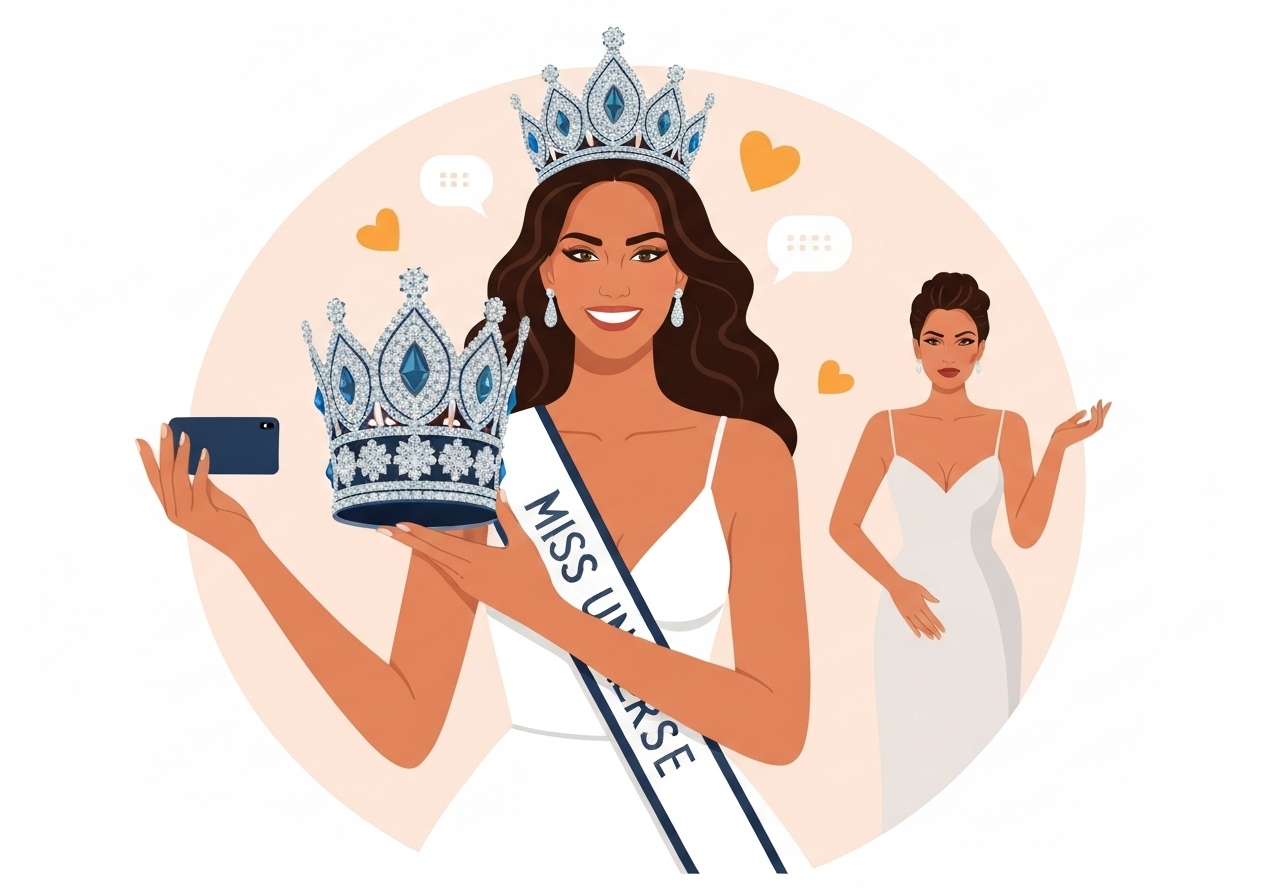
Fátima Bosch Fernández of Mexico was crowned Miss Universe 2025 in Bangkok after a pageant weekend marked by public confrontation and controversy. The 25-year-old won the 74th Miss Universe competition on Friday, finishing ahead of Thailand’s Praveenar Singh (first runner-up) and Venezuela’s Stephany Adriana Abasali Nasser (third). The event drew attention not only for the winner but for a widely seen episode in which Thai national director Nawat Itsaragrisil rebuked Bosch at a Nov. 4 sashing ceremony, prompting a walkout and solidarity from other contestants. Organizers later issued apologies while questions linger about judging, sponsorship and the pageant’s management.
Key Takeaways
- Fátima Bosch Fernández, 25, was crowned Miss Universe 2025 at the pageant’s 74th staging in Bangkok, which featured 130 contestants.
- First runner-up was 29‑year‑old Praveenar Singh of Thailand; third place went to 25‑year‑old Stephany Adriana Abasali Nasser of Venezuela.
- The controversy began at a livestreamed sashing ceremony on Nov. 4 when national director Nawat Itsaragrisil publicly scolded Bosch and called security as she spoke up.
- Several contestants, including Miss Universe 2024 Victoria Kjær Theilvig of Denmark, joined Bosch in leaving the room in a show of solidarity.
- Miss Universe Organization president Raúl Rocha Cantú condemned the director’s conduct as “public aggression” and “serious abuse.”
- Mexican President Claudia Sheinbaum publicly praised Bosch’s response as an example of women raising their voices for dignity and rights.
- Separate developments: two judges reportedly resigned alleging irregularities (an allegation denied) and Thai police probed alleged illegal online-casino promotion tied to event publicity.
- The weekend also included lighter mishaps: Miss Universe Jamaica Gabrielle Henry fell during the evening gown segment but was not seriously injured.
Background
The Miss Universe pageant, now in its 74th edition, remains one of the globe’s most watched beauty competitions and routinely draws international attention for both winners and controversies. National directors play prominent roles in local promotion and contestant management; friction between contestants and national organizers can quickly become a public issue because of heavy media coverage and livestreamed events. Pageants have faced heightened scrutiny in recent years over sponsorship sources, judging transparency and the role of national organizers, making disputes potentially damaging to the brand.
Past editions have produced controversies that sparked debate beyond the stage: the 2021 contest drew criticism over its host country, and individual missteps—falls, wardrobe malfunctions or on‑stage remarks—often become viral moments. Organizers must balance commercial partners, local promoters and international standards, a complex mix that can amplify any internal conflict. In this context, the Nov. 4 sashing ceremony confrontation escalated from a personnel dispute into a matter of public reputation and governance for the Miss Universe organization.
Main Event
The climax of the weekend was the crowning of Bosch in Bangkok, where the final show proceeded amid strained backstage relations. Judges narrowed the field and ultimately awarded the title to Bosch, with Praveenar Singh of Thailand and Stephany Nasser of Venezuela taking the next two spots. Bosch’s ascent to the crown followed the earlier confrontation at a sashing ceremony, when the national director criticized her adherence to local promotional guidelines.
At that Nov. 4 ceremony, Bosch objected to being publicly chastised and attempted to defend herself; the director called security, which triggered visible unrest among contestants. Bosch left the room and was followed by several peers in a visible act of support, including the outgoing Miss Universe 2024. The walkout quickly circulated on social media and set the tone for public reaction in the days before the final event.
After the incident drew criticism domestically and internationally, Nawat Itsaragrisil issued an apology in front of contestants, at times appearing tearful and at other times defensive. The Miss Universe Organization’s president Raúl Rocha Cantú issued a public statement denouncing the conduct as “public aggression” and “serious abuse.” Organizers also faced separate allegations that two judges resigned over perceived improprieties, an assertion that the organization has disputed.
Analysis & Implications
The episode underscores persistent governance challenges in large international cultural events where local promoters wield significant influence. When a national director publicly rebukes a contestant, it raises questions about chain of command, acceptable conduct, and the protections afforded to participants. The Miss Universe Organization’s public condemnation signals an attempt to assert centralized standards, but reputational damage can linger if stakeholders view the response as reactive rather than structural.
Politically, the confrontation attracted attention beyond entertainment circles. Mexico’s president, Claudia Sheinbaum, praised Bosch for speaking out, framing the moment as part of a broader conversation about women’s dignity and participation. That national‑level endorsement elevates the incident from an internal pageant dispute to a cultural touchpoint about gender, respect and public conduct.
Commercially, sponsors and broadcasters monitor controversies closely because sustained negative attention can affect viewership and brand partnerships. The separate police inquiry into alleged illegal online‑casino promotion adds another layer of risk: regulatory scrutiny in the host country could prompt contractual reviews and deter future sponsors. To repair trust, the organization may need clearer rules for national directors, stronger protections for contestants, and greater transparency around judging and sponsorship agreements.
Comparison & Data
| Placement | Contestant | Age | Country |
|---|---|---|---|
| Winner | Fátima Bosch Fernández | 25 | Mexico |
| 1st Runner-up | Praveenar Singh | 29 | Thailand |
| 3rd Place | Stephany Adriana Abasali Nasser | 25 | Venezuela |
| 4th Place | Ahtisa Manalo | 28 | Philippines |
| 5th Place | Olivia Yacé | 27 | Ivory Coast |
The table above summarizes the top five finishers and their ages. The 2025 edition featured 130 contestants and was staged as the 74th Miss Universe competition; those figures are consistent with the organization’s published participant count for the event. Compared with some prior controversies—such as the 2021 venue selection dispute—the 2025 fallout centered more on interpersonal conduct and governance than geopolitical objections. Still, the combination of public rebuke, a walkout, judging resignations reports and a police probe makes this edition notable for both symbolic and operational reasons.
Reactions & Quotes
Contestant and public responses crystallized quickly after the sashing ceremony incident, fueling media coverage and political commentary. Journalists sought direct remarks from Bosch and officials; the exchange became a focal point for discussions about contestant treatment and director authority.
“What your director did is not respectful: he called me dumb. If it takes away your dignity, you need to go.”
Fátima Bosch Fernández
Bosch’s short, forceful remark to reporters was widely shared and framed by commentators as a defense of personal dignity. Her statement drew explicit praise from political leaders in Mexico and spurred international discussion about the rights and agency of pageant participants.
Organizers and officials also issued statements intended to contain the damage and clarify positions. The Miss Universe Organization’s leadership publicly criticized the director’s behavior and emphasized respect for contestants as a core value of the franchise.
“If anyone was affected and not comfortable it happened, I am so sorry. It’s passed. OK? Are you happy?”
Nawat Itsaragrisil
Nawat’s apology combined contrition with a tone that some observers found defensive; that mixture shaped perceptions of the sincerity and adequacy of his response. Separately, Miss Universe Organization president Raúl Rocha Cantú characterized the conduct as unacceptable and called for higher standards of treatment for contestants.
Unconfirmed
- Reports that two judges resigned alleging rigging have been circulated; the organization has denied the characterizations and independent confirmation is limited.
- The precise connection between the alleged unlawful online‑casino promotion and the organizers’ internal dispute has not been conclusively established by authorities.
- Some accounts of the sashing‑ceremony security response differ in detail; exact timing and actions by individuals beyond primary participants remain unclear.
Bottom Line
Fátima Bosch’s victory is a clear competitive outcome: she earned the Miss Universe 2025 title in Bangkok and will carry the crown through the coming year. Yet the week’s most enduring story may not be the judging result but the public confrontation that highlighted tensions among contestants, local organizers and international officials. The swift political support Bosch received in Mexico and the Miss Universe Organization’s public condemnation of the director underscore how such incidents can quickly move from entertainment news into broader cultural and governance debates.
Looking ahead, the organization faces choices about governance, contestant protections and sponsor relations to prevent similar episodes. Observers will watch whether the Miss Universe Organization implements formal measures—clearer codes of conduct for national directors, enhanced contestant support protocols and greater transparency around judging and sponsorship—to rebuild trust among contestants, partners and global audiences.
Sources
- Associated Press (news report covering the crowning, the sashing ceremony incident, political responses and related investigations)
- Miss Universe Organization (official site for the pageant and organizational statements)