
Lead
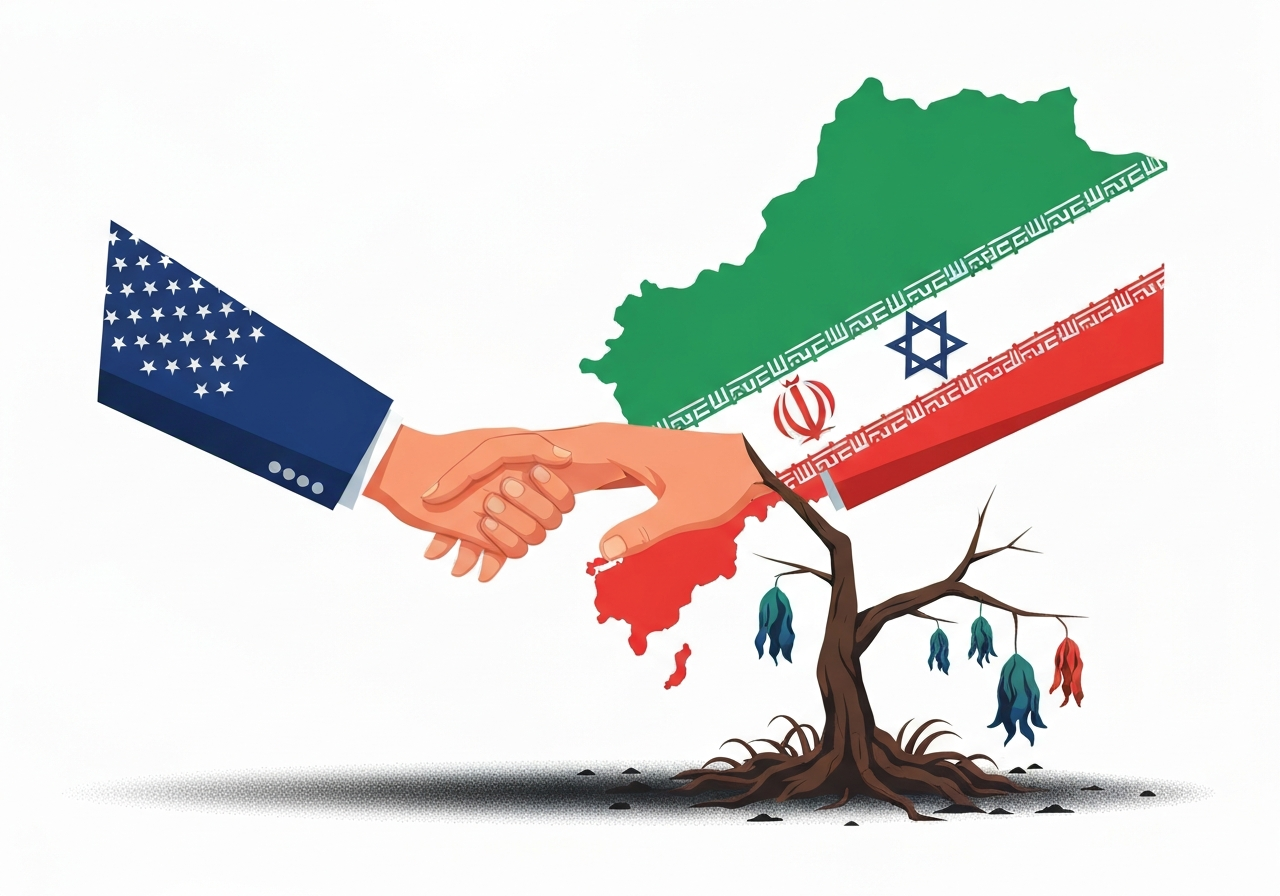
In Dubai on June 16, 2026, Iran’s foreign minister said the tentative U.S.-Iran agreement to end a monthslong war would require Israel to withdraw from territory it occupies in southern Lebanon, a condition Israel has rejected and that could unravel the accord. The deal, negotiated between Washington and Tehran with mediators from Pakistan and Qatar, is not public and has prompted conflicting official descriptions. Israeli leaders have said they will remain in Lebanon “as long as necessary,” while U.S. officials say the draft pact does not demand an Israeli pullback. The disagreement raises the prospect that an uneasy ceasefire could collapse and fighting resume across the region.
Key Takeaways
- The U.S.-Iran interim agreement is scheduled for a signing ceremony Friday at the Bürgenstock resort near Luzern, Switzerland, according to Switzerland’s foreign ministry.
- Iranian Foreign Minister Abbas Araghchi said on June 16 that the truce requires Israeli withdrawal from territories it occupied during the war; Israeli leaders reject that condition.
- Israeli operations in Lebanon since late February have killed nearly 4,000 people and displaced more than 1 million, according to reporting in this episode of the conflict.
- The pact reportedly calls for immediate reopening of the Strait of Hormuz and lifting of a U.S. naval blockade of Iranian ports, tied to reciprocal steps by Tehran.
- The agreement envisions 60 days of follow-on negotiations on Iran’s nuclear program and contemplates a possible release of frozen Iranian assets and a $300 billion reconstruction fund if benchmarks are met.
- U.S. and Pakistani officials describe the deal as an interim truce; key details — including who verifies nuclear steps or handles highly enriched uranium — remain unspecified.
Background
The current confrontation began to escalate publicly after strikes on Iran and counterstrikes across the region, with the United States and Israel conducting military operations that expanded the war in several theaters. Israel joined U.S. strikes on Iran on Feb. 28 and then intensified operations against Iran-backed Hezbollah in Lebanon, moving forces into southern Lebanon and striking targets in Beirut and beyond. Those operations have produced significant civilian harm and widespread displacement in Lebanon while aiming to degrade Hezbollah’s strike capabilities.
Repeated ceasefires and mediated pauses have failed to produce a durable end to hostilities. Negotiators from Pakistan and Qatar, working with U.S. and Iranian teams, have sought an interim framework to halt active fighting, reopen strategic waterways and buy time for substantive talks on nuclear issues and sanctions relief. The fragile history of these pauses, and divergent objectives among parties, has complicated efforts to transform a ceasefire into a stable political settlement.
Main Event
On June 16, Iranian Foreign Minister Abbas Araghchi publicly stated that the draft agreement terminating active hostilities would be void if Israeli forces remained in territories they occupied during the war. Araghchi framed withdrawal as a condition for the war to be considered ended, placing Israel at the center of the pact even though it is not a signatory. Tehran’s position reflects its long-standing insistence that Lebanese frontlines be addressed as part of any regional settlement.
A senior U.S. official who discussed the draft on condition of anonymity said the U.S.-Iran text does not require an Israeli withdrawal. Israeli Prime Minister Benjamin Netanyahu has said his forces will remain in Lebanon “as long as necessary,” signaling a firm position that clashes with Iran’s public demand. Israeli diplomats have privately and publicly expressed frustration at not having seen the memorandum of understanding before its announcement.
Mediators set a public signing at the Bürgenstock resort near Luzern, with Pakistan and Qatar cited by Swiss officials as recommending the venue. According to several regional officials speaking on background, Iran pushed in late-stage discussions for explicit inclusion of Lebanon in the interim accords, a move that regional actors say changed the calculus for Israel and its U.S. allies.
Analysis & Implications
If the Araghchi claim reflects the written terms, Israeli refusal to withdraw would present a clear implementation problem that could cause the ceasefire to collapse. Israel faces a dilemma: maintain its expanded posture in Lebanon to constrain Hezbollah or accept limitations to secure a broader truce supported by its principal ally, the United States. That tension may force difficult U.S.-Israeli diplomatic management in the days after the signing.
The agreement’s economic and strategic provisions — reopening the Strait of Hormuz, lifting a naval blockade, and freeing frozen Iranian assets contingent on compliance — could deliver immediate relief to global energy markets and lower some wartime supply disruptions. But those benefits hinge on precise sequencing, independent verification and credible enforcement mechanisms, areas where the announced framework is vague.
On the nuclear front, the 60-day window for negotiating Iran’s nuclear commitments raises thorny verification questions. U.S. and regional officials have not identified who would inspect or secure highly enriched uranium thought to remain at damaged nuclear sites, nor how Iran’s consent to dilute or remove material would be guaranteed amid internal political opposition in Tehran.
Politically, sending the deal to U.S. Congress or seeking congressional review, as President Trump has indicated willingness to do, could politicize implementation and create additional hurdles. Gulf states’ pledges of reconstruction funds and the proposed $300 billion mechanism depend on political confidence that benchmarks will be met — a confidence that may be undermined if the Israel-Lebanon issue is unresolved.
Comparison & Data
| Item | Reported figure | Context |
|---|---|---|
| Lebanon fatalities | ~4,000 | Deaths attributed to Israeli strikes in Lebanon during the campaign |
| Displaced people | >1,000,000 | Civilians displaced inside Lebanon amid ground and air operations |
| Post-signing negotiation period | 60 days | Period for U.S. and Iran to negotiate nuclear program details |
| Proposed reconstruction fund | $300 billion | Conditional, tied to Tehran meeting benchmarks |
The table places immediate humanitarian costs alongside diplomatic timelines and financial proposals tied to the interim accord. While casualty and displacement figures underscore the human stakes on the ground, the 60-day window and large financial proposals emphasize the deal’s dual military-diplomatic and economic dimensions. Implementation will depend on sequencing: security steps, maritime access, and financial flows are interdependent.
Reactions & Quotes
Iran framed withdrawal as essential to concluding hostilities, a stance that forced mediators and third parties to confront whether a U.S.-Iran pact can bind or influence Israeli military decisions.
“Without the withdrawal of Israeli forces from the territories they occupied during this war, the war has not fully come to an end.”
Abbas Araghchi, Iranian foreign minister (statement)
The U.S. position, as described by anonymous officials, diverges publicly from Iran’s reading, and the administration has signaled a desire for the deal to proceed while leaving some implementation questions open.
“I like the idea, send it to Congress please.”
President Donald Trump (remarks at G7, paraphrased)
Israeli leaders have insisted on maintaining forces in Lebanon to contain Hezbollah, underscoring a core practical objection to any deal that would mandate a withdrawal.
“Israel will remain in Lebanon as long as necessary.”
Prime Minister Benjamin Netanyahu (public statement)
Unconfirmed
- Whether the finalized, written memorandum of understanding explicitly requires a comprehensive Israeli withdrawal from nearly all occupied Lebanese territory — this has not been published.
- Whether Tehran has agreed in practice to dilute or remove highly enriched uranium; public references to such steps remain politically contentious and unverified.
- The precise triggers, amounts and control mechanisms for the reported $300 billion reconstruction fund and any immediate release of frozen Iranian assets remain unconfirmed.
- Which international body, if any, would be authorized to verify Iran’s compliance with nuclear or withdrawal-related benchmarks has not been publicly identified.
Bottom Line
The pact represents a diplomatic opening that could end active hostilities and restore key trade and energy flows — but its viability depends on resolving a single, explosive point: Israel’s role in Lebanon. If Israel refuses to accede to withdrawal language and Iran insists on it as a condition of cessation, the interim agreement may fail at first implementation, risking renewed regional combat.
For the deal to hold, mediators and the United States must bridge the gap between Israel’s security demands and Iran’s insistence on territorial withdrawal. Absent clear verification, sequencing and buy-in from local actors on the Lebanese front, the arrangement may provide only a temporary respite.
Sources
- Associated Press — news reporting on negotiations and statements (press)
- NPR — interview coverage with Israeli ambassador (media)
- Swiss Federal Department of Foreign Affairs — announcement on signing location (official)