
Lead
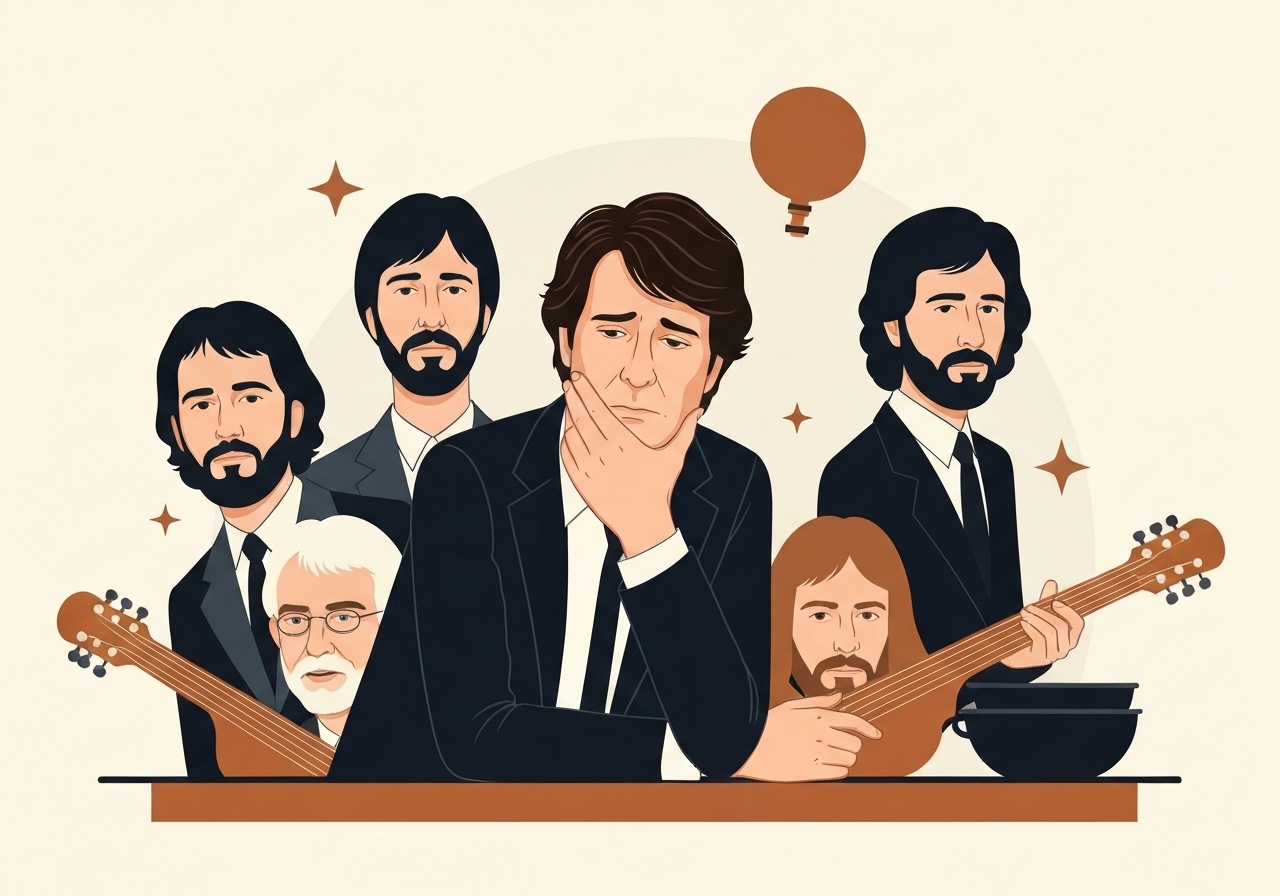
Justin Hayward, co-lead singer of the Moody Blues, is now the only surviving member of the group inducted into the Rock & Roll Hall of Fame at Cleveland Public Hall in April 2018. In a Zoom interview from his home in a small village near the French side of the Italian border, Hayward described how a rapid succession of losses — including Graeme Edge (2021), Denny Laine (2023), and Mike Pinder (2024), plus the more distant deaths of Clint Warwick (2004), Ray Thomas (weeks before the 2018 induction) and mid‑1960s bassist Rod Clark (this past March) — has left him as the last of the principal Moodies from that induction night. The Moody Blues have not performed together since late 2018, and Hayward and John Lodge had maintained the music separately until Lodge’s sudden death in October. Hayward says he will continue touring and recording on his own terms to preserve the songs and the sensibility he helped create.
Key Takeaways
- The Moody Blues were inducted into the Rock & Roll Hall of Fame in April 2018 at Cleveland Public Hall; Justin Hayward accepted the honor with fellow inductees including Graeme Edge, Mike Pinder, John Lodge and Denny Laine.
- Several former members have died in a short span: Graeme Edge in 2021, Denny Laine in 2023, Mike Pinder in 2024; John Lodge died in October (as reported in the interview); earlier losses include Clint Warwick (2004), Ray Thomas (shortly before the 2018 induction) and Rod Clark (this past March).
- The band has been inactive since a string of West Coast concerts in late 2018, with Hayward and Lodge keeping the music alive separately through solo touring until Lodge’s October death.
- Hayward conducts solo shows worldwide, keeps his arrangements close to the original demos and click‑clock timing he used in the studio, and is working on new studio projects while continuing to tour.
- Patrick Moraz remains a disputed claimant to later‑era membership; his 1992 wrongful‑termination suit was not accepted for Hall of Fame recognition.
Background
The Moody Blues emerged from a 1960s London scene transformed by the Beatles and other contemporaries; Hayward joined the group in 1966 as a young songwriter, at a moment when the band had only one hit to its name. That personnel change preceded the band’s creative pivot toward orchestral textures and concept albums, most notably Days of Future Passed, whose orchestral ambitions were enabled by studio opportunities and instruments like the Mellotron.
Across the 1970s and into later decades the Moodies moved between studio innovation and louder live presentations, producing commercial peaks — including the 1972 momentum around Seventh Sojourn and the 1986 mainstream resurgence tied to Long Distance Voyager — while also negotiating lineup changes, technology shifts and evolving audience tastes. The group’s internal dynamics were shaped by different priorities: some members favored studio craftsmanship while others embraced louder touring formats.
Main Event
In the interview Hayward described the emotional and practical aftermath of losing multiple bandmates in quick succession. He framed the deaths less as an intimate family bereavement than as the closing of professional chapters: despite decades of shared creative work, the members were not constantly in each other’s daily lives. Hayward emphasized gratitude for the music they made together, and for an onstage proficiency they maintained even when personal interactions were intermittent.
Hayward recounted the practical history that helped form the band’s sound, including the Mellotron’s decisive role in making his songs work and turning a struggling R&B‑oriented act into the orchestral‑rock template that defined early Moody Blues records. He recalled early humiliation on tour, a turning point in the van on the road, and the chance purchase of a Mellotron for about 20–25 pounds that opened new arranging possibilities.
The conversation also covered later phases: the band’s five‑year hiatus after Seventh Sojourn, the legal conflict with Patrick Moraz that reached a courtroom and public attention in the 1990s, and the commercial rebirth in the mid‑1980s that brought the band to MTV and a new generation of listeners. Hayward said he and John Lodge kept performing the Moodies’ songs in separate solo ensembles after the group’s last collective shows in 2018.
Analysis & Implications
Symbolically, Hayward’s status as the last surviving principal inductee from the 2018 Hall of Fame ceremony turns the Moody Blues’ legacy into a stewarded rather than a living, touring catalogue. When a band’s creative authorship becomes concentrated in one surviving member, control over repertoire decisions, estate administration and licensing tends to centralize, which affects reissues, estates’ negotiations and how the catalogue is curated for future listeners.
Artistically, the Moodies’ blend of pop songwriting and orchestral texture — and the Mellotron’s early adoption — mark them as an important transitional act between 1960s pop and later progressive and symphonic rock. Hayward’s insistence on staying true to demo‑based arrangements and time‑code practices underlines why the band’s recorded sound continues to be referenced by musicians and producers exploring orchestral integration in rock.
Commercially, the group’s cessation of full‑band touring after 2018 removes a potential revenue stream that many legacy acts exploit through farewell tours, anniversary residencies or orchestral collaborations. Hayward’s solo touring and studio projects will therefore play an outsize role in keeping the catalog visible and financially viable for rights holders and heirs.
Comparison & Data
| Year | Member | Role | Status (as cited) |
|---|---|---|---|
| 1966 | Justin Hayward | Co‑lead singer, songwriter | Living; touring solo |
| 2004 | Clint Warwick | Original bassist | Died 2004 |
| 2018 (weeks before April) | Ray Thomas | Flute, vocals | Died weeks before induction |
| 2021 | Graeme Edge | Drums | Died 2021 |
| 2023 | Denny Laine | Original frontman | Died 2023 |
| 2024 | Mike Pinder | Keyboardist | Died 2024 |
| This past March | Rod Clark | Mid‑Sixties bassist | Died this past March |
| October (reported) | John Lodge | Bassist‑singer | Died in October (reported) |
The table above compiles the chronological losses noted in the interview and highlights how, within roughly two decades, most core contributors from the band’s classic and early lineups have passed. That concentration of deaths, especially concentrated after 2018, changes the band’s living network for touring, interview access and firsthand historical testimony.
Reactions & Quotes
Contemporary responses to the run of losses have been both personal and institutional: fans mourned on social channels, and music commentators framed the moment as a closing chapter for a distinct strand of British orchestral rock. In the interview Hayward summarized the Hall of Fame night with a short self‑effacing line that became emblematic of the band’s humility:
“We’re just a bunch of British guys”
Justin Hayward, interview
On the Mellotron’s impact, Hayward recalled the instrument’s low‑budget purchase and outsized creative return:
“We bought it for about 20 or 25 pounds — and it changed everything for our songs.”
Justin Hayward, interview
Industry observers have noted that when one surviving principal artist remains, curatorial decisions about reissues, archival releases, and licensing often rest with that person or the estates — a practical reality with both cultural and economic consequences.
Unconfirmed
- Future plans for a formal Moody Blues farewell tour remain unannounced; Hayward has expressed no concrete, publicly confirmed plan for such an event.
- Precise details of catalog administration and how royalties or licensing will be handled following the recent deaths have not been publicly disclosed.
- The current contact or relationship status between Justin Hayward and Patrick Moraz following the 1992 litigation is not fully detailed in public records beyond the lawsuit outcome mentioned.
Bottom Line
Justin Hayward now occupies a unique position as the surviving principal voice of a band that helped forge a bridge between 1960s pop songwriting and orchestral rock. The cluster of deaths following the 2018 Hall of Fame induction converts the Moody Blues’ story from a living, collaborative narrative into one increasingly mediated by recordings, interviews and the stewardship choices Hayward and estates make.
For listeners and historians, the immediate consequence is a narrowing of primary witnesses but an opportunity for careful curation: reissues, documentaries and authorized histories can preserve nuance if handled with fidelity to the record and with respect for competing legacies. Hayward’s continued solo work and selective archival projects will likely determine how the Moody Blues’ body of work is presented to new audiences in the years ahead.