
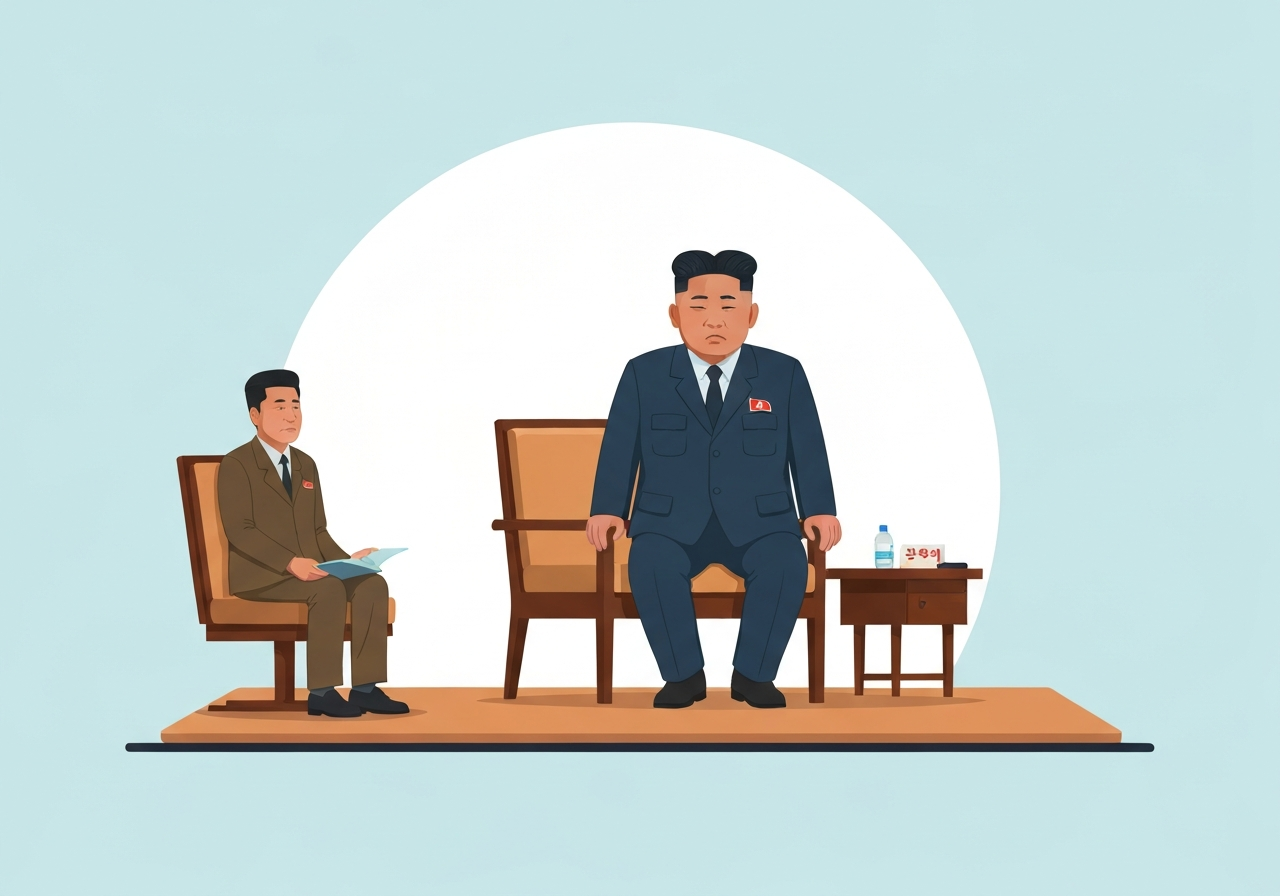
Lead: North Korea’s ruling Workers’ Party has formally re-appointed Kim Jong Un as its general secretary at a rare party congress that opened on 19 February in Pyongyang. State media reported the decision on the fourth day of the meeting attended by about 5,000 party members. In his opening remarks, Kim pledged to raise living standards and accelerate economic work while underscoring the centrality of the country’s nuclear forces. The congress also showcased a major reshuffle of the party presidium and renewed public speculation about succession within the Kim family.
Key Takeaways
- Kim Jong Un was confirmed as general secretary by the party congress on the fourth day of meetings that began on 19 February.
- State-run KCNA said North Korea has “radically improved” its war deterrence, with nuclear forces as a pivot, reflecting continued weapons development despite sanctions.
- About 5,000 party delegates reportedly attended the congress, providing one of the rare public windows into elite politics in Pyongyang.
- The presidium (executive committee) of the congress, which has 39 members, saw more than half its membership replaced according to state media.
- Kim framed boosting the economy and raising people’s living standards as “heavy and urgent historic tasks” in his opening speech.
- Before the congress convened, North Korea displayed what it said were new nuclear-capable rocket launchers, signalling a possible next phase in its weapons programme.
- South Korea’s intelligence service has said Kim has selected his daughter, Kim Ju Ae, as his heir; she is believed to be about 13 years old and has appeared increasingly at official events.
Background
The Workers’ Party congress is the highest political gathering in the Democratic People’s Republic of Korea and has been held roughly once every five years in the past decade. These congresses are tightly staged events that serve both as policymaking moments and as choreographed displays of regime continuity. Since Kim Jong Un assumed power in 2011 after the death of his father, Kim has consolidated authority through party, military and security appointments and by prioritising nuclear and missile development alongside selective economic programs.
International sanctions imposed over Pyongyang’s weapons tests have constrained conventional trade and finance, but they have not halted the state’s weapons development program. The regime’s opacity makes independent assessments of technical progress difficult; open-source analysts often rely on satellite imagery, defector testimony and state media proclamations to infer developments. Domestically, the leadership faces the twin tasks of maintaining elite cohesion and addressing chronic economic shortfalls, which the regime frames as national security priorities.
Main Event
The congress opened on 19 February and, according to state media, continued into a fourth day when Kim’s re-appointment was announced. Delegates—reported as about 5,000—participated in sessions that included presentations on economic policy, defence posture and personnel decisions. State outlets emphasised achievements in strengthening “war deterrence” and highlighted recent displays of military hardware, including systems described as nuclear-capable rocket launchers.
In his opening remarks, Kim stressed economic revival and improving citizens’ standards of living, calling those aims “heavy and urgent historic tasks.” At the same time, official reports framed the nuclear forces as the cornerstone of national defence, reflecting a dual emphasis on domestic welfare and strategic deterrence. The presidium was reshuffled, with state media saying more than half of its 39 members were replaced—an indicator of personnel consolidation and changing power dynamics within the elite.
The congress format allows the regime to set priorities and sequence policy announcements; analysts expect Kim to use the forum to outline the next phase of the weapons programme while balancing domestic economic pledges. The event also intensified attention on Kim’s family: earlier this month Seoul’s intelligence agency reported that Kim had designated his daughter, Kim Ju Ae, as his successor, and her growing public visibility has fuelled succession debate.
Analysis & Implications
Domestically, the congress serves to reaffirm Kim’s control over both party structures and policy direction. The large-scale reshuffle of the presidium suggests a consolidation of loyalists and a management of rival networks inside the party. By linking economic improvement with strengthened defence, the leadership is signalling that resource allocation will remain subordinated to perceived national security imperatives.
Regionally, reinforced emphasis on nuclear forces complicates diplomacy. North Korea’s continued testing and displays of new launchers increase pressure on neighbours and the United States to recalibrate deterrence and defence postures. The opacity around actual warhead and delivery-system capabilities means neighbouring states must plan for a range of technical outcomes, from incremental improvements to substantive leaps in reach and survivability.
Internationally, the re-appointment and attendant military messaging reduce incentives for rapid diplomatic rapprochement absent reciprocal concessions. Sanctions regimes and punitive measures have had limited success in changing Pyongyang’s strategic calculus; the congress messaging suggests the regime remains committed to expanding its strategic arsenal while using economic promises domestically to maintain legitimacy.
Comparison & Data
| Item | Detail |
|---|---|
| Congress start date | 19 February |
| Reported delegates | About 5,000 (state media) |
| Presidium size | 39 members; >50% replaced (state media) |
The table summarizes the verifiable numeric claims released by state outlets. Because independent verification inside North Korea is limited, international analysts treat these figures as useful but not exhaustive indicators of elite mobilisation and institutional change.
Reactions & Quotes
“Under the leadership of Kim Jong Un the DPRK has radically improved its war deterrence, with the nuclear forces as its pivot.”
KCNA (state media)
KCNA’s phrasing reiterates the regime’s central narrative that nuclear capability underpins national security. The wording is intended for both domestic audiences and external observers, underscoring deterrence as a priority.
“Boosting the economy and raising the people’s living standards are heavy and urgent historic tasks.”
Kim Jong Un (opening speech)
Kim’s framing links socio-economic goals to regime survival. Observers note that such language often precedes tightly controlled, centrally directed economic initiatives rather than market-led reforms.
“Seoul’s intelligence assessment that Kim Ju Ae is being groomed as a successor has intensified regional attention to succession dynamics.”
South Korean intelligence agency (reported)
Seoul’s public statements about succession are politically sensitive and shape allied policymaking, even as many operational details about leadership plans remain opaque.
Unconfirmed
- Precise technical advances in nuclear warhead design and deployment remain unconfirmed by independent analysts because of limited access to on-the-ground data.
- The exact number and roles of new presidium appointees have been partially reported by state media but lack external verification about their influence and portfolios.
- Reports that Kim Ju Ae has been formally designated heir come from South Korean intelligence briefings and are not independently confirmed by North Korean official documents.
Bottom Line
The congress has cemented Kim Jong Un’s position atop the party and signalled continuity in Pyongyang’s strategic priorities: a mix of domestic economic promises and continued emphasis on nuclear deterrence. Personnel changes at the presidium indicate internal adjustments that consolidate leadership control and prepare for policy execution.
For regional actors and global policymakers, the event reinforces the need to plan for a North Korea that is both politically stable under Kim and technically persistent in pursuing advanced weapons capabilities. With public succession signals and renewed military displays, the coming months are likely to see heightened diplomatic monitoring and recalibration of defence and non-proliferation strategies.