
Lead
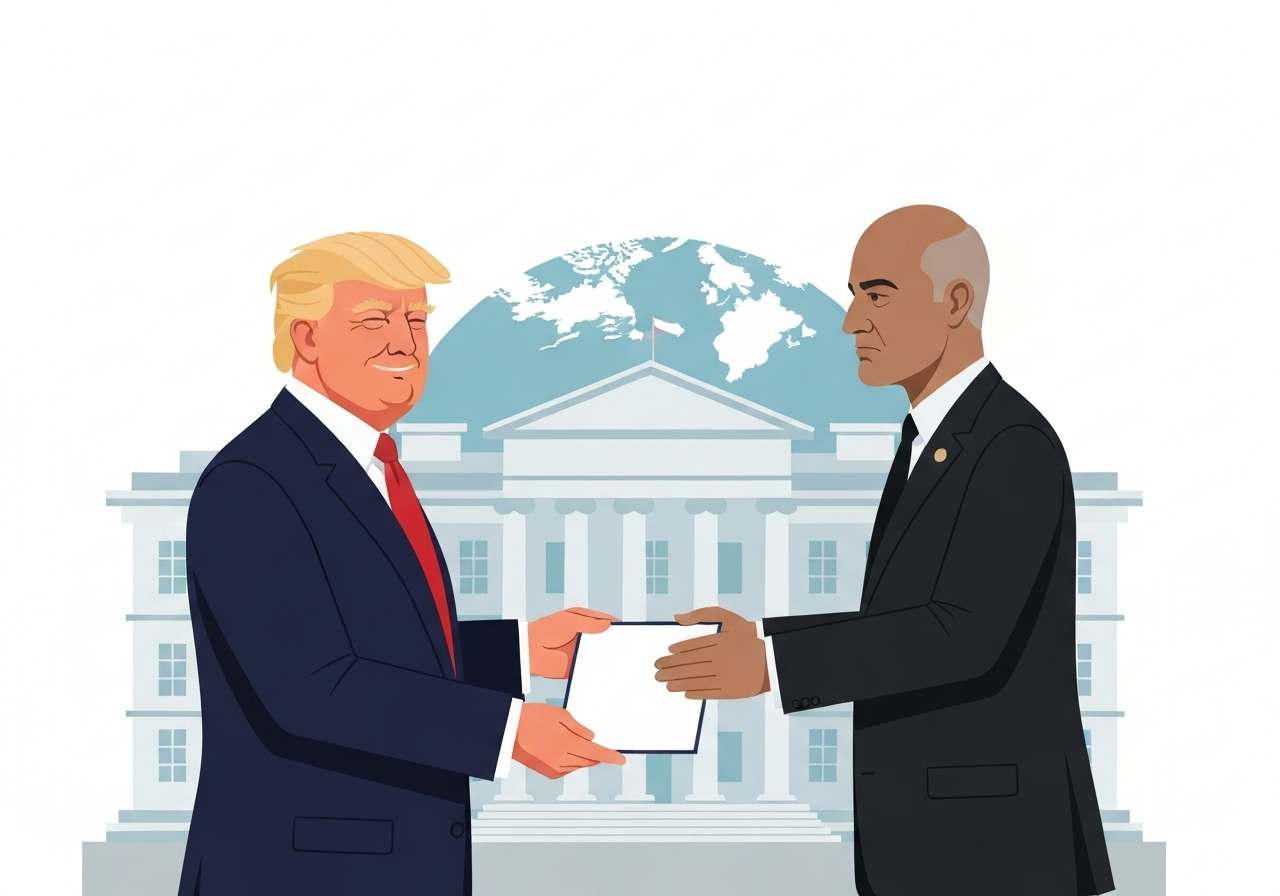
President Donald Trump announced on Dec. 21, 2025, via Truth Social that he has appointed Louisiana Governor Jeff Landry as the United States Special Envoy to Greenland. The president said the move is meant to strengthen U.S. national-security interests tied to Greenland’s strategic location. Landry confirmed on Dec. 22 that the role is a volunteer post and said it will not affect his duties as governor of Louisiana. The announcement immediately raised questions about diplomatic procedure, Danish sovereignty and the envoy’s remit.
Key Takeaways
- Announcement date: Dec. 21, 2025 — President Trump posted the appointment on Truth Social.
- Appointee: Jeff Landry, Governor of Louisiana, who described the position as a volunteer role on Dec. 22, 2025.
- Role scope: Presented by the White House post as advancing U.S. security and allied interests in Greenland.
- Sovereignty context: Greenland is an autonomous territory of the Kingdom of Denmark, a NATO member; bilateral consultation norms are in play.
- Strategic facts: Greenland hosts U.S. strategic facilities historically important to Arctic security and missile-warning systems.
- Domestic impact: Landry said the envoy role will not interfere with his gubernatorial responsibilities.
- Diplomatic questions: Observers noted the appointment raises questions about formal accreditation and whether Denmark was consulted.
Background
Greenland occupies a strategic position in the North Atlantic and Arctic, with a large landmass (about 2.16 million km²) and a small population concentrated along its coast. The island’s geography makes it central to military surveillance, early warning systems and new Arctic shipping routes as polar ice patterns change. The United States has maintained a long-standing security relationship with Greenland through agreements with Denmark, including the operation of past and present facilities that contribute to missile warning and Arctic monitoring.
Interest in Greenland from U.S. presidents is not new: in 2019 President Trump publicly expressed interest in Greenland, a remark that drew rebuke from Danish officials and highlighted the sensitivities around sovereignty and bilateral protocol. Since then, Greenland’s geopolitical profile has risen with Arctic resource, transit and security discussions among NATO members and other global actors. Any U.S. position specifically focused on Greenland intersects with Danish foreign policy and Greenlandic self-government institutions.
Main Event
On Dec. 21, 2025, President Trump used his Truth Social account to announce he had named Governor Jeff Landry as a Special Envoy to Greenland. The White House post framed the appointment as a security-focused designation intended to protect allies and U.S. interests. No formal White House credentials or State Department communiqués were attached to the initial post.
Landry replied on Dec. 22 via his verified social account, thanking the president and stating the role is voluntary and will not affect his duties as Louisiana’s governor. He emphasized his commitment to making Greenland “a part of the U.S.” in tone, language that prompted immediate attention given Greenland’s status within the Kingdom of Denmark. Landry did not, in that post, specify where he would be based or whether he would travel to Nuuk or meet Danish or Greenlandic officials.
As of the first 48 hours after the announcement, there were no publicly released diplomatic notes or confirmations from Denmark or Greenlandic self-government offices included in the U.S. posts. Media coverage cited the social-media statements and flagged immediate questions about the envoy’s legal and diplomatic standing, as special envoys can be presidential appointees but typically require coordination with the State Department and, for territory-level engagements, dialogue with the sovereign government involved.
Analysis & Implications
Strategically, an envoy focused on Greenland reflects the continuing U.S. view of the Arctic as a region of growing significance. Arctic routes, natural-resource prospects and proximity to North American and European security systems have increased the diplomatic and military value of influence in Greenland. A presidential envoy could be used to coordinate interagency work, signal priorities to allies, or pursue specific projects—but only if backed by formal policy instruments and intergovernmental coordination.
Diplomatically, the appointment raises questions about process. Conventional practice for sensitive territory-level roles usually includes State Department involvement and prior consultation with the sovereign government — in this case Denmark — and with Greenlandic authorities that manage many domestic affairs. A unilateral announcement on social media without announced coordination can strain relations or create diplomatic confusion if not followed by formal channels.
Domestically for Louisiana, Landry’s dual role as governor and volunteer envoy could present time-management and legal questions, though he has stated it will not affect his gubernatorial duties. Governors have historically taken on federal or international roles temporarily, but the optics and concrete division of responsibilities matter for both state governance and for how foreign interlocutors perceive U.S. authority and reliability.
Comparison & Data
| Item | Figure / Note |
|---|---|
| Greenland area | ~2,166,086 km² |
| Population (approx.) | ~56,000 (concentrated along coasts) |
| Notable U.S. facility | Thule Air Base (historically used for Arctic/missile warning cooperation) |
| 2019 U.S. public interest | President Trump’s 2019 remarks on Greenland drew diplomatic pushback |
The table places basic geographic and historical anchors beside the appointment. Greenland’s large land area and small population underscore why small diplomatic moves can have outsized strategic visibility. Any new U.S. engagement should be read against this scale: few residents, large strategic footprint.
Reactions & Quotes
U.S. President Donald Trump framed the appointment in terms of national security and allied protection.
“He understands how essential Greenland is to national security and will advance the country’s interests for the safety, security and survival of allies and the world.”
Donald J. Trump (Truth Social)
Governor Landry responded publicly the following day, thanking the president and describing the role as volunteer and non-interfering with his gubernatorial duties.
“It’s an honor to serve you in this volunteer position… This in no way affects my position as Governor of Louisiana!”
Governor Jeff Landry (official social post)
As of publication, officials in Copenhagen and Nuuk had not issued a formal public response; some foreign-policy analysts cautioned that a formal diplomatic framework will be required to avoid misunderstandings.
Unconfirmed
- Whether Denmark or Greenlandic authorities were formally consulted before Dec. 21 remains unconfirmed publicly.
- It is unconfirmed whether Landry will be credentialed in Nuuk or will establish an office in Greenland.
- Any operational budget, staffing plan or legal mandate for the envoy role has not been released and remains unconfirmed.
Bottom Line
The White House’s Dec. 21, 2025 social-media announcement that Governor Jeff Landry will serve as U.S. Special Envoy to Greenland signals a presidential interest in Arctic and North Atlantic affairs but leaves substantial procedural and diplomatic questions unanswered. Key follow-ups will be whether the State Department formalizes a mandate, whether Denmark and Greenland are consulted and how the envoy’s duties will be resourced and synchronized with existing U.S. Arctic policy.
Readers should watch for formal State Department guidance, statements from the Danish and Greenlandic governments, and clarifications from the governor’s office on operational details. Without those elements, the appointment is an important political signal but not yet a fully defined instrument of U.S. foreign policy.
Sources
- WVUE (Fox 8) — Local news report summarizing announcement and social posts
- Truth Social — President Donald Trump (official social profile with original post) (official social post)
- Governor Jeff Landry (Twitter profile) (official social post confirming role)
- CIA World Factbook — Greenland (government/analytical data on area and population)
- Royal Danish Ministry of Defence (official) — context on Danish defence responsibilities in Greenland