
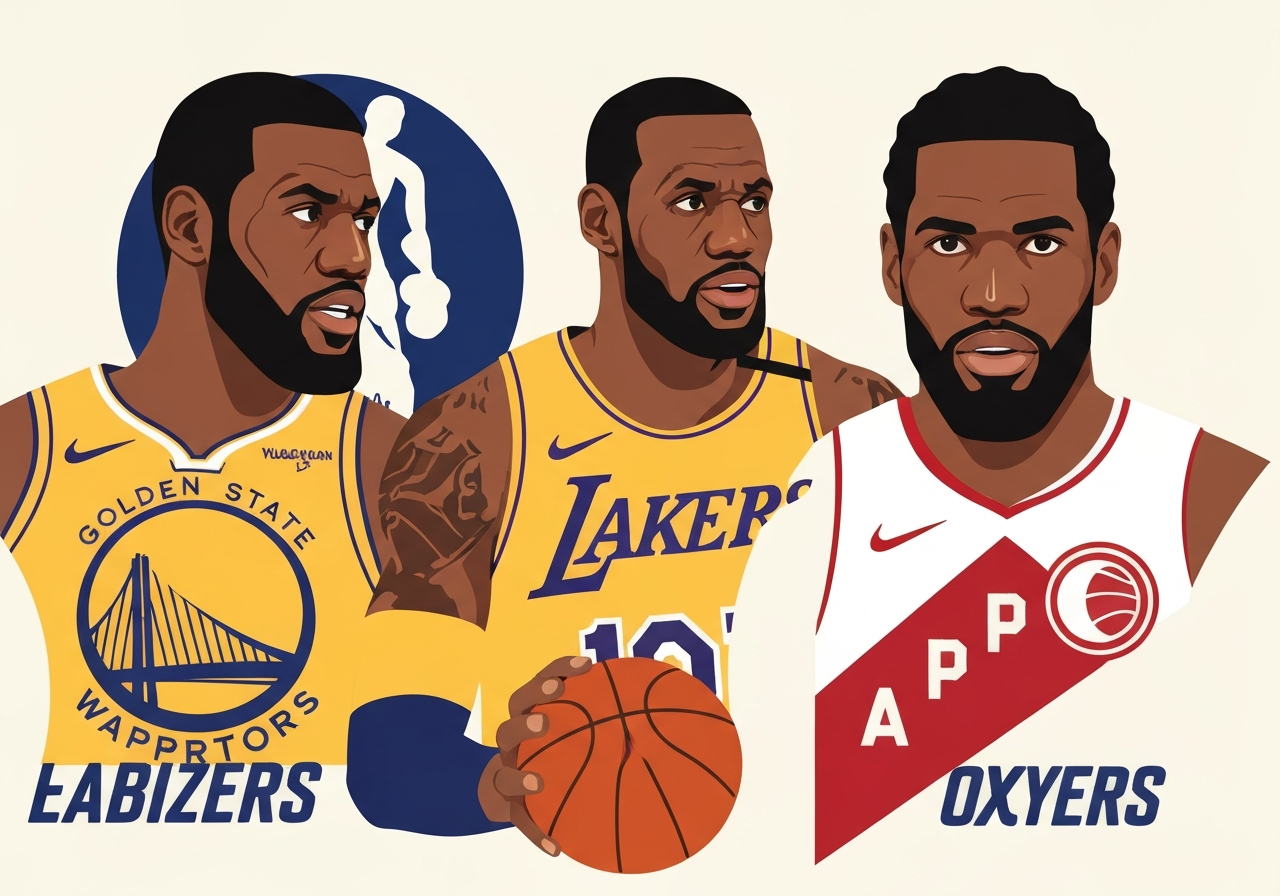
In a rapid post-draft shift, NBA free agency opened Tuesday evening, June 30, 2026, and the market moved immediately: LeBron James informed the Los Angeles Lakers he will explore free agency for 2026-27, the Golden State Warriors have emerged as a leading suitor, and Kawhi Leonard was dealt back to the Toronto Raptors in a large multi-asset trade. Several roster moves and signings — from Marcus Smart’s deal in Houston to multiple veteran extensions and one-year contracts — have already reshaped the opening hours of the negotiation window. The flurry follows a draft-week cascade of trades that began when Giannis Antetokounmpo was sent to the Miami Heat, prompting additional moves around the league.
- LeBron James told the Lakers he will test free agency for 2026-27; reports say he intends to keep playing but will explore other teams (reported June 30, 2026).
- The Golden State Warriors are widely reported as the front-runner to sign LeBron, with DraftKings odds listing the Warriors -500 and the Cavaliers +300 among top markets.
- Kawhi Leonard was traded from the Clippers to the Toronto Raptors; the Clippers received Brandon Ingram, Gradey Dick and multiple future picks including first- and second-round selections and a pick swap.
- Marcus Smart agreed to a two-year, $13 million contract (second year a player option) with the Houston Rockets, per ESPN reporting.
- League financials: the 2026-27 salary cap is $164.961 million; the minimum team salary is $148.465 million; the first apron is $209.015 million and the second apron is $221.686 million.
- Restricted free-agency center Walker Kessler reportedly declined a five-year, $140 million extension and has drawn offers in the mid-to-high $30 million range annually, per The Athletic.
- Jalen Duren is a restricted free agent and the Detroit Pistons reportedly intend to match any offer sheet to retain him; Duren averaged 19.5 points and 10.5 rebounds in 70 regular-season games.
Background
The 2026 NBA Draft closed a busy week that already included a high-profile Giannis Antetokounmpo trade to the Miami Heat the day before the draft; that deal set off a series of subsequent moves. Teams entered the free-agency negotiation window on Tuesday, June 30 at 6 p.m. ET, armed with cap space, trade assets and varying roster timelines. The post-draft environment often accelerates creative roster construction as franchises try to marry short-term contention windows with longer-term salary and draft planning.
LeBron James’ reported decision to explore free agency comes after a productive 2025-26 season in which he averaged 20.9 points, 7.2 assists and 6.1 rebounds across 60 games at age 41. That combination of performance and veteran status makes him a rare late-career prize for contenders seeking leadership and two-way production. Golden State’s reported interest in assembling a core of LeBron with Stephen Curry and Draymond Green — and possibly Anthony Davis — has intensified speculation, though AD’s move appears uncertain.
Meanwhile, Kawhi Leonard’s return to Toronto reconnects a 2019 Finals MVP with the franchise he led to its only championship. The Clippers’ willingness to part with Leonard and the Raptors’ readiness to exchange multiple future assets reflect divergent timelines: Los Angeles adding younger pieces and picks, Toronto prioritizing immediate championship upside with a proven two-way star.
Main Event
Free agency’s early hours were defined by two headline moves. First, LeBron informed the Lakers he will not exercise a player option to remain in Los Angeles and will explore offers league-wide. Reports indicate he has instructed his representatives to talk to all interested clubs, leaving his final destination open while the window for signings opens.
Second, the Clippers and Raptors agreed to a large trade sending Kawhi Leonard to Toronto. The reported return to Los Angeles includes Brandon Ingram, Gradey Dick, multiple first- and second-round picks and a pick swap. That package signals a major roster reset for the Clippers, who prioritized acquiring youth, shooting and future draft flexibility over retaining Leonard’s remaining $50 million salary in the final year of his deal.
Beyond the headliners, several confirmed and reported moves landed quickly: Marcus Smart’s two-year, $13 million deal with Houston; Bogdan Bogdanović’s reported one-year deal with the Rockets; Dean Wade’s four-year, $39 million agreement with the 76ers; Zach Collins’ two-year, $17 million extension with the Bulls; Luke Kennard’s two-year, $13 million deal with Phoenix; Tim Hardaway Jr.’s one-year, $6.5 million move to Miami; Robert Williams III’s three-year, $44 million extension with Portland; and Ousmane Dieng’s three-year, $17.5 million deal retaining him in Milwaukee.
Restricted free agency and matching rights also shaped early trade chatter. Walker Kessler’s decision to decline a five-year, $140 million offer from Utah stirred interest and potential offer sheets; Detroit reiterated an intent to match any Jalen Duren offer to keep their All-Star center. Those situations underscore how restricted status and team matching rights constrain and channel movement even when free agency is active.
Analysis & Implications
LeBron’s choice to explore free agency reshuffles competitive calculus for championship hopefuls and middling contenders alike. For Golden State, signing LeBron would present a stylistic and roster puzzle: integrating James alongside Stephen Curry and Draymond Green would require significant financial engineering and likely the movement of established pieces to stay under apron thresholds. The Warriors’ reported ambition to create a “big four” would hinge on whether Anthony Davis is movable and whether Washington would permit such a transaction.
If LeBron lands in Golden State, the immediate short-term outlook would tilt toward another title chase, but long-term roster balance and salary flexibility would become acute concerns. The Warriors already operate with championship timelines and aging core members; adding another high-minute, high-usage veteran carries injury, chemistry and luxury-tax implications. Conversely, a return to Cleveland or a move to Miami would reshape Eastern Conference pecking order and present different spacing and playmaking synergies.
Kawhi’s trade to Toronto has distinct strategic meaning. For the Raptors, adding a two-time Finals MVP accelerates championship windows but comes at the cost of long-term draft capital and young talent. For the Clippers, the haul of Brandon Ingram, Gradey Dick and multiple picks signals a pivot to rebuilding/retooling with cost-controlled assets. The transaction highlights a league trend: contending teams willing to mortgage future picks for an immediate star, while teams out of contention harvest picks and youth.
Salary-cap movements and the confirmed 2026-27 figures — cap at $164.961 million with aprons at $209.015M and $221.686M — will dictate which clubs can realistically compete for top free agents without incurring punitive tax structures. Restricted free agents like Walker Kessler and Jalen Duren further complicate market dynamics because teams with cap space must consider match risk and trade avenues such as sign-and-trades to acquire star-caliber players.
| Cap Metric | 2026-27 Amount (USD) |
|---|---|
| Salary cap | $164,961,000 |
| Minimum team salary | $148,465,000 |
| First apron | $209,015,000 |
| Second apron | $221,686,000 |
The table above summarizes the league’s 2026-27 financial thresholds announced as the new league year approaches. Those figures set the parameters for trades, extensions and multi-year offers and explain why reported suitors must weigh both immediate competitiveness and long-term fiscal penalties.
Reactions & Quotes
The reporting wave produced near-instant reactions from insiders and analysts. Below are representative lines that shaped early public understanding and the context that followed each remark.
“LeBron has informed the Lakers he will look to play elsewhere for 2026-27 and will explore free agency.”
Shams Charania, ESPN (report)
This report framed the opening narrative: a superstar actively testing the market. Media coverage emphasized that James instructed his team to speak with all interested clubs, which immediately expanded the list of potential destinations and ignited odds movement across sportsbooks.
“The Warriors are at the front of the line in pursuit of LeBron James.”
Marc Stein, NBA insider (report)
That characterization helped crystallize public expectations and betting probabilities. Analysts noted that Golden State’s interest is conditional on roster moves and whether Anthony Davis could be acquired — a transaction that multiple outlets later described as unlikely.
“The Pistons intend to match any offer sheet for Jalen Duren.”
Marc Spears, ESPN (report)
Reports that Detroit plans to retain Duren indicate that certain rumored sign-and-trade strategies may be limited, affecting how suitors structure bids and potential trade packages early in free agency.
Unconfirmed
- Whether Anthony Davis will be traded to Golden State remains unconfirmed; recent reporting describes that deal as increasingly unlikely.
- Exact teams and final contract terms that will emerge from LeBron’s market tour are unconfirmed until signings are officially filed with the league.
- Reported mid-to-high $30 million offers for Walker Kessler are based on reporting and have not been publicly disclosed in full; figures and suitors remain subject to verification.
Bottom Line
The opening hours of 2026 free agency have been dominated by star-level maneuvers: LeBron James’ decision to explore free agency and Kawhi Leonard’s trade to Toronto will have ripple effects across the league’s competitive landscape. Teams with cap flexibility and trade assets are recalibrating plans, and the salary-cap thresholds announced for 2026-27 will heavily influence which suitors can realistically add marquee veterans without crippling future flexibility.
Watch the next 72 hours for finalized signings, potential sign-and-trade structures around restricted players, and how the Warriors and other top contenders attempt to balance short-term title aims against long-term fiscal health. Until teams file contracts with the league, multiple reported moves remain subject to change and verification.