
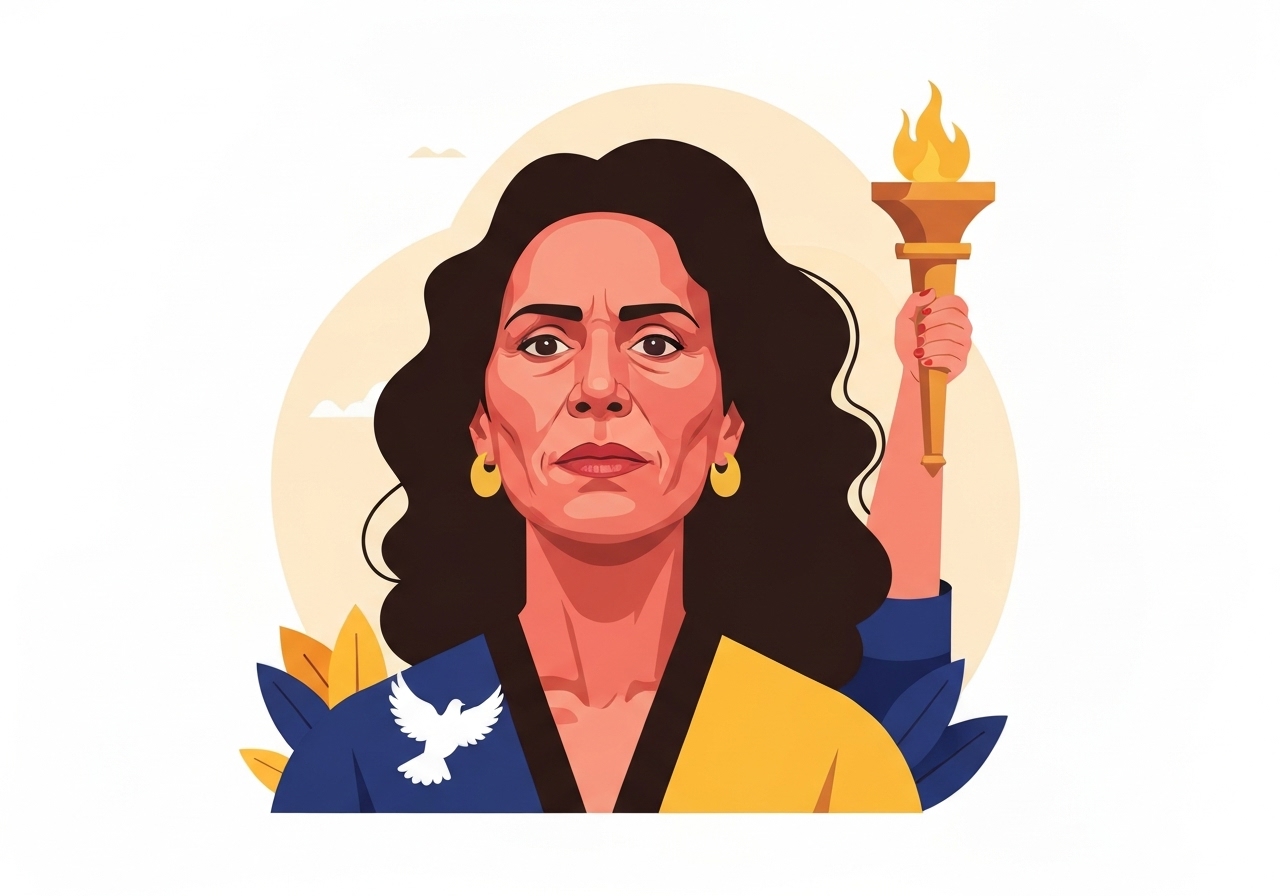
Lead: María Corina Machado, a Venezuelan opposition figure and 2025 Nobel Peace Prize laureate, has emerged at the center of a power vacuum after the overnight capture of President Nicolás Maduro and his wife in Caracas. Machado has publicly urged recognition of Edmundo González, whom many observers and opposition groups view as the legitimate winner of the 2024 presidential election. Her Nobel citation praised her efforts to press for a nonviolent transition from authoritarian rule, and she has framed recent events as a long-sought turning point for Venezuela. The immediate question is whether domestic actors and foreign powers will coalesce around a single successor or deepen the country’s instability.
Key Takeaways
- María Corina Machado won the 2025 Nobel Peace Prize for campaigning for a peaceful transition from dictatorship to democracy in Venezuela.
- Following the overnight capture of Nicolás Maduro and his wife in Caracas, Machado called for Edmundo González to be recognized as the legitimate president; González was widely regarded as the winner of the 2024 election.
- Machado was barred from running in the 2024 presidential contest by the Maduro government and instead backed González’s candidacy.
- International observers, including U.S. officials, said the 2024 vote was manipulated to allow Maduro a contested third term.
- Machado publicly praised actions by the U.S. administration that targeted Venezuelan-linked drug trafficking operations and dedicated her Nobel Prize to the American president; she has also urged Venezuelans to organize until a democratic transition is complete.
- The opposition leader was forced into hiding inside Venezuela and, according to reports, was extracted to Europe in a recent escape aided by U.S. military veterans.
- Former U.S. President Donald Trump said he had not been in contact with Machado since recent military actions and expressed doubts about her ability to command broad domestic support.
Background
María Corina Machado rose to national prominence over two decades of political activity opposing the Bolivarian movement that began under Hugo Chávez in 1998. She served as a legislator in Venezuela’s National Assembly and later became one of the most visible critics of the United Socialist Party of Venezuela (PSUV) and President Nicolás Maduro. The 2024 presidential election, in which many international monitors reported irregularities, intensified polarization: Maduro retained power in a result widely challenged by opposition figures and foreign governments.
Machado’s Nobel Peace Prize in 2025 amplified her international profile and framed her struggle as part of a rights-focused, nonviolent campaign against entrenched authoritarian practices. She has consistently advocated close cooperation with international partners, particularly the United States, to pressure Maduro’s government through sanctions and diplomatic isolation. Within Venezuela, her uncompromising rhetoric has generated both fervent supporters—some calling her the country’s “Iron Lady”—and detractors who question whether she can build the broad coalition needed to govern a divided nation.
Main Event
In the hours after what media described as the overnight capture of President Nicolás Maduro and his wife in Caracas, Machado issued a statement urging Venezuelans and international actors to recognize Edmundo González as the rightful president. González had been the opposition’s candidate in the 2024 election and is widely portrayed by the opposition as the legitimate victor. Machado framed the capture as the culmination of years of civic resistance against abuses by the Maduro administration.
Reports from the capital described heightened security measures and competing claims of authority. Machado’s message called for vigilance and organization, saying that the opposition must be prepared to enforce its mandate and secure a democratic transition. She also publicly credited recent U.S. pressure and operations—described by some reports as strikes against trafficking networks in the Caribbean Sea—for contributing to the collapse of elements of Maduro’s control, and dedicated her Nobel recognition to international partners who backed pressure tactics.
Former President Donald Trump, speaking to reporters, said he had not been in contact with Machado since the military operations and questioned whether she has sufficient domestic standing to lead Venezuela. He added that the United States would keep control until a proper transition is possible; his remarks underscore the risk of direct foreign involvement shaping Venezuela’s near-term trajectory. Machado, for her part, framed Maduro’s detention as a step toward international justice for crimes she and others allege were committed by the regime against Venezuelans and foreign nationals.
Analysis & Implications
Machado’s Nobel Prize gives her enhanced global legitimacy, especially among Western governments and human rights networks, but international recognition does not automatically translate into domestic governing capacity. Venezuela’s political environment is fragmented: civilian institutions have been weakened, rival security forces retain influence, and armed groups operate in parts of the country. Any transition will require managing those fractured power centers and rebuilding trust in state institutions.
If key military and police units back an opposition-led transition, Machado and González could consolidate authority; if not, Venezuela risks prolonged contestation or fragmentation. External actors—especially the United States and regional governments—face a dilemma: robust intervention might speed regime change but could also provoke nationalist backlash or unintended violence. Machado’s alignment with international pressure strategies raises questions about balancing outside support with domestic legitimacy.
Economically, a transition overseen by opposition leaders could unlock new foreign investment and aid, but reconstruction and stabilization would take years. About 20% of Venezuela’s population has left the country in recent years, creating a large diaspora whose remittances and political engagement will shape recovery. The longer uncertainty persists, the greater the risk of economic collapse, social unrest, and new waves of migration.
Comparison & Data
| Indicator | Reported Value | Context |
|---|---|---|
| 2024 election outcome | Disputed — González viewed by opposition as winner | International observers reported irregularities |
| Population displacement | ~20% fled Venezuela | Economic and political collapse cited as causes |
| Nobel Peace Prize | 2025 — awarded to Machado | Cited for nonviolent struggle for democratic transition |
The table summarizes key figures referenced in this report to provide quick context. These indicators—electoral legitimacy, displacement, and international recognition—help explain why the opposition’s claim to leadership has traction abroad but may still face obstacles at home.
Reactions & Quotes
Global officials, Venezuelan opposition figures, and elements of the public have responded unevenly to recent developments. Below are representative statements with surrounding context.
“We have fought for years, we have given everything, and it has been worth it.”
María Corina Machado — opposition leader (statement)
This comment followed Machado’s public endorsement of Edmundo González and her characterization of Maduro’s capture as the result of sustained civic struggle. She used the Nobel platform to amplify calls for organized civic action until a democratic transition is secured.
“I think it would be very tough for her to be the leader. She doesn’t have the support …”
Donald J. Trump — former U.S. President (press remarks)
Trump’s remarks, given during a press appearance, signaled skepticism about Machado’s domestic standing despite acknowledging her personally. He also stated the United States would manage Venezuela until a proper transition takes place, language that indicates potential U.S. operational involvement or oversight in the short term.
“[The Nobel Committee honored her] for her struggle to achieve a just and peaceful transition from dictatorship to democracy.”
Nobel Prize Committee (award citation)
The Nobel Committee’s citation framed Machado’s efforts as primarily nonviolent and rights-based, a characterization that helped increase international diplomatic attention and support for opposition strategies emphasizing legal and civic pathways to change.
Unconfirmed
- Full details and legal justification for the U.S. role in the reported strikes and any operational involvement in Maduro’s capture remain incomplete and publicly unverified.
- Precise casualty figures and target identifications from recent Caribbean Sea strikes attributed to U.S. operations have not been independently corroborated in public reporting.
- The extent and command structure of the U.S. military veterans’ role in Machado’s reported extraction to Europe are not fully documented in open-source accounts.
Bottom Line
María Corina Machado stands at a pivotal moment: her 2025 Nobel Peace Prize and vocal international profile give her significant moral and diplomatic capital, but translating that into stable domestic authority will be difficult. Venezuela’s institutions are weakened, security forces remain fragmented, and public opinion inside the country is divided. Any credible transition will require negotiated arrangements with security actors, broad domestic buy-in, and careful coordination with international partners to avoid further destabilization.
Short-term outcomes hinge on whether key military units and regional actors accept González as provisional authority and whether Machado and other opposition leaders can widen their appeal beyond committed bases. For readers watching this story, the most important signs to track are confirmed statements of support from major Venezuelan security commanders, formal recognition by regional governments, and transparent, internationally observed steps toward restoring constitutional governance.
Sources
- NPR (news report) — primary article summarizing recent events and statements.
- Nobel Prize (official) — Norwegian Nobel Committee award information and citation (official).
- The Associated Press (news/photo) — photo credit and wire reporting (news agency).