
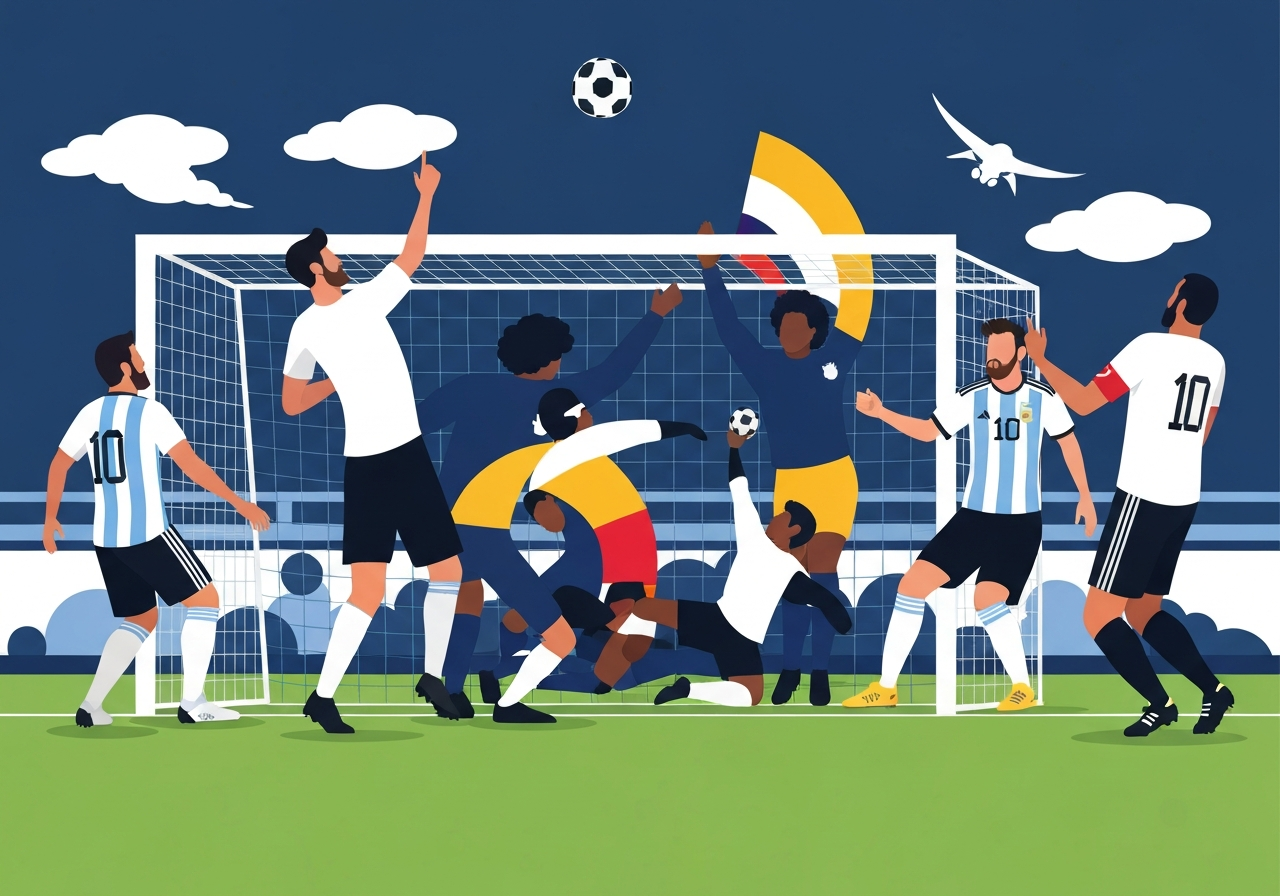
Reigning champions Argentina advanced to the World Cup last 16 after a dramatic 3-2 extra-time win over Cape Verde at a packed Miami Stadium on 4 July. Lionel Messi opened the scoring in the 29th minute, but Cape Verde — making their first-ever World Cup appearance — twice drew level to force extra time in front of 64,478 spectators. Lisandro Martínez briefly put Argentina ahead in extra time before Sidny Lopes Cabral equalised, and an additional-time goal following a corner ultimately decided the tie. The result sets Argentina up to face Egypt in Atlanta next Tuesday.
Key Takeaways
- Final score: Argentina 3, Cape Verde 2 after extra time; the match was decided in the second period of extra time.
- Scorers and moments: Messi scored in the 29th minute (his seventh goal of the tournament and 20th across six World Cups); Deroy Duarte levelled before the hour; Lisandro Martínez scored early in extra time; Sidny Lopes Cabral equalised in the 103rd minute; the decisive goal came from a corner in the latter extra period.
- Venue and crowd: The game was played at Miami Stadium on 4 July with an attendance of 64,478 in hot, humid conditions.
- Cape Verde milestone: The island nation — ranked 67th entering the tournament — are World Cup debutants and the only first-time team to reach the last 32 in this edition.
- Goalkeeping: Argentina keeper Emiliano Martínez produced several key saves, including a late stop from a Cape Verde free kick that might have re-opened the match.
- Tactical note: Cape Verde displayed disciplined defending and quick pass-and-move transitions that troubled Argentina for long spells.
Background
Cape Verde arrived in the tournament as one of four World Cup debutants and were widely viewed as underdogs against three-time winners Argentina. The squad had already earned respect in the group stage with draws against established teams, and their compact structure and collective work rate were singled out as reasons for their progress. Argentina, by contrast, entered the match as reigning champions and favourites but had struggled at times to break down organised defences during the tournament. The contrast in pedigree and expectation — Argentina as heavy favourites and Cape Verde as determined newcomers — framed the match as a potential upset in the early knockout rounds.
The setting in Miami amplified the occasion: a large, partisan crowd in warm conditions that tested both teams’ conditioning. Cape Verde’s run to the knockouts carried national significance; a small island nation with limited World Cup history suddenly found itself on the global stage. For Argentina, the fixture was a reminder that tournament football frequently rewards resilience and tactical discipline as much as star power. The match also raised questions about squad rotation, match tempo, and how heavyweight teams manage energy across tightly scheduled fixtures.
Main Event
Argentina took the lead in the 29th minute when Lisandro Martínez threaded a long ball over the top to Lionel Messi. Messi controlled with the outside of his left boot and finished into the roof of the net, recording his seventh goal of this World Cup and extending his all-time World Cup goal tally to 20 across six tournaments. For much of the opening half, Argentina struggled to sustain clear chances as Cape Verde defended in numbers and sought opportunities on the break.
Cape Verde responded after the interval: Deroy Duarte struck to level the match just before the hour mark after a build-up that began on the right through captain Ryan Mendes. The equaliser silenced large sections of the Miami crowd and emphasised Cape Verde’s belief in their own game plan. Messi had a clear opportunity minutes later but was denied by the Cape Verde goalkeeper Vozinha, and Argentina’s pattern of play remained intermittently frustrated by the visitors’ defensive discipline.
With the scores tied after 90 minutes, the game moved into extra time. Lisandro Martínez fired Argentina back in front in the second minute of the first extra-time period with a powerful strike that found the roof of the net. Cape Verde, however, responded again: left back Sidny Lopes Cabral curled a flagged effort into the top corner in the 103rd minute to make it 2-2, keeping their improbable run alive.
Six minutes into the second period of extra time a corner swung in from Messi and a headed effort involving Cristian Romero and a Cape Verde defender left the ball in the net, producing the decisive goal that sealed a 3-2 win for Argentina. Emiliano Martínez made one of several important saves late on to deny Cape Verde another leveller, and the match finished with Argentina through and Cape Verde applauded off after a heroic performance.
Analysis & Implications
Sporting significance: Argentina’s victory was ultimately about experience and marginal moments — the capacity to convert set-piece situations and to see out a tight finish. For a side intent on defending a world title, surviving a scare against lower-ranked opponents underlines both durability and vulnerability. The match exposed tactical stiffness in Argentina’s build-up play at times and showed that high-quality pressing and compact defending can disrupt even elite attacking patterns.
Cape Verde’s performance will be analysed as a model for smaller nations: disciplined defensive organisation, rapid transitions and clinical finishing at key moments created genuine problems for Argentina. Their ability to come from behind twice and test a heavyweight into extra time enhances their profile and may accelerate investment and development at home. The tournament exposure also increases the likelihood of transfers, scouting attention and support for the domestic game in Cape Verde.
Broader tournament impact: Argentina must recover quickly to face Egypt in Atlanta next Tuesday, and squad management will be a focus after the physical demands of extra time. For the tournament narrative, Cape Verde’s run contributes to a pattern in which organised underdogs can disrupt established hierarchies, raising questions about conventional seeding expectations and the depth of international competitiveness. The result also keeps alive debates about substitution rules, set-piece coaching and the psychological edge that late levellers provide to smaller squads.
| Statistic | Argentina | Cape Verde |
|---|---|---|
| Final score | 3 | 2 |
| World Cup status | Reigning champions | Debutants |
| Tournament goals (Messi) | 7 (this tournament); 20 across six World Cups | |
| FIFA ranking (entering tournament) | Cape Verde ranked 67th (Argentina ranking not provided) | |
The table above compiles verified facts from the match report: the final scoreline, Cape Verde’s debutant status, Messi’s tournament and career World Cup totals, and Cape Verde’s FIFA ranking entering the competition. These figures highlight the contrast in experience and the exceptional nature of Cape Verde’s progress.
Reactions & Quotes
“Incredible levels of resilience”
Al Jazeera (match report)
The description above summarises the coverage of Cape Verde’s mentality during the game and was used in reporting to characterise their repeated comebacks.
“They will return home heroes”
Al Jazeera (match report)
That observation reflects broader commentary in the aftermath: despite defeat, Cape Verde earned national acclaim for a performance that elevated the island’s footballing profile.
Unconfirmed
- Official attribution of the decisive goal: reports describe involvement by both Cristian Romero and a Cape Verde defender; the final match report will confirm whether the goal is recorded as an own goal or credited to Romero.
- Longer-term squad impacts for Argentina (injuries or rotation choices ahead of the Egypt tie) remain pending official medical updates.
Bottom Line
Argentina survived a significant scare to progress, but the match served as a reminder that pedigree alone does not guarantee straightforward results in World Cup knockout football. Cape Verde’s appearance and performance were exceptional: the debutants combined defensive organisation with timely finishing to imperil a top-tier team and earned plaudits despite elimination.
Looking ahead, Argentina must recover rapidly and address the creative lapses exposed by Cape Verde, while Cape Verde return home with heightened status and lessons to build on. The match will be remembered as one of the tournament’s early shocks in spirit if not by final outcome, and it underlines how World Cups can elevate smaller footballing nations on the global stage.
Sources
- Al Jazeera — International news outlet, match report.