
Lead
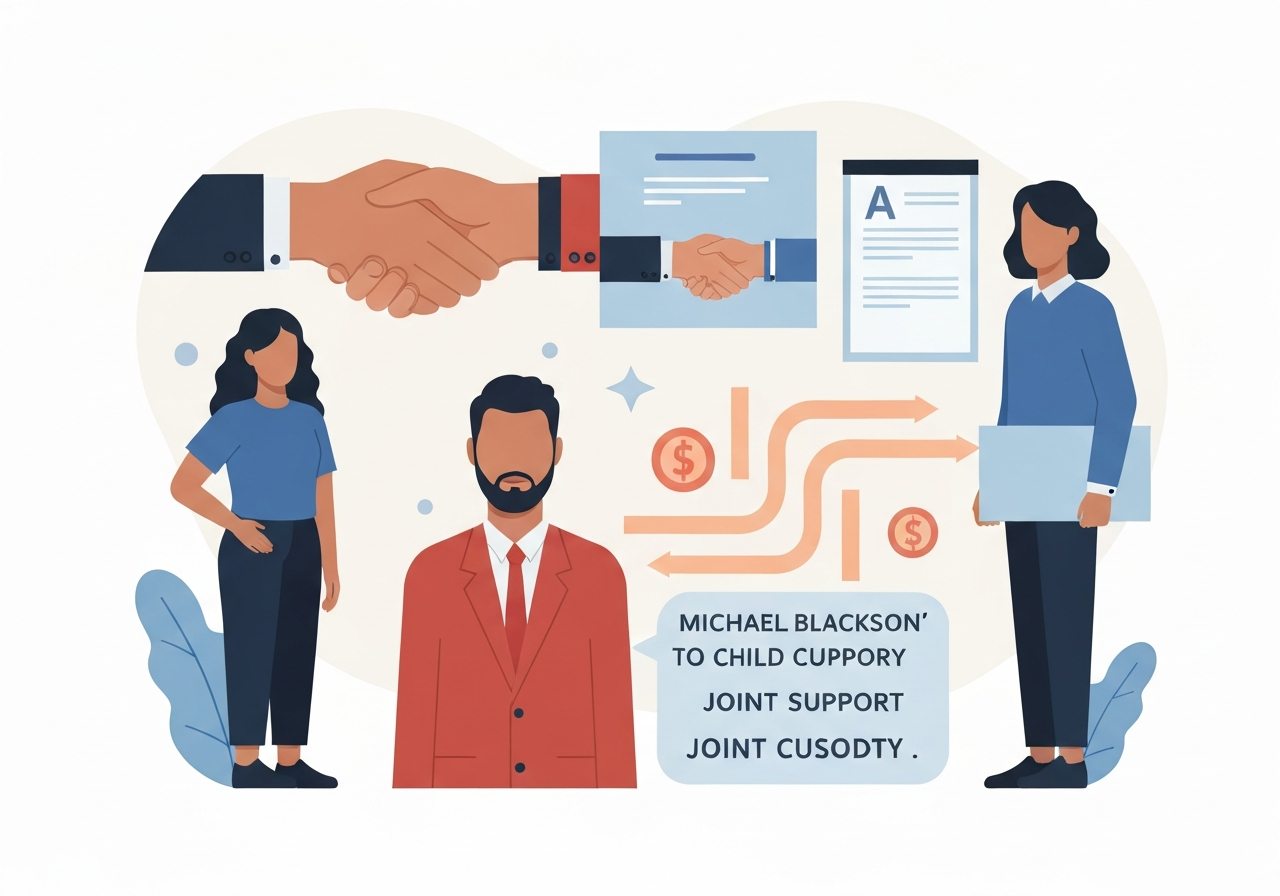
On June 14, 2026, comedian and Love & Hip Hop: Miami cast member Michael Blackson reached a court-approved settlement with Nadia Beddini over their young son, Kweku. Under the agreement Michael will pay $4,500 per month in child support and Nadia will receive $5,000 toward legal fees. The pair agreed to joint legal and physical custody, with specific travel restrictions included. A judge signed the agreement after both parents accepted the terms.
Key Takeaways
- Monthly support: Michael Blackson will pay $4,500 per month for his son Kweku, who is reported to be nearly one year old.
- Attorney fee payment: The settlement requires a $5,000 payment to cover Nadia Beddini’s legal fees tied to the case.
- Custody arrangement: The parents agreed to joint legal and physical custody, sharing decision-making on health, education and welfare.
- Travel clause asymmetry: Michael cannot take Kweku abroad without Nadia’s written approval; Nadia may travel if she provides written notice and an itinerary.
- Judicial closure: The document is recorded as a custody settlement and bears a judge’s signature, indicating mutual agreement rather than contested adjudication.
- Sibling timing: Kweku was born within two months of Michael’s son with ex-fiancée Rada Darling, a point noted in public reporting.
- Prior relationship claims: Nadia says they were longtime friends who planned a child; Rada says she learned of the full scope of Michael’s relationships only when pregnancy news surfaced during filming.
Background
Michael Blackson is a comedian and reality-TV personality known for his role on Love & Hip Hop: Miami. Public attention increased after the births of two infants connected to Blackson in a short span: Kweku with Nadia Beddini and another son, Michael Jr., with ex-fiancée Rada Darling. Celebrity paternity disputes and custody arrangements often draw heightened media scrutiny, and this case followed that pattern, playing out in entertainment coverage and public statements.
The parties reportedly traveled to Ghana together previously to introduce Kweku to Blackson’s family, reflecting the international family ties referenced in the settlement’s travel provisions. Reality television and social media have amplified interest in family developments for on-screen personalities, increasing pressure on private negotiations to be resolved in public view. In this context, a judge-approved custody settlement can both settle legal obligations and reduce further courtroom publicity.
Main Event
According to court documents filed in June 2026 and reported by entertainment outlets, Blackson and Beddini reached terms that the judge signed as a custody settlement. Financial terms state Blackson will remit $4,500 monthly child support for Kweku and provide $5,000 toward Nadia’s attorney fees tied to the matter. The agreement is explicit that both parents hold joint legal and physical custody, meaning they share authority over major decisions and the child will alternate time between households.
The travel portion of the settlement sets different rules for each parent: Blackson may not take Kweku outside the United States without Nadia’s written consent, while Nadia is permitted to travel if she supplies written notice and a travel itinerary to Blackson. That asymmetry appears tied to prior international family introductions and the practicalities of coordinating cross-border visits to extended family. Court filings and reporters’ accounts indicate the clause reflects both parties’ preferences as presented to the judge.
Both Beddini and Rada provided divergent accounts in media interviews: Beddini says she and Blackson were friends for years, that their pregnancy was planned and that Rada was aware; Rada says she knew Blackson had relationships with other women but learned the full extent only when the pregnancy became public during filming. The judge’s signature on the settlement suggests the court accepted the written terms without further litigation at that time. Observers note that settlements of this type commonly aim to minimize future court intervention while formalizing parenting and financial responsibilities.
Analysis & Implications
The settlement formalizes immediate financial obligations and clarifies custody, reducing near-term legal uncertainty for the child. A fixed monthly payment of $4,500 sets a defined cash-flow expectation; while not uncommon in celebrity contexts, it represents a substantial ongoing commitment relative to median child support figures nationwide. The $5,000 attorney-fee payment is modest compared with protracted litigation costs, indicating both parties opted for a relatively swift resolution.
The travel restrictions create an operational dynamic that will require ongoing cooperation: Blackson needs written approval to take Kweku abroad, whereas Beddini can travel after providing notice and an itinerary. That asymmetry could reflect each parent’s differing ties to extended family abroad — notably Blackson’s family connections in Ghana — and attempts to balance cultural visitation with the child’s stability. In practice, such clauses often lead to more frequent written communications and can become friction points if plans conflict.
From a reputational standpoint, resolving the matter through a signed settlement reduces the immediate media cycle and legal costs while giving both parents a framework to co-parent publicly. However, the mixed public statements from the adults involved mean the relationship dynamics may remain a recurring story, especially given the entertainment-platform connection. Future compliance will hinge on how the pair manage communication and whether either seeks modification of terms if circumstances change, such as income shifts or relocation.
Comparison & Data
| Term | Settlement Detail |
|---|---|
| Monthly child support | $4,500 |
| Attorney fees | $5,000 |
| Custody | Joint legal and physical custody |
| Travel permission | Father requires written consent to leave U.S.; mother must give notice and itinerary |
The table above summarizes the core terms recorded in the filings. Presenting these items side-by-side clarifies the financial and practical commitments each parent accepted. In many private settlements, parties trade more extensive financial concessions for greater control over custody terms; here, the mix of monthly support and travel provisions reflects such negotiated trade-offs. The judge’s sign-off signals judicial acceptance of a mutual resolution rather than imposed orders following contested hearings.
Reactions & Quotes
“We were friends for years and planned on having a child together,”
Nadia Beddini, as reported to media
That statement, relayed by entertainment reports, frames the relationship history from Beddini’s perspective and explains why the parties negotiated terms rather than litigating. It was presented as part of a broader narrative that the parents had an existing personal connection prior to becoming co-parents.
“I learned of the pregnancy while filming and was surprised by the extent of the relationship,”
Rada Darling, as reported to media
Rada Darling’s reported comment provides a contrasting account and is cited in coverage as the ex-fiancée’s perspective on timing and disclosure. The divergence in public accounts underlines why some observers expected contested proceedings before the settlement.
“The agreement restricts international travel by the father without written consent,”
Court filing (custody settlement), June 2026
The travel clause appears explicitly in the court records summarized by reporters and will govern cross-border visits unless modified by later order. Such provisions are common when parents have differing international ties or when introduction to extended family abroad has already occurred.
Unconfirmed
- Whether either parent will later seek to modify the support amount or custody arrangement — no filed motion has been reported beyond the settlement.
- Precise dates of travel to Ghana and details of family introductions are reported in media accounts but not fully documented in public court exhibits.
- Private communications between the parties that led to the settlement have not been made public; motivations reported by each parent differ and remain based on their public statements.
Bottom Line
The signed settlement gives immediate clarity: Blackson is legally obligated to pay $4,500 a month and $5,000 in attorney fees, and both parents now share legal and physical custody under defined travel rules. By resolving matters through agreement rather than extended litigation, the parties limited further courtroom exposure and set a contractual framework for co-parenting.
That framework, however, contains built-in friction points — notably the asymmetric travel permissions and differing public narratives from the adults involved — which may require careful communication to avoid future disputes. Observers should watch for any filings seeking modifications if circumstances change, and for how the parents manage cross-border family visits given Blackson’s international ties.
Sources
- TMZ — Entertainment news report summarizing court documents and party statements (media).
- Love & Hip Hop: Miami (VH1) — Official program page for show involved (broadcaster/production).