
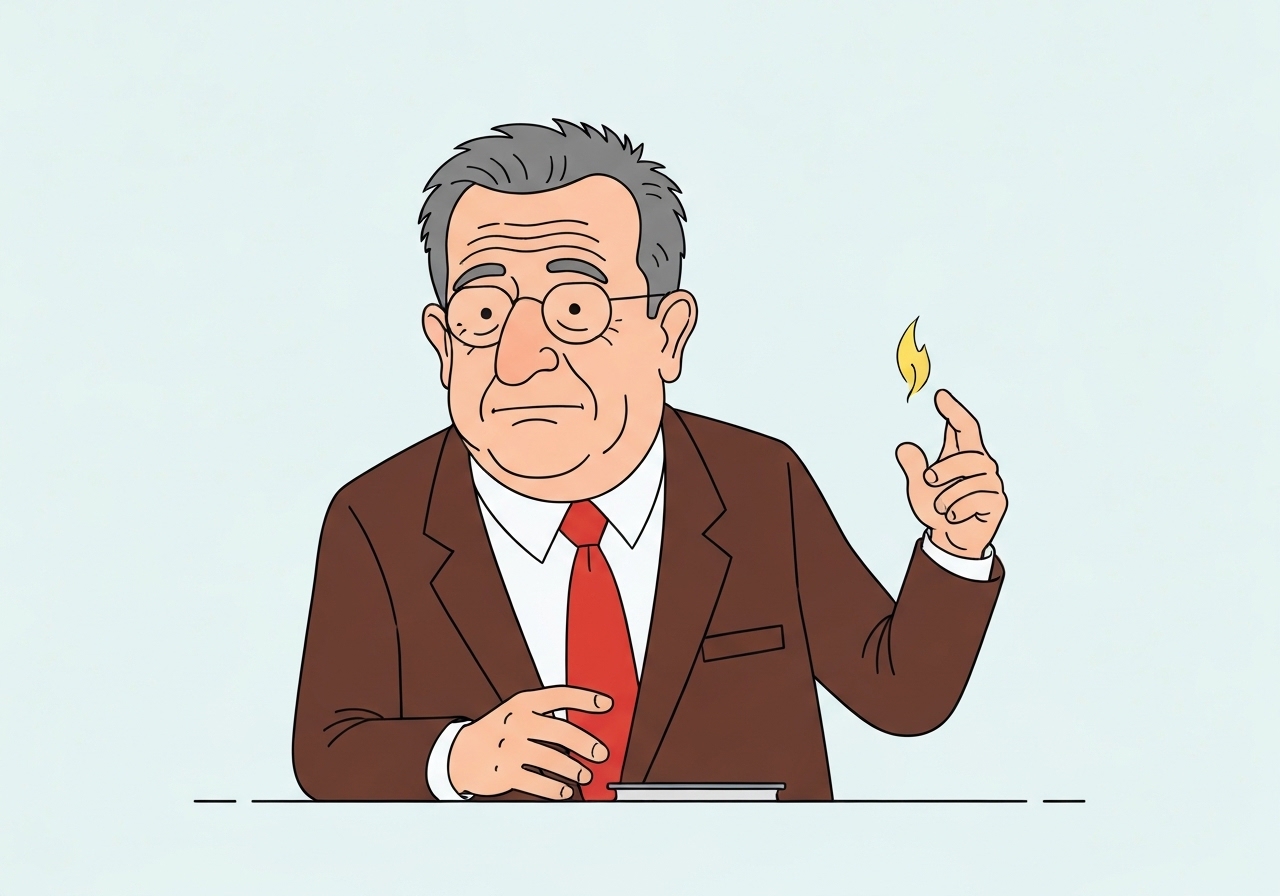
Scott Adams, the creator of the satirical comic strip Dilbert, has died at 68. He disclosed in May 2025 that he had metastatic prostate cancer and only months to live; in November he publicly sought help to secure access to the FDA-approved drug Pluvicto, and reported receiving assistance from President Trump and HHS Secretary Robert F. Kennedy Jr. Adams told viewers on his YouTube show in early January 2026 that the “odds of me recovering are essentially zero.” His former wife, Shelly Miles, announced his death during a YouTube livestream and read a final statement in which Adams asked readers to “pay it forward.”
Key takeaways
- Scott Adams died at age 68; he publicly disclosed metastatic prostate cancer in May 2025 and described a terminal prognosis in January 2026.
- In November 2025 Adams posted on X requesting intervention on a delayed Pluvicto treatment; he said he secured an appointment the following day after public attention.
- Dilbert was once syndicated in roughly 2,000 newspapers across 65 countries and spawned books, a video game and a two-season animated sitcom.
- The strip’s decline accelerated after 2022 controversies, including the introduction of a character in 2022 and a livestream comment in February 2023 that led to widespread cancellations and loss of distribution.
- Adams built a public platform beyond cartoons: he authored books, marketed a food product (Dilberitos), practiced hypnosis, and hosted a YouTube show with more than 180,000 subscribers.
- He experienced chronic health issues affecting his craft, including focal dystonia and spasmodic dysphonia, treated by experimental procedures during his life.
- Adams described his career strategy as a “talent stack,” combining multiple skills to create value beyond traditional cartooning.
Background
Scott Adams rose to prominence in the early 1990s with Dilbert, a comic strip that lampooned white-collar office culture. The strip drew on his experiences working at institutions such as Crocker National Bank and Pacific Bell, where Adams held a range of technical and managerial roles that informed his satire. He studied economics at Hartwick College and earned an MBA from UC Berkeley; in the 1980s he also trained in hypnosis, a skill he later referenced in public commentary.
Dilbert’s humor focused on cubicle life, pointless meetings and management absurdities, with recurring figures such as the Pointy-haired Boss and Dogbert. Adams developed Dilbert on mornings and evenings between 1989 and 1995, and the strip expanded into books, merchandising and television at its peak. Over decades the strip adapted to changing office norms and technology, remaining a touchstone for many readers who recognized its depiction of corporate bureaucracy.
Main event
The final public chapter of Adams’s life began after he revealed a diagnosis of metastatic prostate cancer in May 2025 and said he expected only months to live. In November 2025 he posted on X seeking help to resolve insurance or access issues that were delaying treatment with Pluvicto, an FDA-approved therapy for certain prostate cancers. Adams said public intervention by high-profile figures led to an appointment the next day; he later reported on his show that treatment access had improved but his prognosis remained dire.
In early January 2026 Adams told his audience that “the odds of me recovering are essentially zero,” framing his situation with blunt acceptance. On January 13, 2026, his former wife Shelly Miles announced his death during a livestream, reading a statement from Adams that reflected gratitude and a request that those who benefited from his work “pay it forward.” The announcement closed a public arc that combined creative achievement with escalating controversy and intense media attention in his later years.
Adams’s career was marked both by popular success and sustained controversy. In 2022 he introduced a character named Dave, a Black character who identifies as white; critics viewed this as commentary on diversity initiatives, and the storyline preceded a wave of cancellations. In February 2023 a livestream remark in which Adams urged white people to “get the hell away from Black people” prompted distributors and dozens of newspapers to drop Dilbert, and the strip’s distributor severed ties.
Analysis & implications
Adams’s death crystallizes tensions between creator accountability, free expression and marketplace consequences. His trajectory—from a widely syndicated cartoonist to a polarizing public figure—illustrates how a creator’s off-strip commentary can reshape legacy and distribution. Newspapers and syndicators have increasingly made editorial decisions based on reputational risk, and the Dilbert case is a clear instance where a creator’s statements had direct commercial and cultural effects.
The public intervention in Adams’s access to Pluvicto raises questions about equity and visibility in healthcare access. High-profile attention expedited an appointment, according to Adams, which may prompt scrutiny about whether patients without media platforms face longer delays for novel therapies. Policymakers and patient advocates could use this episode to press for clearer pathways to treatments and more consistent insurance decisions for approved drugs.
For the comics industry, Adams’s arc may change how syndicates and media outlets evaluate creator conduct and brand association. Syndication once prioritized mass appeal and stable relationships with newspaper chains; digital platforms and rapid social-media amplification mean creators’ off-strip behavior now factors into licensing, merchandising and adaptation opportunities. Adams’s influence on workplace satire remains significant, but his later years complicate how cultural historians and publishers will treat his body of work.
Comparison & data
| Year / Event | Metric or detail |
|---|---|
| Peak syndication | ~2,000 newspapers in 65 countries |
| YouTube presence | ~180,000 subscribers on “Real Coffee with Scott Adams” |
| Controversy timeline | 2022: introduction of Dave; Feb 2023: livestream comment and widespread cancellations |
| Health disclosures | May 2025: metastatic prostate cancer; Jan 2026: terminal prognosis |
Those figures show the scale of Adams’s reach and the rapidity with which his public controversies affected distribution. At its height, Dilbert’s footprint made it a global workplace touchstone; by 2023 distribution had narrowed as newspapers and syndication partners responded to public pressure. The health timeline underscores how quickly public narratives about treatment access and prognosis unfolded in his final months.
Reactions & quotes
The immediate public reaction combined expressions of condolence with renewed debate over Adams’s legacy. Many readers recalled Dilbert’s early cultural resonance even as others reiterated objections to Adams’s later commentary.
“I had an amazing life. I gave it everything I had. If you got any benefits from my life, I ask you pay it forward as best you can.”
Shelly Miles, former spouse (reading Adams’s statement)
“The odds of me recovering are essentially zero.”
Scott Adams, YouTube show (early January 2026)
Unconfirmed
- Precise administrative details of the November 2025 Pluvicto appointment and which offices or intermediaries directly arranged it remain partially public and not independently verified.
- The full scope and nature of private communications between Adams and high-profile figures about his treatment have not been disclosed beyond public posts and statements.
Bottom line
Scott Adams built a globally recognized comic that captured decades of corporate absurdity and earned a broad audience, but his later public remarks produced consequences that reshaped his distribution and public standing. His death ends a contentious public chapter that blended cultural influence with polarized responses to his off-strip commentary.
Beyond the immediate obituary, readers and industry observers should watch for further developments: how Adams’s archives and intellectual property are handled, whether publishers revisit policies on creator conduct, and how the health-care access episode affects conversations about equity for patients seeking new therapies.
Sources
- NPR (news report)