
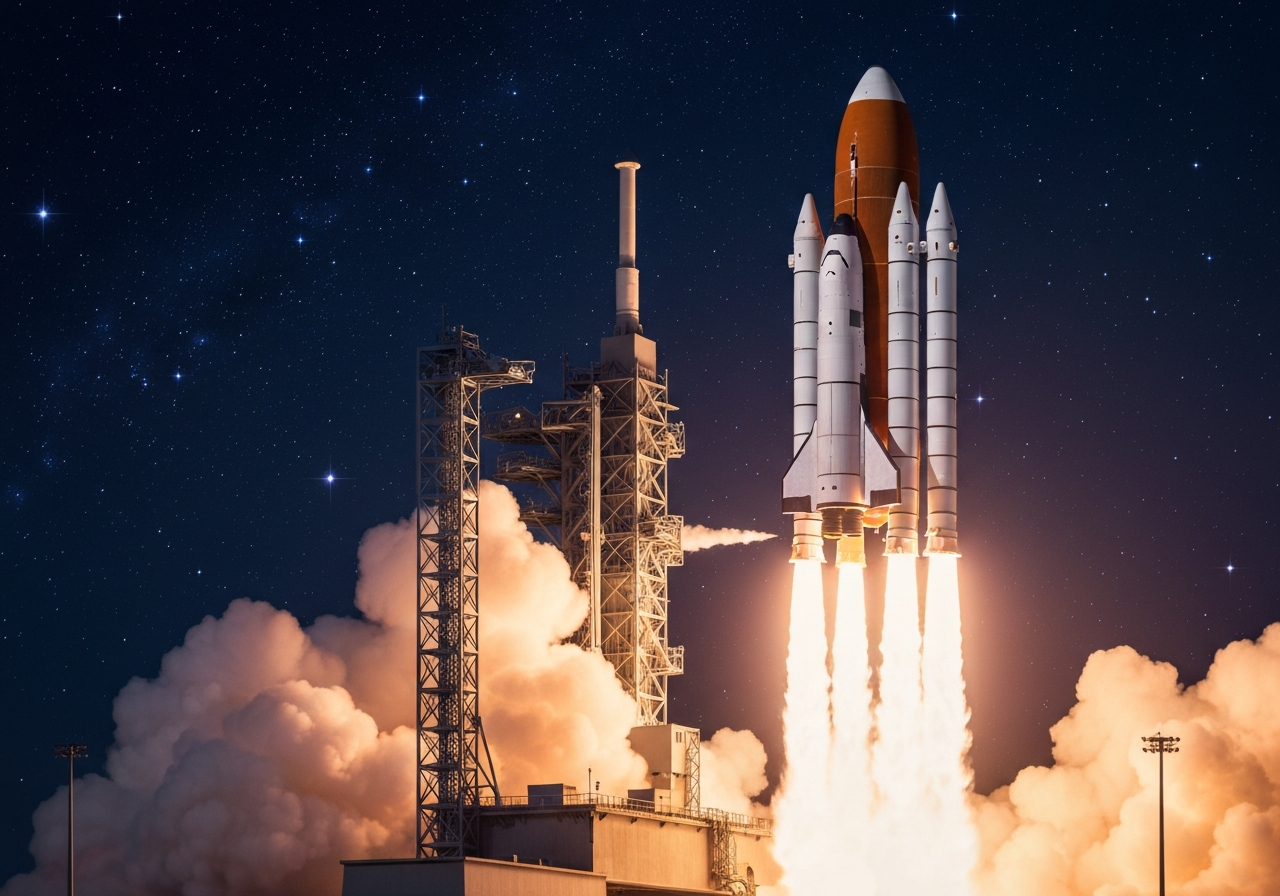
SpaceX is set to attempt a second launch of its upgraded Starship V3 on May 22, 2026, during a 90-minute window that opens at 6:30 p.m. EDT (2230 GMT) from Starbase, Texas. The attempt follows a May 21 scrub caused by a hydraulic pin that failed to retract on the tower arm, which SpaceX said could be fixed for a next-day try. Flight 12 is the first Starship launch of 2026 and the debut of the redesigned V3 vehicle and new Pad 2 infrastructure. SpaceX will stream the countdown live, with coverage beginning roughly 45 minutes before the opening of the window.
Key Takeaways
- Launch timing: Flight 12’s 90-minute window opens May 22, 2026, at 6:30 p.m. EDT (2230 GMT) and closes at 8:00 p.m. EDT (0000 GMT).
- Scrub reason: May 21 launch was aborted at the last minute after a hydraulic pin holding a tower arm did not retract, according to company commentary.
- Vehicle and pad: This flight debuts Starship Version 3 from the new Pad 2 at Starbase, incorporating systems intended to speed fueling and improve booster recovery turnaround.
- Propulsion and configuration: Starship stands about 408 feet tall; the Super Heavy first stage for this vehicle is reported to use 33 Raptor engines.
- Payload reports vary: outlets cite between 20 and 22 dummy Starlink satellites on this suborbital demonstration; we note the discrepancy below.
- Flight profile: The mission is a suborbital test; the upper stage will splash down in the Indian Ocean about 65 minutes after liftoff while the booster is expected to splash down in the Gulf of Mexico roughly seven minutes after launch.
- Operational stakes: Success would advance SpaceX’s plans for lunar lander qualification for NASA’s Artemis program and for future Starlink and commercial missions.
Background
SpaceX has been iterating Starship designs since the vehicle’s initial test flights in 2023; Flight 12 marks the public debut of the Version 3 configuration. The company last flew a Starship vehicle in October 2025, creating a seven-month gap during which engineers revised structural and ground systems. The V3 design and the new Pad 2 are intended to improve reusability workflow, including faster tanking and more reliable booster handling to support catch-and-turnaround operations.
Starbase, Texas (also called Boca Chica) has been SpaceX’s primary development and test site for Starship prototypes. Pad 2 is a newer installation at the complex and includes changes SpaceX says will increase propellant load rates and streamline post-landing operations. The Flight 12 test is framed as a suborbital validation of those systems rather than an operational orbital deployment.
Main Event
On May 21, 2026, SpaceX conducted fueling and a wet dress rehearsal ahead of the first scheduled attempt. The company reported normal tanking operations earlier in the day and began propellant loading in the evening as teams completed final checks. Upper-level winds contributed earlier to a slip in the local launch time but did not by themselves cause the scrub.
At T-40 seconds on the May 21 attempt controllers placed the countdown into an automated hold, and personnel later identified a hydraulic pin on the tower arm that did not retract. Elon Musk noted on social media that the pin’s failure prevented the arm from releasing, and SpaceX called the attempt off at the last minute. Engineers worked through the night to diagnose and, if possible, repair the mechanism ahead of a possible May 22 try.
If the second attempt proceeds, the live webcast will open roughly 45 minutes before the window and teams will run through the same prelaunch sequence: final propellant topping, engine chill procedures, automated holds as required, and a monitored T-0 sequence. SpaceX has said neither the Super Heavy booster nor the Ship upper stage will attempt pad recoveries on this flight; both vehicles are expected to execute planned splashdowns in the ocean.
Analysis & Implications
Operationally, Flight 12 is about more than a single launch: it evaluates design changes to the stack and the Pad 2 ground systems intended to shorten turnaround time. A successful test that validates the faster fueling rate and revised tower interfaces would lower technical risk for future attempts that aim to catch returning stages. For SpaceX, proving these modifications is a prerequisite to the fully reusable cycles the company promises for cost reduction.
Strategically, the mission feeds into NASA’s Artemis schedule because NASA has selected Starship as the Human Landing System for an Artemis lunar mission planned later this decade. Delays or repeat failures would complicate NASA’s timeline and could force additional margin, testing, or contingency planning. Conversely, a clean test would strengthen SpaceX’s posture when negotiating future program milestones with government and commercial customers.
The economic implications extend to SpaceX’s Starlink constellation and commercial launch business. Flight 12 carries dummy payloads meant to simulate operational satellite deployments, and validating payload handling, telemetry, and deployment sequencing reduces risk for forthcoming revenue-generating flights. Investors and partners typically watch these demonstration flights as indicators of schedule credibility for revenue operations.
Comparison & Data
| Feature | Prior Starship | Starship V3 (Flight 12) |
|---|---|---|
| Launch pad | Pad 1 (existing) | Pad 2 (new systems for faster fueling and catches) |
| Fueling rate | Baseline rate from earlier flights | Reported ~20% faster fueling on Pad 2 (company statement) |
| Payload on this test | Dummy Starlinks on prior flights | Reported 20–22 dummy Starlink units (reports vary) |
| Booster engines | Super Heavy configurations previously used | Super Heavy reported with 33 Raptor engines |
The table summarizes public statements and reporting about what differs for V3 compared with earlier flight hardware. Where outlets or company statements differ (for example, in the number of dummy payloads) we preserve that variance and flag it below as unconfirmed.
Reactions & Quotes
“The hydraulic pin holding the tower arm in place did not retract.”
Elon Musk / X (company social post)
SpaceX leadership and commentators framed the May 21 scrub as a last-minute mechanical issue rather than a systemic design failure, stressing that the teams were prepared to troubleshoot and attempt another window the following day.
“We’re loading about 20% faster on Pad 2 than we did on Pad 1.”
Dan Huot / SpaceX spokesperson
Company spokespeople have emphasized Pad 2 performance improvements as a key outcome of the Flight 12 test sequence, with faster propellant throughput highlighted as an operational benefit.
“This is historic. This is a major moment, y’all.”
Nicki Minaj (attendee remarks)
Cultural observers noted celebrity presence at the Starbase viewing area, which underscores the public visibility of large commercial space programs.
Unconfirmed
- Exact payload count: news reports and company commentary list both 20 and 22 dummy Starlink satellites for Flight 12; the precise number has not been uniformly confirmed in public documentation.
- Chun Wang Mars flyby claim: a reported announcement that a private individual will lead a future Starship flyby of Mars was mentioned in live updates, but company confirmation and mission planning details were not published by SpaceX at the time of this report.
Bottom Line
Flight 12 is a critical validation step for SpaceX’s revised Starship and Pad 2 systems. A successful launch and the associated system checks would reduce near-term technical risk for the program and support SpaceX’s timeline for lunar, Starlink, and commercial missions. Failure or additional delays will likely prompt incremental redesigns or extended testing that could ripple into customer schedules.
For readers: follow the live webcast beginning roughly 45 minutes before the 6:30 p.m. EDT (2230 GMT) window on May 22, 2026, and expect controlled holds and troubleshooting to shape the countdown. We will update this dispatch as SpaceX posts official mission status and as descent and splashdown data are reported.
Sources
- Space.com live coverage (news outlet, live reporting)
- SpaceX launch page (official company site)