
Lead
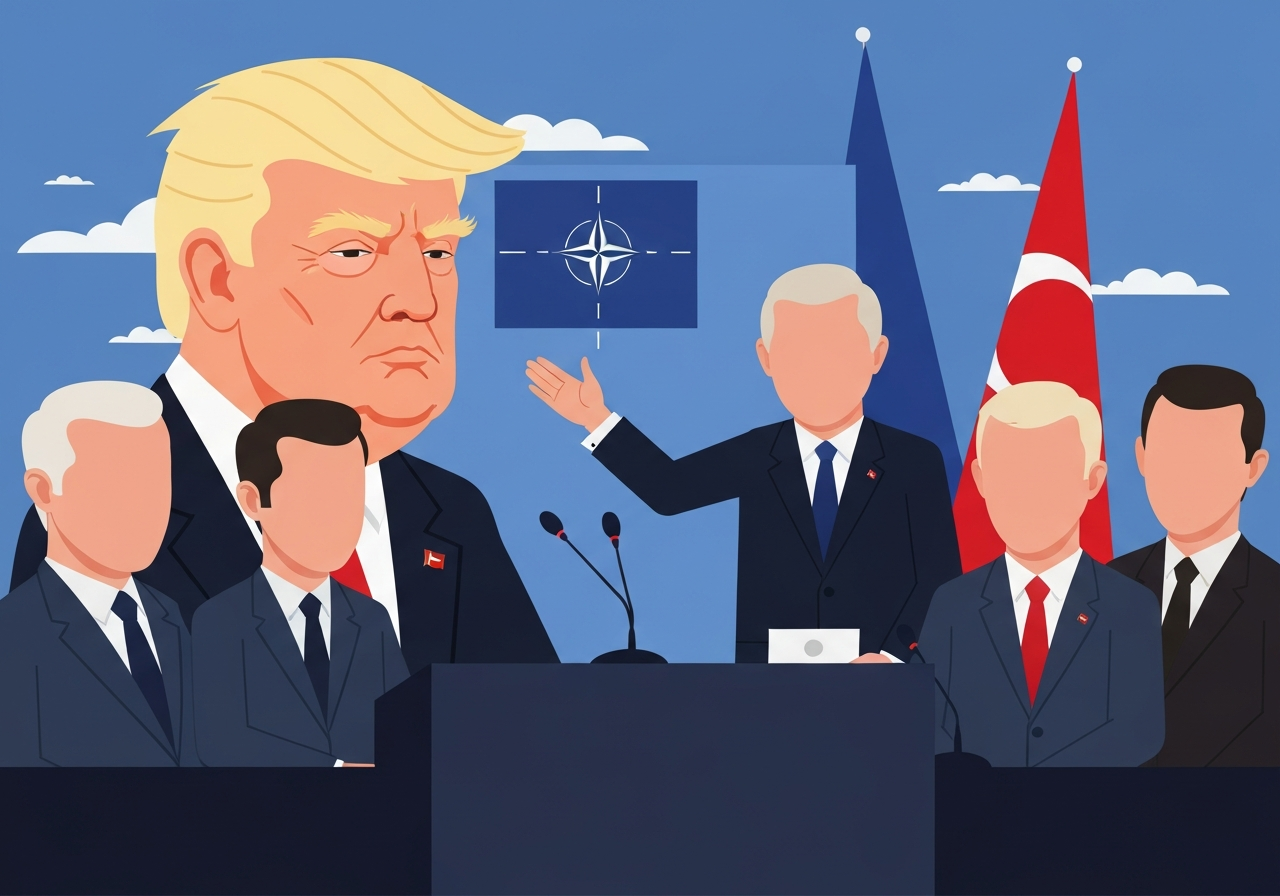
As NATO leaders prepare to meet in Ankara on July 7, the alliance faces a high-stakes test of cohesion with former US President Donald Trump again at the center of attention. Dutch Prime Minister Mark Rutte arrived in Washington in late June pressing a message of transatlantic benefits, citing roughly $1.2 trillion (about €1 trillion) in allied defense spending increases since 2017. Tensions over US reviews of troop posture and public pressure on allies have heightened concerns that political disputes could undercut collective deterrence. The summit will try to balance immediate needs for support to Ukraine with a longer-term push to sustain NATO unity.
Key Takeaways
- Leaders will meet in Ankara on July 7 with all 32 NATO allies expected to attend; the summit aims to reaffirm Article 5 and allied commitments.
- Mark Rutte highlighted an estimated $1.2 trillion (€1 trillion) in additional European and Canadian defense spending since 2017 to appeal to US economic and industrial interests.
- The US announced a review of troop deployments and military posture in Europe on June 18, raising concerns about the pace of potential reductions.
- European NATO members and Canada reportedly plan to pledge €70 billion ($80 billion) in military aid to Ukraine this year and next, according to AFP reporting.
- European defense spending rose sharply in 2025, an increase of about 20% in real terms compared with 2024, under US pressure to do more.
- NATO plans to spotlight defense industrial cooperation, with proposals for new procurement and contracts intended to involve US industry.
- Experts warn that visible political disagreements at the summit could weaken deterrence even if material commitments are confirmed.
Background
NATO convenes its heads of state at a moment of overlapping crises: Russia’s continuing invasion of Ukraine and heightened tensions in the Middle East. Since 2017, a sustained push—intensified during the Trump administration—has driven significant increases in European defense budgets, a point allies now emphasize to sustain US political support. The alliance now numbers 32 members, each with different threat perceptions and fiscal capacities, complicating any straightforward burden-sharing solution. Domestic politics in several allied capitals, electoral cycles, and competing priorities such as energy security and migration further shape how governments approach collective defense commitments.
Mark Rutte has taken on a visible role in smoothing differences with the United States, making an economic case for NATO by stressing procurement opportunities for US firms. The strategy responds to domestic American political rhetoric that prioritizes jobs and industry, alongside traditional security arguments. At the same time, NATO defense ministers in Brussels on June 18 encountered blunt US messaging about allies’ performance, reflecting an administration review of American force posture in Europe. That review — and the way its findings are presented — will influence how quickly or slowly the US might change its footprint on the continent.
Main Event
Rutte used his Washington appearances to argue that NATO delivers tangible benefits to the US, including new defense market opportunities. He displayed figures showing collective European and Canadian defense spending increases since 2017 and framed planned procurement as mutually beneficial. NATO Secretary-General has similarly emphasized unity and sought to minimize public friction ahead of Ankara. The goal is to avoid televised confrontations that could be magnified into broader political signals of discord.
On June 18, US defense officials announced a formal review of troop deployments and military posture in Europe, signaling the administration will re-evaluate which forces and bases remain strategically necessary. The announcement prompted unease among European ministers, who worry about creating gaps during any transition and about the speed of potential US drawdowns. German Defense Minister Boris Pistorius warned publicly that a coordinated roadmap is needed to prevent “dangerous capability gaps.”
Support for Ukraine remains a core agenda item. Reports say European members and Canada will pledge about €70 billion in military assistance this year and next, a large pooled commitment intended to sustain Kyiv’s defense. Rutte has repeatedly urged a more even distribution of Ukraine aid among NATO partners, reflecting concerns that reliance on a few major donors is unsustainable. The summit will therefore seek both material pledges and language that signals continued solidarity against Russian aggression.
Analysis & Implications
Political cohesion is the summit’s strategic linchpin: material contributions matter, but the credibility of collective defense depends on perceived unity. If leaders publicly clash, adversaries could interpret that as a weakening of deterrence, diminishing the practical value of troop deployments or pledges. For allies, the calculus combines short-term actions for Ukraine and long-term planning for European security architectures if US forces are scaled back.
Rutte’s emphasis on defense industrial cooperation aims to align US economic interests with NATO goals, a deliberate attempt to make the alliance politically palatable to an American audience sensitive to jobs and trade. By framing procurement deals as win-win, NATO planners hope to reduce incentives for unilateral US actions. Yet this strategy depends on detailed commercial and political agreements that may be hard to finalize quickly and could leave smaller allies feeling sidelined.
Europe faces a choice: accelerate capability development to reduce dependence on the US or accept a managed, synchronized drawdown of American forces with transitional safeguards. The reported 20% rise in European defense spending in 2025 is significant, but spending increases alone do not translate automatically into interoperable capabilities or rapid force generation. Experts stress the need for coherent planning, training, and logistics to turn money into effective deterrence.
Comparison & Data
| Metric | Reported Figure |
|---|---|
| Additional allied defense spending since 2017 | ~$1.2 trillion (≈€1 trillion) |
| Real-term increase in European defence spending in 2025 vs 2024 | ≈20% |
| AFP-reported NATO pledges to Ukraine (2024–25) | €70 billion per year (~$80 billion) |
These headline numbers show both momentum and limits. The $1.2 trillion figure represents aggregated increases across many states over several years; the 20% rise in 2025 reflects a single-year boost from already varied baselines. The €70 billion figure for Ukraine, if confirmed, would be a substantial pooled commitment but distribution mechanisms and timelines will determine operational impact. Converting spending into deployable, interoperable forces requires multiyear investment in procurement, maintenance, and joint exercises.
Reactions & Quotes
Allies offered cautious public responses while seeking to manage differences behind closed doors. Observers say the tone in Ankara will be as important as the written communiqués.
“We must prevent dangerous capability gaps and coordinate a roadmap for any transition,”
Boris Pistorius, German Defence Minister (official statement)
Pistorius stressed the need for synchronization to avoid military shortfalls during any realignment of US forces.
“We’re going to keep a close eye on allies who are not doing their part,”
Pete Hegseth, US Defence official (June 18 announcement)
Hegseth’s remarks accompanied the US review of deployments and underscored Washington’s focus on burden-sharing performance.
“Leaders want to show that NATO delivers tangible benefits and that a market exists for defense cooperation,”
Claudia Major, Transatlantic security expert (German Marshall Fund)
Major framed Rutte’s procurement push as an effort to appeal to US economic priorities and to preserve political support for the alliance.
Unconfirmed
- Specific package details of Rutte’s proposed “defense industrial revolution” — exact contract values and signatories have not been publicly confirmed.
- The timeline and final decisions from the US review of troop deployments in Europe remain unpublished and could change pending internal US deliberations.
- Precise breakdown and delivery schedules for the reported €70 billion per-year Ukraine pledges were reported by AFP but await formal allied confirmation in Ankara.
Bottom Line
The Ankara summit is less about unveiling a single headline policy and more about managing perceptions of allied resolve. Material commitments—defense spending increases, procurement deals and aid pledges for Ukraine—are important, but public cohesion and careful messaging will determine whether deterrence remains credible. Allies will aim to present a united front, using economic incentives and procurement linkage to reduce points of friction with the United States.
For European capitals, the immediate imperative is to turn recent spending gains into interoperable capabilities and a coordinated transition plan if US posture changes. For the US, demonstrable benefits to American industry and credible allied burden-sharing will be central to sustaining long-term engagement. The outcome in Ankara will shape transatlantic defense planning for years to come.