
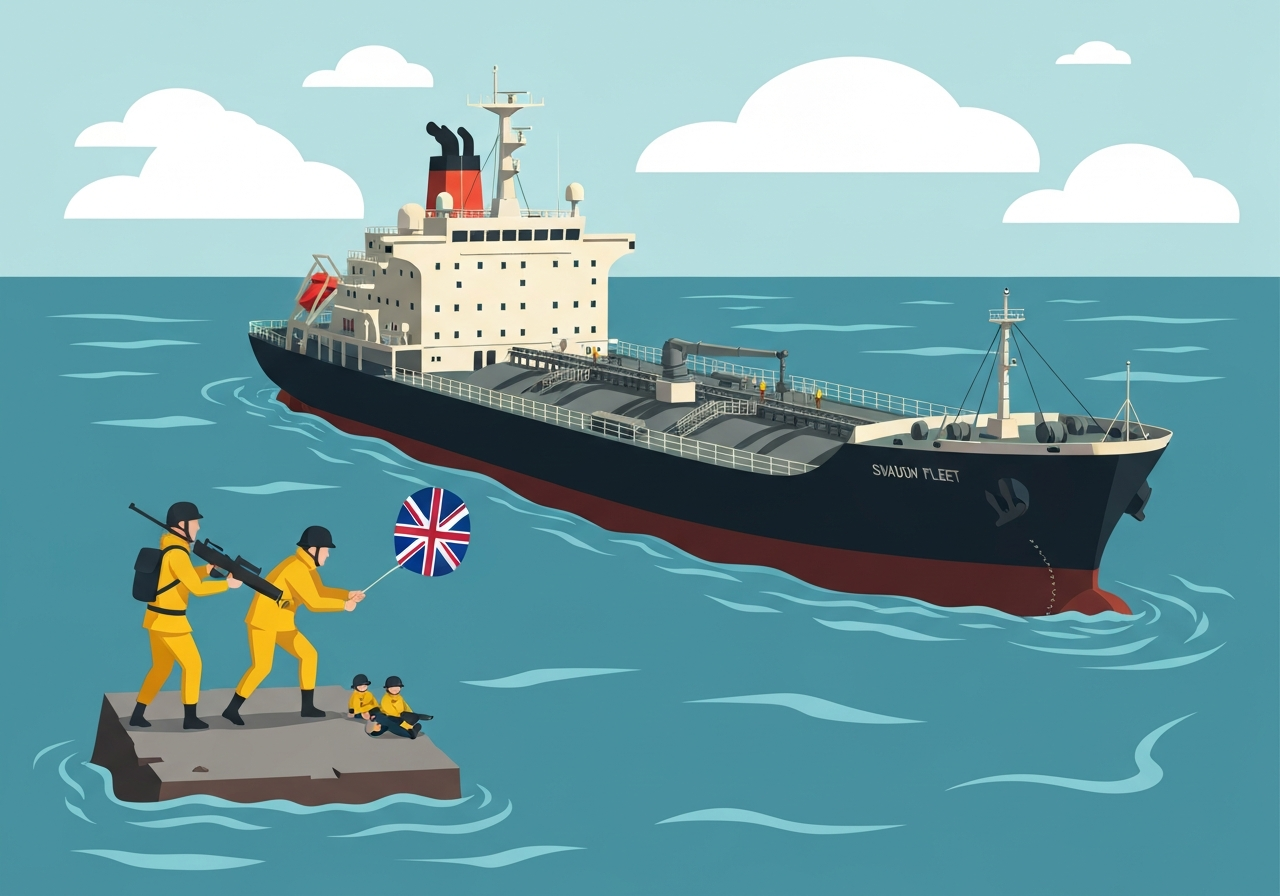
Lead: British forces seized the tanker Smyrtos in the English Channel early on Sunday after a six-hour operation, the UK Ministry of Defence said. The vessel, sailing under a Cameroon flag, was boarded by Royal Marine Commandos and National Crime Agency officers with air and naval support. Prime Minister Keir Starmer framed the action as a targeted strike on Russia’s sanctions-evasion network and a move to choke revenues allegedly funding the war in Ukraine. The ship will be held off England’s south coast while authorities monitor safety and environmental risks.
- Operation length: The interdiction of the Smyrtos lasted six hours, according to the UK Ministry of Defence.
- Forces involved: Royal Marine Commandos and National Crime Agency officials boarded the tanker, supported by Chinook helicopters, a frigate and a minehunter.
- Vessel details: Smyrtos was flying a Cameroonian flag, departed Ust-Luga on June 5 and was bound for Port Said, Egypt, per maritime tracking data.
- Government action: The UK says it has imposed sanctions on more than 500 vessels connected to Russia’s shadow-fleet operations.
- Economic impact: UK officials report Russia’s oil and gas revenues fell by about 24% in 2025 compared with the prior year.
- Diplomatic reaction: Ukrainian President Volodymyr Zelenskyy welcomed the seizure and urged stronger European laws on tanker detention and asset confiscation.
- Precedent seizures: French authorities impounded the Grinch in January, and the Deyna was detained in Marseille in March.
Background
Since Russia’s full-scale invasion of Ukraine in 2022, Western governments have targeted maritime routes used to move and sell crude that helps finance Moscow’s war effort. Analysts say a so-called “shadow fleet” — a network of tankers changing flags, transponders and ownership papers — has been central to efforts to obscure the origin and destination of shipments. The UK and partners have responded with sanctions, interdictions and coordinated tracking to disrupt that logistics chain.
Seizures of vessels suspected of evading sanctions have occurred across Europe in 2026: French authorities impounded the Grinch in January, and the Deyna was detained in Marseille in March. London officials point to a growing set of legal and enforcement tools, as well as expanded maritime intelligence, to locate and detain ships allegedly operating on behalf of Russian interests. Those moves sit alongside broader sanctions designed to reduce Russia’s energy earnings.
Main Event
Early on Sunday, UK Defence Ministry sources said commandos boarded the Smyrtos as it transited the English Channel. The operation combined small-boat approaches with helicopter insertions; a frigate and a minehunter provided sea control and situational awareness. Officials described the boarding, search and securing of the vessel as completed within six hours, after which the tanker was moved to an anchorage off the south coast of England for monitoring.
Government statements said National Crime Agency investigators accompanied military personnel to collect evidence and assess potential criminal links to sanctions-busting. The Ministry of Defence said the ship’s documents and routing suggested attempts to obscure its true ownership and cargo origin by sailing under a Cameroonian flag. Authorities are retaining custody while checks continue on cargo manifests, ownership chains and environmental safety.
Prime Minister Keir Starmer hailed the operation as a direct strike against networks that, in his words, help fund Russia’s war in Ukraine; he framed it as part of a broader UK-led crackdown. Defence Secretary Dan Jarvis publicly praised the troops and investigators involved and said the interdiction was intended to make it harder for Russia to monetise oil and gas. Moscow reacted angrily, with the Kremlin decrying the detention of vessels linked to Russia as tantamount to “piracy,” according to officials.
Analysis & Implications
The seizure underscores a stepped-up enforcement posture by the UK and its partners to interdict maritime routes used to circumvent sanctions. By physically taking control of a tanker rather than relying solely on remote sanctions measures, states increase chances of seizing cargoes, collecting evidence and pursuing legal action. That hands-on approach raises the operational bar: it requires close coordination between military units, law-enforcement teams and maritime authorities.
Economically, interdictions target a critical revenue stream for Russia. UK officials point to a 24% decline in Russian oil and gas receipts in 2025 compared with the previous year — a figure they attribute in part to sanctions and enforcement. However, analysts caution enforcement alone may be insufficient unless combined with tighter financial controls, insurance blacklists and port cooperation to close loopholes that allow ships to change identities and swap cargoes at sea.
Diplomatically, the action will please Kyiv and coalition partners pressing for tougher measures, but it risks escalating tensions with Moscow and could prompt retaliatory steps or legal challenges. European calls for clearer legal frameworks — including authority to detain tankers and confiscate cargo — are likely to intensify. Such measures would require domestic legislation and multinational coordination to withstand legal scrutiny and avoid unintended commercial or environmental consequences.
Comparison & Data
| Event | Date | Location | Outcome |
|---|---|---|---|
| Smyrtos seizure | Early June 2026 | English Channel | Vessel boarded; held off south England |
| Grinch impoundment | January 2026 | France | Detained by French forces |
| Deyna detention | March 2026 | Marseille | Detained; under investigation |
The table places the Smyrtos operation in the context of several recent interdictions in Europe. UK officials cite more than 500 vessels targeted by sanctions to date and point to a reported 24% decline in Russian oil and gas revenues in 2025 compared with 2024. While those figures suggest pressure on Moscow’s energy income, enforcement varies by port state, and the shadow-fleet’s tactics — such as reflagging and ship-to-ship transfers — continue to complicate tracking and interdiction efforts.
Reactions & Quotes
UK officials framed the seizure as a lawful enforcement action against a vessel suspected of facilitating sanctions evasion. The defence ministry emphasised the joint nature of the operation and the involvement of both military and civilian investigators in gathering evidence and ensuring safety.
“This successful operation delivers yet another blow to Russia and reminds those fuelling the war in Ukraine that we will not let them hide,”
Keir Starmer, Prime Minister (statement)
Officials said the comment was intended to signal sustained pressure on networks selling Russian energy and to underline that interdictions will continue. After the public statement, ministers stressed the need for follow-up legal work to determine ownership chains and potential criminal charges.
Ukrainian reactions were supportive and called for stronger European laws to enable detention and confiscation of both vessels and cargo. Kyiv’s leaders argued that removing oil revenues from Russia constrains its ability to sustain military operations.
“Every decision that deprives Russia of money limits the war itself,”
Volodymyr Zelenskyy, President of Ukraine (social post)
European policymakers face a choice between fast-moving interdictions and building legal mechanisms to seize assets sustainably. Kyiv’s demand for new legislation will likely be a point of contention as EU members balance legal standards against political urgency.
Unconfirmed
- Precise ownership links: Public reports have not yet established definitive corporate ownership tying the Smyrtos to specific Russian entities.
- Cargo valuation: Official figures for the volume and market value of the Smyrtos’s cargo have not been released and remain under verification.
- Potential legal charges: Authorities have not publicly confirmed whether criminal prosecutions are being prepared against crew or owners.
Bottom Line
The boarding and seizure of the Smyrtos represents a tangible escalation in the hands-on enforcement of sanctions at sea. It demonstrates the UK’s willingness to use military and law-enforcement tools to interdict ships suspected of helping to finance Russia’s war in Ukraine, and it forms part of a broader Western campaign that has already led to multiple detentions this year.
Yet operational success does not erase legal and logistical challenges: proving ownership links, processing cargo seizures, and enacting broader legislative measures remain necessary to sustain pressure. Observers will watch whether this interdiction accelerates calls for uniform European rules on tanker detention and cargo confiscation, and whether Moscow responds with diplomatic, legal or other countermeasures in the weeks ahead.
Sources
- Al Jazeera — News report summarising the operation (media)
- UK Ministry of Defence / UK Government — Official statements and press releases on the seizure (official)
- MarineTraffic — Vessel tracking data and port calls (commercial maritime data)