
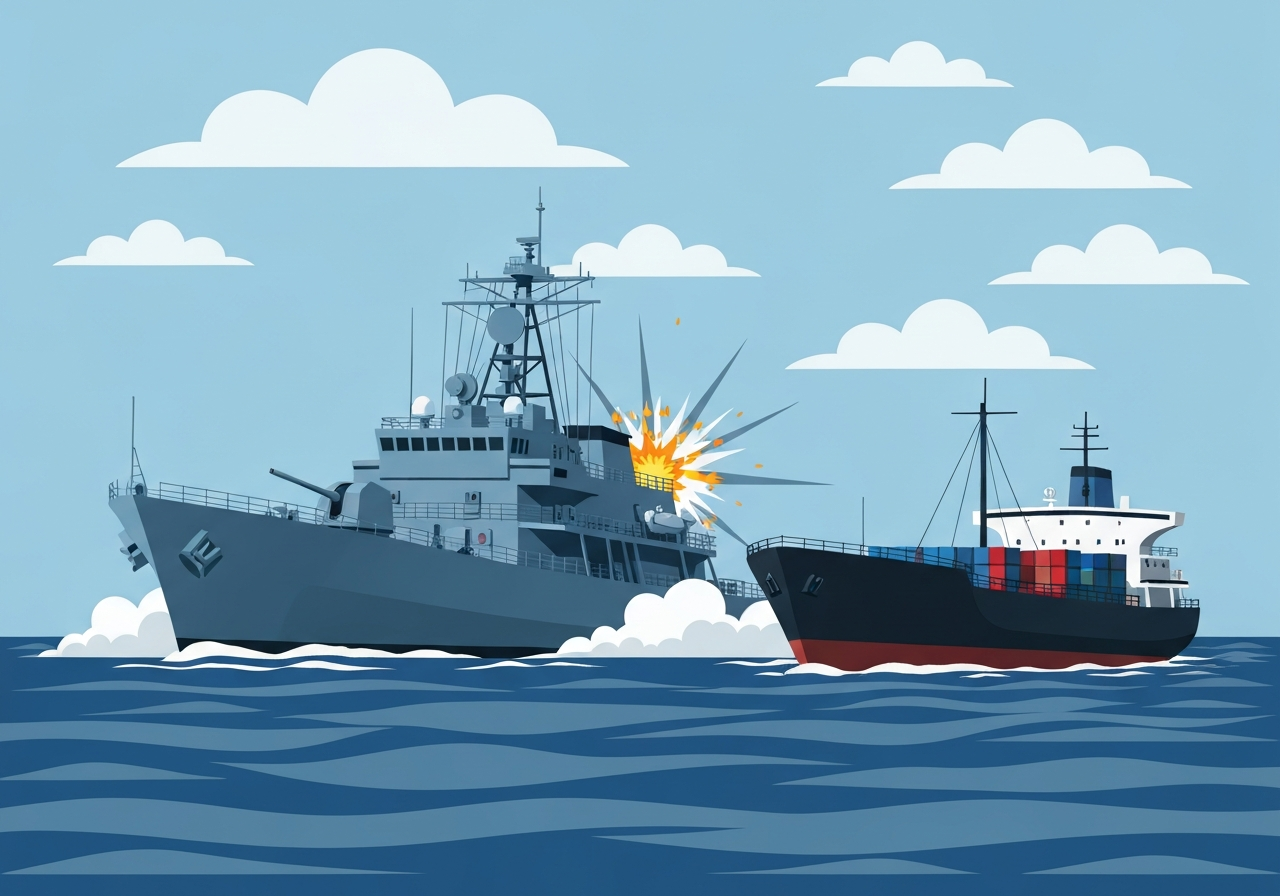
Lead: US naval forces intercepted, fired upon and boarded an Iran‑flagged container vessel, the Touska, in the Gulf of Oman on 19 April after what US Central Command says were repeated warnings. The US says marines disabled the ship’s propulsion, took custody and are inspecting cargo; Iran’s military has called the action a violation of a two‑week ceasefire and vowed retaliation. The incident comes as a US delegation prepares to travel to Islamabad for fresh negotiations with Tehran, and as global oil prices jumped on news of the seizure. Tensions remain high with the ceasefire due to expire and the prospect of further diplomatic engagement uncertain.
Key takeaways
- US forces intercepted the Iranian‑flagged cargo ship Touska in the Gulf of Oman on 19 April; Centcom reports marines boarded after about six hours of warnings.
- Centcom says the USS Spruance disabled Touska’s propulsion before a helicopter team rappelled aboard; President Donald Trump said the engine room was “blown” and US forces have “full custody.”
- Iran’s Khatam al‑Anbiya headquarters called the seizure a ceasefire violation and pledged to retaliate; Iranian state media also reported drone strikes on US ships, with no confirmed damage.
- The Touska is listed on US Treasury sanctions lists, is roughly 290m long with a 13m draught, and was about 40 nautical miles from Chabahar according to AIS tracking data reported on 19 April.
- Oil markets reacted: Brent futures rose to $94.66 (+4.74%) and WTI to $88.55 (+5.6%) on the morning after the announcement.
- A new round of US‑Iran talks was scheduled in Islamabad the same day; Tehran has not formally confirmed participation and state outlets reported officials currently have “no plans for now to participate.”
Background
The incident occurs against a fraught backdrop: the US and Iran have observed a two‑week ceasefire following a sequence of strikes and counter‑strikes that began after US and Israeli action on 28 February. Washington has imposed a naval blockade on Iranian ports as leverage in negotiations, and Tehran has threatened to restrict or toll passage through the Strait of Hormuz — a chokepoint through which roughly 20% of global oil and LNG transits. Previous rounds of talks in early April in Islamabad ran for roughly 21 hours and failed to bridge core differences, particularly over Iran’s nuclear programme and sanctions relief.
Both sides have sent high‑level delegations and advisers to diplomatic venues in recent weeks; the White House named Vice‑President JD Vance to lead the US team to Pakistan, while Iran’s participation remained publicly unconfirmed on 19 April. Domestically, political pressures shape options: Iran’s parliament is debating new measures to regulate passage through the Strait, and US officials have framed the blockade and sanctions as part of a strategy to extract concessions. Non‑state actors, especially Hezbollah in Lebanon, add complexity to the regional security picture as ceasefire terms with Lebanon include requirements for Beirut to act against armed groups.
Main event
According to US Central Command, marines launched from the amphibious assault ship USS Tripoli and rappelled onto the deck of the Touska after the vessel failed to heed multiple warnings over an approximately six‑hour period. Centcom added that the USS Spruance disabled the ship’s propulsion before boarding; President Trump described the engine room being struck and wrote that US forces have “full custody” of the vessel. Video released by Centcom shows the boarding helicopter and marines approaching the ship.
Iranian authorities, including the Khatam al‑Anbiya military headquarters, condemned the seizure as an “act of armed piracy” and said Tehran would respond. State media also carried reports that Iran launched drone strikes against US ships in the Gulf of Oman in response, though there were no independent confirmations of damage to US vessels as of the latest reporting. MarineTraffic and open‑source AIS records indicated the Touska left Port Klang, Malaysia on 12 April and was near Chabahar on 19 April before stopping and drifting.
The Touska is listed by the US Treasury on a sanctions list; US accounts said marines were conducting inspections of the cargo after boarding. The White House reiterated that the naval blockade of Iranian ports will remain until negotiators reach terms satisfactory to Washington. In parallel, Islamabad closed key roads and prepared the Serena Hotel and other venues for incoming delegations ahead of planned talks.
Analysis & implications
Diplomatically, the seizure complicates an already brittle negotiating track. US action to interdict a sanctioned vessel signals an intent to enforce the blockade actively; Iran’s framing of the seizure as a ceasefire breach hardens incentives for retaliation and increases the chance Tehran opts out of immediate talks. If Iran declines to attend, the next window for diplomacy narrows and the risk of a return to expanded hostilities rises — particularly given public threats from US leadership to target Iranian infrastructure if a deal is not reached.
Economically, markets reacted quickly: oil prices spiked on the prospect of renewed disruption in the Strait of Hormuz and retaliatory measures against commercial shipping. Even short‑term interruptions or insurance premium rises would raise transport costs and could feed through to refined fuel prices. For global trade and energy security, continued maritime friction elevates the cost and complexity of routing or insuring tankers transiting the region.
Legally and operationally, the incident raises contested questions about the legitimacy of the US blockade and the lawfulness of interdiction on the high seas. The US points to sanctions and prior unlawful activity as justification; Iran characterises the action as piracy and a violation of the ceasefire. Absent independent adjudication, each side will use the episode for domestic and diplomatic messaging, complicating third‑party mediation efforts.
Comparison & data
| Indicator | Reported value |
|---|---|
| Brent crude (morning Asia trade) | $94.66 (+4.74%) |
| WTI crude (morning Asia trade) | $88.55 (+5.6%) |
| Touska length / draught | ~290 m / 13 m |
| Distance from Chabahar at ~13:00 GMT | ~40 nautical miles |
Those market moves represent intraday volatility tied to geopolitical headlines rather than sustained price levels; commodities can swing sharply on uncertainty and then retrace. The vessel’s physical profile (length, draught) and sanctioned status were factors cited by US officials when justifying the boarding; proximity to Iranian territorial approaches and routing choices are relevant to operational risk assessments for commercial shipping.
Reactions & quotes
US officials emphasised enforcement and inspection. The White House and Centcom framed the action as a lawful interdiction of a sanctioned vessel after warnings.
“We have full custody of the ship.”
President Donald Trump (Truth Social/statement)
Iran’s military and state media responded strongly, framing the seizure as unlawful and promising a response that could include asymmetric measures.
“Armed Forces … will soon respond to and retaliate for this act of armed piracy by the US Navy.”
Khatam al‑Anbiya headquarters (Iranian military)
Human rights and legal analysts cautioned against rhetoric that targets civilian infrastructure. Commentators warned about the humanitarian and legal implications of threats to power plants or bridges.
“Threatening massive war crimes … is as simple as that.”
Kenneth Roth (former Human Rights Watch executive)
Unconfirmed
- Reports of Iranian drone strikes on US ships were carried by Iranian media; independent verification of damage or casualties was not available at the time of reporting.
- Tehran’s final decision on attending the Islamabad talks remained unclear; state outlets reported “no plans for now,” but no named official issued a definitive refusal.
- Claims that the Touska’s engine room was “blown” were made by President Trump; US military statements describe disabling propulsion but do not use identical language.
Bottom line
The boarding and seizure of the Touska marks a sharp escalation in maritime enforcement and further strains an already fragile ceasefire between the US and Iran. The move risks scuttling sensitive diplomatic momentum: if Iran declines the Islamabad meeting, negotiators lose a timely channel to de‑escalate before the ceasefire expires. Markets have signalled concern, with oil jumping on the headline — an immediate economic cost that could persist if shipping insurance and rerouting become widespread.
For the coming days, watch three things closely: whether Iran attends the Islamabad talks or issues a formal refusal; any verified Iranian retaliatory actions against US or commercial vessels; and statements from third‑party states or international organisations offering mediation or condemnation. Each development will shape the probability of renewed negotiations versus a slide toward broader regional confrontation.