
Lead
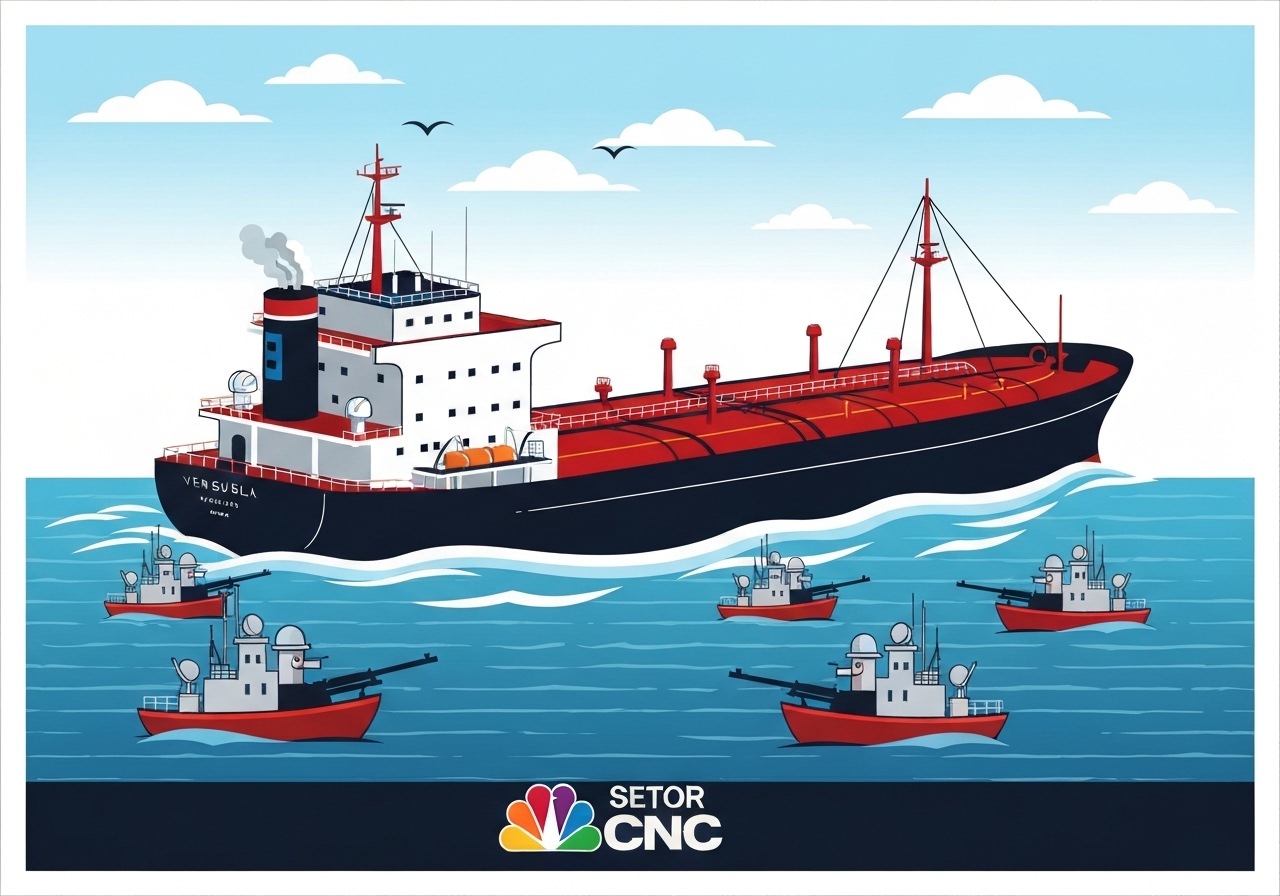
U.S. forces seized a large oil tanker off Venezuela on Dec. 10, 2025, President Donald Trump announced from the White House. Trump described the vessel as “very large” and said it was the largest tanker ever seized, without identifying its owner or destination. The announcement came amid an intensified U.S. military presence in the Caribbean and renewed U.S. pressure on Venezuelan President Nicolás Maduro. Energy markets moved higher after the report, reflecting concerns about supply and geopolitical risk.
Key Takeaways
- U.S. forces announced a seizure of a tanker off Venezuela on Dec. 10, 2025; the president called it “the largest one ever seized.”
- President Trump declined to name the ship’s owner or where it was headed when asked at the White House.
- U.S. crude rose to $58.95 per barrel, up $0.70 (1.2%), and Brent climbed to $62.65, up $0.71 (1.15%) at 3:12 p.m. ET on the same day.
- Kpler data show Venezuela exported about 749,000 barrels per day in 2025, with roughly half directed to China and about 132,000 bpd to the U.S.
- Analysts warn shippers may become more cautious about loading Venezuelan crude after the seizure, per Kpler oil analyst Matt Smith.
Background
The seizure occurs against a backdrop of heightened U.S. pressure on President Nicolás Maduro’s government. In the weeks prior, the administration ordered a build-up of U.S. forces in the Caribbean and has carried out strikes it says targeted drug-trafficking boats bound for the United States. Those moves form part of a broader effort to increase pressure on Caracas through military and economic means.
Venezuela is a founding OPEC member and holds the world’s largest proven oil reserves. According to energy consultancy Kpler, the country has been exporting about 749,000 barrels per day in 2025, with at least half of that volume going to China and about 132,000 bpd arriving in the United States. Sanctions, declining production, and damaged infrastructure have constrained Venezuela’s ability to sustain higher export levels.
Main Event
On Dec. 10, 2025, President Trump spoke from the Roosevelt Room, telling reporters that U.S. forces had seized a tanker off Venezuela’s coast. He emphasized the vessel’s size and said the seizure was carried out “for a very good reason,” but he refused to specify ownership or cargo destination when pressed. The administration has not publicly released a detailed operational or legal summary of the interdiction as of the announcement.
The White House statement came after a period of escalation that included U.S. strikes on boats accused of drug trafficking and a notable increase in U.S. naval assets in the region. Officials have framed those actions as efforts to disrupt narcotics flows and to exert leverage on the Maduro government. Observers note the seizure adds a new and more direct pressure point tied to Venezuela’s oil exports.
Markets reacted quickly: U.S. benchmark futures and Brent strengthened by roughly 1.1–1.2% during afternoon trading, reflecting both supply risk and geopolitical premium. Energy traders and shipping firms will be watching for official documentation—such as an affidavit, sanctions designation, or a maritime interdiction report—that could clarify legal grounds and the cargo’s origin.
Analysis & Implications
Legally, maritime seizures hinge on established authorities—sanctions enforcement, counter-narcotics operations, or judicial orders. The administration’s refusal to detail the legal basis leaves open questions about which statutory or executive powers were invoked and how the action will be defended in international or commercial fora. Such ambiguity raises the likelihood of legal challenges from shipowners or third-party states.
Strategically, the move signals a willingness by the U.S. to target energy flows as leverage against Caracas. Because a substantial portion of Venezuelan crude reaches China, the seizure could complicate Beijing–Caracas trade and prompt diplomatic friction if shipments to third parties are disrupted. It also elevates the risk of reciprocal measures or legal protests from partners involved in Venezuelan exports.
For global energy markets, the seizure is likely to increase perceived risk around Venezuelan barrels rather than remove material volumes immediately from global supply. Shipping intermediaries and insurers may impose higher premiums or stricter vetting, effectively reducing the marketability and transport options for Venezuelan crude absent swift legal clarifications or diplomacy.
Comparison & Data
| Metric | Value |
|---|---|
| U.S. crude (Dec. 10, 2025, 3:12 p.m. ET) | $58.95 / bbl (+$0.70, +1.2%) |
| Brent (same timestamp) | $62.65 / bbl (+$0.71, +1.15%) |
| Venezuela exports (2025, Kpler) | ~749,000 bpd |
| Estimated share to China | ~50% (at least) |
| Exports to U.S. (2025) | ~132,000 bpd |
The table shows the immediate market reaction and the scale of Venezuelan exports in 2025. While headline prices moved modestly, the more consequential impact may be on trade routes, insurance costs, and buyer willingness to accept Venezuelan-origin barrels.
Reactions & Quotes
“We’ve just seized a tanker on the coast of Venezuela — a large tanker, very large, the largest one ever seized actually,”
President Donald Trump, White House remarks
Context: The president framed the seizure as decisive action but withheld operational specifics. His statement underscored the administration’s harder line toward Maduro’s government.
“Shippers will likely be much more cautious and hesitant about loading Venezuelan crude going forward,”
Matt Smith, Oil Analyst, Kpler
Context: Kpler’s analyst warned the industry response could constrict export routes and complicate sales even if the physical flow of oil is not immediately reduced.
“Maduro’s days are numbered,”
President Donald Trump, interview with Politico
Context: In a separate interview published Dec. 9–10, the president reiterated pressure on Venezuela, and said he would not rule out a ground invasion while declining to discuss specific military plans.
Unconfirmed
- No official public documentation has yet confirmed the tanker’s owner, flag state or cargo manifest; those details remain undisclosed.
- It is not confirmed in public reporting that the seized cargo consisted of Venezuelan-origin crude; investigation is pending.
- There is no public legal statement clarifying the statutory basis for the seizure or whether international partners were notified in advance.
Bottom Line
The seizure of a tanker off Venezuela represents a significant escalation in U.S. pressure tactics that links energy flows directly to geopolitical strategy. Markets reacted with modest price gains, but the larger effect may be on trade logistics, insurance and the willingness of buyers and shippers to handle Venezuelan barrels.
Key uncertainties—ownership, cargo origin and legal justification—will determine whether the action becomes a short-lived episode or a sustained disruption. Watch for official legal filings, statements from maritime authorities, responses from China and Venezuela, and any shifts in shipping or insurance costs that could effectively throttle exports even without large, immediate changes in physical supply.