
Lead
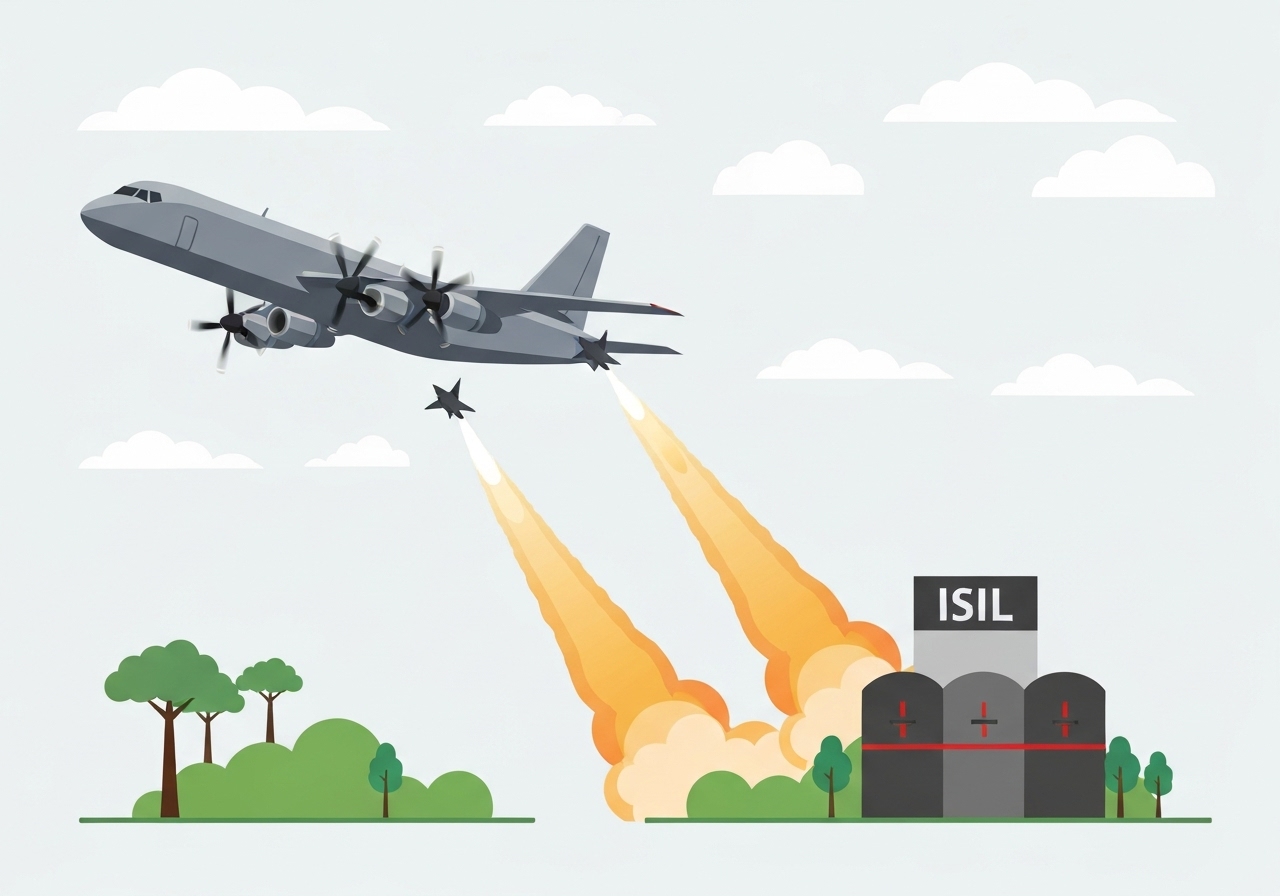
On 25 December 2025, President Donald Trump announced that the United States carried out an airstrike against ISIL-affiliated fighters in northwest Nigeria. The president described the attack on his Truth Social platform as a “powerful and deadly strike” aimed at militants accused of killing mainly Christian civilians. US Africa Command (AFRICOM) later said the action, carried out at the “request of Nigerian authorities,” killed multiple ISIL fighters and placed the strike in what AFRICOM referred to as Sokoto state. The announcement arrived amid prior US warnings and recent US policy steps targeting Nigerian actors linked to mass violence.
Key Takeaways
- The strike took place on 25 December 2025 and was announced by President Trump on his Truth Social account.
- AFRICOM said the operation killed “multiple ISIS terrorists” and located the action in Sokoto state (reported by AFRICOM as “Soboto”).
- President Trump characterized the militants as responsible for the killing of “primarily, innocent Christians,” citing historic levels of violence.
- US Secretary of Defense Pete Hegseth posted support on social media and hinted at “more to come,” without operational details.
- The US Department of State has recently moved to restrict visas for Nigerians linked to mass killings of Christians, part of broader pressure on perpetrators.
- Nigeria’s federal authorities stress that armed groups have attacked both Muslim and Christian communities, calling the security picture complex.
- The strike follows Trump’s earlier instruction to the Pentagon to plan possible operations in Nigeria amid concerns about religiously motivated violence.
Background
Nigeria’s northwest and the broader Sahel-adjacent regions have faced prolonged insecurity from a mix of Islamist militants, bandit gangs and ethnic militias. ISIL-affiliated networks have operated in pockets of northwestern Nigeria alongside locally rooted armed groups that routinely clash with security forces and civilian communities. Over recent years, attacks have targeted markets, places of worship and villages, producing large numbers of fatalities and displacements.
US involvement in counter‑terror operations in Africa has been episodic but steady, centered on intelligence support, strikes against high‑value targets and training for partner forces under AFRICOM’s remit. The Trump administration’s announcement follows policy moves including visa restrictions announced by the US Department of State aimed at Nigerians allegedly involved in mass killings and violence against Christians. Nigerian authorities and civil society groups have repeatedly urged international cooperation while stressing the need for respect of national sovereignty and nuanced understanding of local dynamics.
Main Event
President Trump announced the strike late on Christmas Day from his Mar‑a‑Lago residence in Palm Beach, Florida, saying it was conducted “at my direction as Commander in Chief.” He framed the operation as punishment for militants who he said had slaughtered mostly Christian civilians. The message was posted on Truth Social and amplified by senior US officials on other platforms.
AFRICOM confirmed an airstrike in northwest Nigeria and said it acted at the request of Nigerian authorities, reporting that the strike had killed “multiple ISIS terrorists.” The command located the action in what it described as “Soboto state,” an apparent reference to Sokoto state in Nigeria’s northwest. AFRICOM’s public post did not provide a detailed casualty count or precise coordinates of the strike.
Defense Secretary Pete Hegseth publicly thanked the Nigerian government for its cooperation and warned of additional actions, but he did not release operational specifics. Nigerian federal spokespeople have stressed that armed actors target communities across religious lines and cautioned against simplifying the conflict into a single sectarian narrative. Local reporting and aid groups are still gathering on‑the‑ground information about civilian harm and displacement resulting from the strike.
Analysis & Implications
The strike marks a notable escalation of direct US kinetic involvement in Nigeria since US policy has mostly emphasized training, surveillance and limited strikes against transnational terrorist nodes. Conducting kinetic strikes “at the request” of a host government provides political cover but complicates questions about oversight, intelligence sharing and post‑strike assessment of civilian harm. Reliable casualty verification in remote zones of northwest Nigeria is often delayed, raising immediate concerns about transparency.
Politically, the action aligns with a US administration posture that has foregrounded protecting persecuted religious communities and using targeted measures—such as visa restrictions—to pressure alleged perpetrators. The operative framing of victims as “primarily, innocent Christians” will resonate with domestic constituencies in the US and influence diplomatic messaging, but it risks heightening sectarian perceptions inside Nigeria where violence is frequently multi‑causal.
Regionally, an expanded US strike footprint in Nigeria may prompt operational recalibrations by both Nigerian security forces and non‑state actors. It could enhance short‑term pressure on ISIL affiliates but also risks provoking retaliatory attacks or exacerbating recruitment narratives if civilian harm is perceived. International partners will closely watch post‑strike assessments, and calls for independent investigations into both the strike’s effects and the broader pattern of violence are likely to increase.
Comparison & Data
| Item | Recent trend / note |
|---|---|
| Reported date | 25 December 2025 |
| Location named by AFRICOM | Sokoto state (reported as “Soboto”) |
| Casualties (US statement) | “Multiple” ISIL fighters; no precise figure released |
| US policy steps | Recent visa restrictions for Nigerians linked to mass killings of Christians |
Available public data remain limited: AFRICOM and US officials provided broad characterizations rather than precise tallies. Independent verification in northwest Nigeria typically lags due to access, security constraints and sparse independent monitoring infrastructure. Historical strikes in the region have shown wide variation between initial official claims and later, field‑verified casualty and damage assessments.
Reactions & Quotes
“Tonight, at my direction as Commander in Chief, the United States launched a powerful and deadly strike against ISIS Terrorist Scum in Northwest Nigeria.”
President Donald Trump (Truth Social)
Trump framed the operation as a direct response to what he described as large‑scale killings of Christians and presented it as fulfillment of prior warnings to militants.
“Grateful for Nigerian government support & cooperation… more to come.”
Pete Hegseth, US Secretary of Defense (social media)
Hegseth’s post signaled continued US readiness to take further action but lacked operational specifics, leaving analysts to await formal statements from defense channels for clarification.
“Armed groups in Nigeria target both Muslim and Christian communities; the security situation is complex and cannot be reduced to a single narrative.”
Nigerian federal government spokesperson (official statement)
Nigerian officials warned that simplifying the conflict risks mischaracterizing local dynamics and undermining coordinated domestic responses.
Unconfirmed
- Exact casualty figures from the strike remain unverified; AFRICOM used the term “multiple” without a definitive number.
- The degree to which the targeted militants were solely responsible for the killings of “primarily, innocent Christians” has not been independently corroborated and may oversimplify local incident patterns.
- Reported location identified as “Soboto” by AFRICOM appears to refer to Sokoto state; final geographic confirmation is pending.
Bottom Line
The US airstrike announced on 25 December 2025 represents a clear escalation in direct US action against ISIL affiliates in northwest Nigeria and reflects an administration strategy linking kinetic operations with diplomatic pressure. While US officials cite multiple militant deaths and cooperation with Nigerian authorities, independent verification is limited and essential for assessing civilian harm and operational effectiveness.
Going forward, expect calls for transparent post‑strike assessments, heightened scrutiny of US‑Nigerian coordination, and increased attention to the strike’s potential to alter local conflict dynamics. For policymakers and observers, the central questions will be whether the action degrades ISIL operational capacity, how it affects civilian protection, and whether it catalyzes a broader change in regional security cooperation.
Sources
- Al Jazeera (international news)
- US Africa Command (AFRICOM) official statements — (official military)
- US Department of State (visa policy announcement) — (official government)
- Truth Social (President Trump’s post) — (social media/primary statement)