
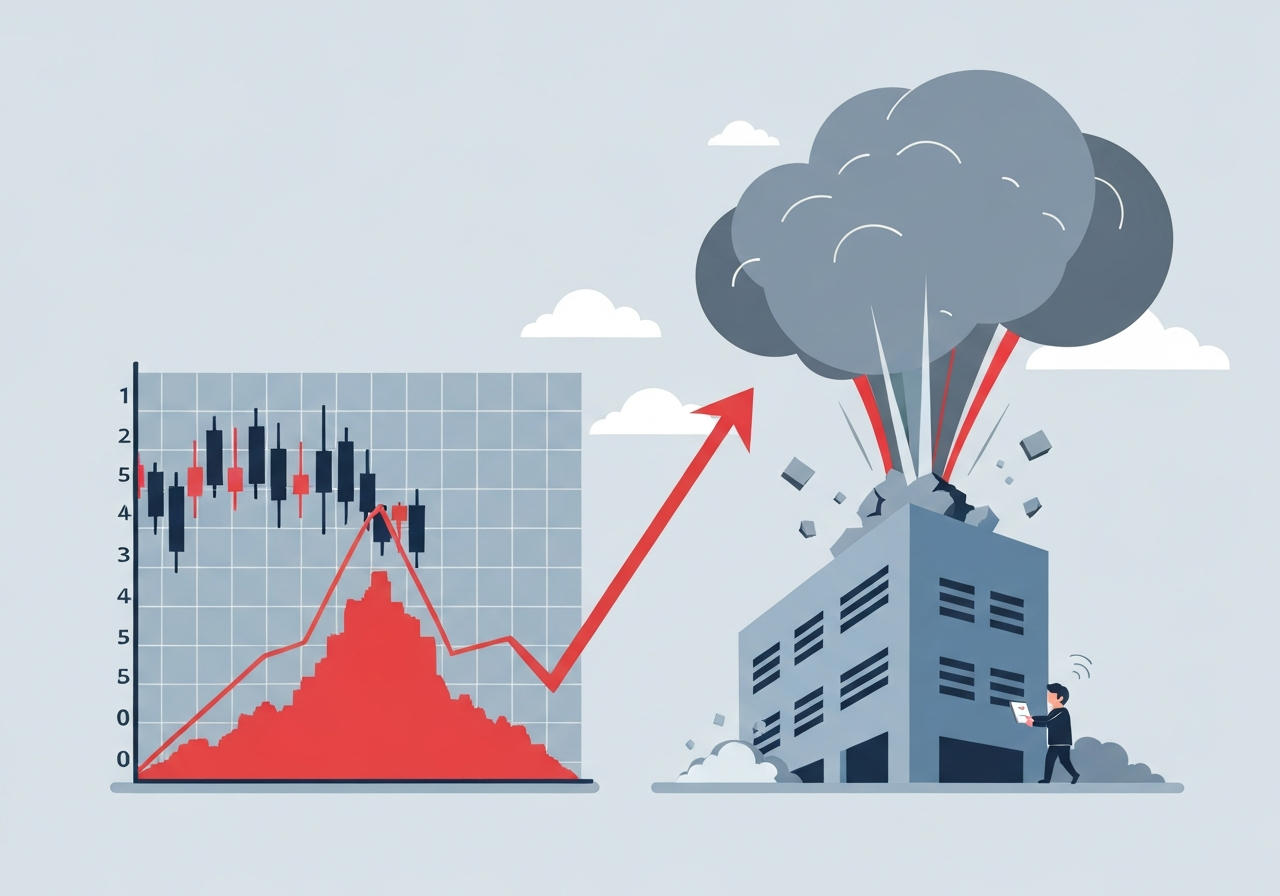
Lead: U.S. forces carried out what they described as “self-defense strikes” against Iran on the evening of June 9, 2026, after an Apache helicopter was shot down a day earlier. The move sent U.S. stock futures lower overnight, with S&P 500 and Nasdaq 100 contracts falling and oil prices ticking up. Asian bourses posted broad losses—led by a deep slide in South Korea—while European markets opened modestly higher. Investors are now parsing near-term geopolitical risk alongside a key U.S. inflation print due Wednesday morning.
Key takeaways
- S&P 500 futures fell about 0.50% and Nasdaq 100 futures dropped roughly 0.87% in early trading after the strikes.
- Futures tied to the Dow Jones Industrial Average declined roughly 140 points, or 0.28%.
- Asia-Pacific markets closed mostly lower: South Korea’s Kospi slid 4.52% to 7,730.82, Japan’s Nikkei 225 fell 1.89% to 64,179.27, and China’s CSI 300 lost 1.11% to 4,748.59.
- Australia’s S&P/ASX 200 fell 0.57% to 8,653.30 despite the regional weakness.
- West Texas Intermediate crude rose about 1%, trading near $89 a barrel after the strikes.
- Chip and AI-exposed names underperformed: SoftBank tumbled ~10%, SK Hynix fell over 8%, and Samsung Electronics slid about 7.45%.
- Market attention also shifted to U.S. data: the consensus Dow Jones forecast puts May CPI at a 4.2% annual pace, with a 0.5% monthly gain due 8:30 a.m. ET Wednesday.
Background
Geopolitical tensions escalated after a U.S. Army Apache helicopter was downed on June 8, prompting President Donald Trump and U.S. defense officials to say a response would follow. On June 9 U.S. Central Command said strikes were carried out “in response to yesterday’s downing” and framed them as proportional self-defense. Iran has not issued a direct, verifiable admission of responsibility for shooting down the helicopter, leaving a contested factual backdrop to the military exchange.
Markets entered the week already sensitive after an AI-driven rally concentrated in semiconductor and memory stocks reversed late last week, producing a pullback. That sector concentration had pushed valuations higher, and strategists warned sentiment looked stretched before the fresh geopolitical shock. At the same time, investors were awaiting the May consumer price index reading, which could influence Federal Reserve expectations; a hotter-than-expected CPI would complicate the backdrop for risk assets.
Main event
Shortly after U.S. forces announced the strikes on June 9, U.S. equity futures turned lower: S&P and Nasdaq contracts slid, and Dow futures were down about 140 points. In regular New York trading on Tuesday the blue-chip Dow had actually gained 86.10 points (0.17%), even as the S&P 500 and Nasdaq Composite finished the session lower by 0.26% and 0.97% respectively. The overnight military action shifted sentiment further toward risk-off in early Wednesday trade.
Asia-Pacific markets reacted sharply: South Korea’s Kospi registered the day’s largest drop among major Asian indices, led by steep losses in memory and semiconductor firms. Japan’s SoftBank plunged roughly 10% amid broader tech weakness and questions over its planned funding tied to AI-related assets. Taiwan’s TSMC and major Korean chipmakers also lost ground, amplifying regional selling pressure in technology-related sectors.
Oil jumped about 1% to near $89 a barrel as traders priced in the possibility of renewed Middle East supply risks. Commodity-sensitive sectors and parts of the energy complex outperformed briefly, while rate-sensitive and growth-exposed names lagged. European markets, by contrast, initially shrugged off the overnight strikes and opened slightly higher, with autos, insurance and health-care stocks leading gains while tech and banks trailed.
Analysis & implications
Markets typically dislike sudden geopolitical escalation because it introduces uncertainty about energy supplies, trade routes and military escalation risk; the immediate move higher in crude reflects that classic channel. A sustained rise in oil, if it occurs, could feed through to higher inflation readings, complicating central bank policy calculations ahead of scheduled data releases. With May CPI due early Wednesday, traders face a two-front risk: geopolitical shock and domestic inflation surprises.
The concentration of recent equity gains in memory and semiconductor firms has made the broader market more sensitive to sector-specific reversals. When a handful of names lead a rally, a shock that disproportionately hits that cohort—such as a liquidity squeeze, margin funding concerns, or negative sentiment toward AI valuations—can translate into outsized market moves. The weakness in SoftBank and major chip suppliers highlights how funding mechanics and concentrated positioning can amplify volatility.
For policymakers, the timing is awkward. A hotter CPI print would strengthen arguments for a tighter policy stance, while a geopolitical-driven market sell-off and higher oil could slow growth and present a policy trade-off. Internationally, renewed U.S.-Iran hostilities would likely slow any diplomatic momentum toward a durable ceasefire, raising the risk premium for trade, shipping through the Strait of Hormuz, and regional investment flows.
Comparison & data
| Index / Instrument | Move (approx.) | Level |
|---|---|---|
| S&P 500 futures | -0.50% | — |
| Nasdaq 100 futures | -0.87% | — |
| Dow futures | -140 pts (-0.28%) | — |
| Nikkei 225 | -1.89% | 64,179.27 |
| Kospi | -4.52% | 7,730.82 |
| CSI 300 | -1.11% | 4,748.59 |
| S&P/ASX 200 | -0.57% | 8,653.30 |
| WTI crude | +~1% | ~$89 / bbl |
The table above summarizes the key market moves reported after the June 9 strikes. The most pronounced regional effect was in South Korea, where memory-sector exposure and investor positioning contributed to a notably larger percentage decline than elsewhere. In the U.S., futures moves were modest in absolute percentage terms but significant given the overnight timing and the layering of macro data risk.
Reactions & quotes
Officials and market participants offered immediate, contrasting takes on the strikes and market implications.
“A proportional response to unjustified Iranian aggression,”
U.S. Central Command (Centcom)
Centcom framed the operation as limited and retaliatory; officials emphasized that the strikes were calibrated to be proportional while warning the situation remained fluid. That official line sought to assert measured intent but also underscored the potential for further escalation if either side amplifies its response.
“It feels very toppy at this moment,”
Marta Norton, Chief Investment Strategist, Empower Investments
Norton pointed to stretched sentiment concentrated in memory and semiconductor stocks as a contextual reason behind the scale of the sell-off. Her assessment reflects a common market view that concentrated rallies are more vulnerable to news shocks and technical unwind than broad-based advances.
“The two pilots … are safe and uninjured,”
President Donald Trump (social post)
President Trump highlighted the safety of U.S. personnel involved in the helicopter incident, a detail intended to reassure domestic audiences even as geopolitical tensions rose. Remarks from political leaders are being weighed by markets for clues about intent and the prospects for further action.
Unconfirmed
- Attribution of the helicopter downing: Iran has not publicly and verifiably admitted to shooting down the Apache; responsibility remains disputed.
- Scale and casualty figures from the U.S. strikes: independent verification of on-the-ground damage or casualties has not been published.
- Whether the strikes permanently end or merely pause any nascent diplomatic talks between Washington and Tehran is not yet clear.
Bottom line
The June 9 U.S. strikes on Iran produced a prompt market reaction: futures dropped, Asian tech-led bourses were hit hard, and oil rose near $89 a barrel. Part of the market move reflects immediate geopolitical risk; another part reflects existing vulnerability from a concentrated rally in semiconductors and AI-related names. With May CPI due and the potential for oil-driven inflation upside, traders face intersecting macro and geopolitical risks that could amplify volatility in the coming days.
Investors should watch three developments closely: the May CPI print at 8:30 a.m. ET, follow-up official statements from Washington and Tehran about further military or diplomatic steps, and any market-structure signals from funding-sensitive names (for example, margin loans or distressed asset sales). These will determine whether the market reaction is short-lived jitter or the start of a broader risk-off phase.