
Lead
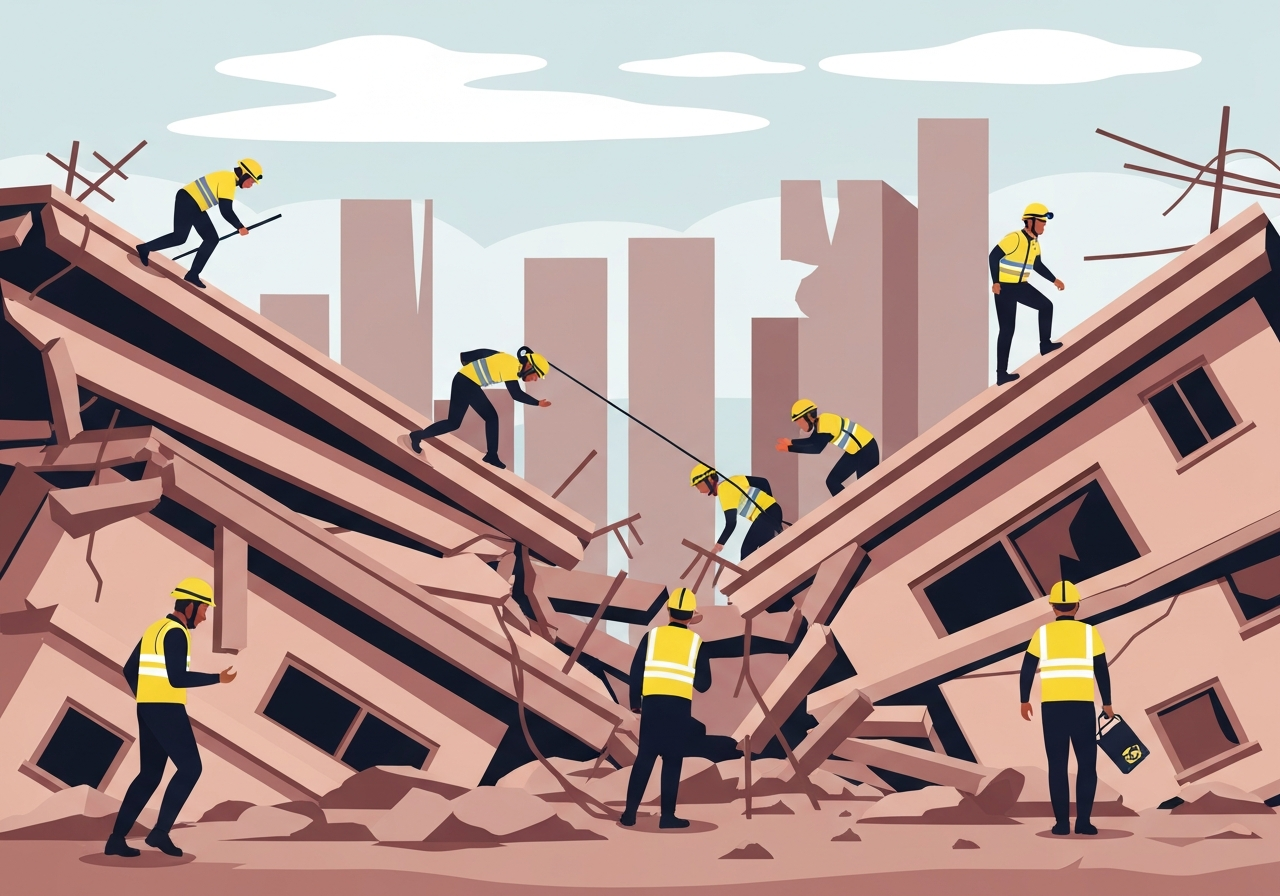
Rescue teams raced through rubble across Venezuela on Saturday after two powerful earthquakes struck on Wednesday evening, with officials reporting 1,430 people killed and 3,238 injured so far. The hardest-hit area is La Guaira state, where whole buildings have collapsed and thousands have been displaced. International search-and-rescue units are arriving as the critical 72-hour window for finding survivors narrows. A US Geological Survey assessment issued a red alert and estimated a very wide potential fatality range to guide response planning.
Key takeaways
- Official toll: Venezuelan authorities put the confirmed deaths at 1,430 and injuries at 3,238, announced by top lawmaker Jorge Rodríguez on state media.
- USGS warning: The US Geological Survey’s PAGER system estimated potential fatalities between 10,000 and 100,000, a probabilistic exposure estimate rather than a definitive death count.
- Scale of displacement: Acting President Delcy Rodríguez said 3,142 families are in shelters and La Guaira has had electricity restored to about 60%.
- Aftershocks and security: Authorities reported roughly 430 aftershocks; the state says 14,000 military and police personnel are patrolling La Guaira to maintain order and safety.
- International response: The UN coordination system shows at least 20 international search teams already deployed, with 32 more mobilising — a projected 52 teams and over 2,265 rescuers, including about 140 search dogs.
- Critical infrastructure: Satellite imagery shows cracks and damage at Simón Bolívar International Airport’s runway and terminal, limiting operations and complicating logistics.
- Local capacity: Civilians and volunteer groups are conducting much of the early search work, often without heavy equipment; well-equipped international teams are arriving by air to supplement efforts.
Background
Venezuela was struck by twin earthquakes on Wednesday evening that caused widespread structural collapse, particularly in La Guaira, a coastal state north of the capital, Caracas. The country’s emergency systems were already strained by long-term underinvestment, and critics say political and economic instability have weakened building standards and public services over many years. That vulnerability has amplified the human toll and complicated the immediate response.
The USGS PAGER alert — a probabilistic tool that combines earthquake magnitude, depth, shaking intensity and exposed population — triggered a red warning, issued only one to two times a year for events of this severity. Authorities and international agencies are treating the event as a large-scale disaster, mobilising specialised urban search-and-rescue teams, medical units and logistics support from across the Americas and Europe.
Main event
Initial reports from La Guaira show multi-storey residential towers reduced to rubble in some neighbourhoods, with dramatic before-and-after aerial photos revealing entire façades missing or buildings collapsed. Local residents have described frantic scenes as aftershocks forced rescuers and volunteers to withdraw temporarily for safety. In many areas, streets are blocked by debris, slowing the movement of heavy machinery and ambulances.
Government officials say efforts are focused on locating survivors and restoring basic services. Acting President Delcy Rodríguez announced that electricity in La Guaira had been restored to roughly 60% and that additional machinery had been mobilised to clear access routes. She thanked international partners for incoming assistance and said security forces were deployed to keep order as rescue work continues.
International search-and-rescue teams from countries including Spain, Chile, Mexico, Ecuador, Panama and others have been arriving at airports and staging areas. Crews are bringing sniffer dogs, heavy lifting equipment and medical supplies. Volunteers and local civilians have been instrumental in early recoveries, but many teams emphasised the need for specialised gear to reach people trapped deep under concrete and twisted steel.
At Valencia airport, arriving teams were met by grateful crowds and airport staff, with some rescuers visibly moved by the reception. Rescue workers describe exhausting shifts in high heat, the psychological strain of recovery operations, and the growing urgency as the hours pass since the quakes.
Analysis & implications
The immediate humanitarian impact is severe: confirmed fatalities and injuries are high, thousands are displaced, and critical infrastructure is damaged. The USGS PAGER estimate — a wide 10,000–100,000 range — is intended as an early indicator of potential scale to prioritise response; it does not replace careful on-the-ground casualty accounting, which typically lags in large disasters.
Venezuela’s long-term institutional weaknesses — underfunded emergency services, deteriorated building maintenance and constrained logistics — heighten the risk that the confirmed toll will rise. Restoring transport corridors and airport capability will be vital for getting heavy equipment and specialised teams to the worst-hit zones rapidly. Without such access, local volunteers will continue to shoulder dangerous recovery tasks with limited tools.
Politically, the crisis could intensify scrutiny of government preparedness and transparency. Officials have framed the response as a national priority and emphasised international cooperation, but independent verification of casualty and missing-person figures will be crucial for public confidence and for directing international aid effectively.
Economically, the damage in coastal urban areas and the disruption of an international airport will have short-term effects on commerce and longer-term reconstruction costs. Reconstruction will require sustained funding, materials, and oversight to ensure safer rebuilds, especially for high-rise residential buildings that suffered catastrophic damage.
Comparison & data
| Measure | Reported figure |
|---|---|
| Confirmed deaths | 1,430 |
| Confirmed injured | 3,238 |
| Families in shelters | 3,142 |
| USGS PAGER estimate (probabilistic) | 10,000–100,000 |
| Aftershocks reported | ~430 |
| International rescue teams | 20 deployed, 32 mobilising (52 total projected) |
| Rescuers mobilised (projected) | ~2,265 |
The table summarises confirmed tallies and early external estimates. The USGS PAGER range is intentionally broad because it combines seismic parameters with population exposure and historical fatality rates from similar events; it should be treated as guidance for response priorities rather than a precise death count. On-the-ground counts will be refined as search operations progress and records are consolidated.
Reactions & quotes
Officials and responders have underlined the urgency of search operations and the importance of international assistance.
“The most important task and our priority is the rescue of people who are still alive. We have faith and hope that we are going to rescue them.”
Acting President Delcy Rodríguez
Delcy Rodríguez delivered public briefings stressing rescue efforts and thanking foreign partners while announcing security and service-restoration measures in La Guaira.
“Survivability reduces with every hour — time is of the essence.”
Josh Macabuag, engineer, Search and Rescue Assistance in Disasters (Saraid)
Macabuag, with prior experience in the 2023 Turkey-Syria earthquake response, emphasised that while rare rescues after many days do occur, the probability of finding people alive declines continuously with time.
“Road blockage and aftershocks are slowing us down; we have had to adapt to motorcycles and lighter means of transport to reach people.”
Loyce Pace, Regional Director for the Americas, International Red Cross
Pace highlighted logistical constraints and heroic local efforts, noting teams singing to trapped victims and rescuers pulling relatives from debris with bare hands.
Unconfirmed
- Web-based missing-person tallies: an external site had received around 68,000 missing reports with 13,000 located, but this self-reporting tool likely overcounts or overlaps and has not been validated by authorities.
- Exact runway damage depth at Simón Bolívar International Airport is unclear; satellite images show surface cracks but the structural severity and repair timeline remain unverified.
- Some local claims that search operations will be halted in specific sites have not been independently confirmed and may reflect temporary tactical withdrawals for safety due to aftershocks.
Bottom line
The human cost of Venezuela’s twin earthquakes is already high and may rise as search teams continue to clear rubble and consolidate casualty records. Early probabilistic tools such as the USGS PAGER are flagging the potential scale for responders, but they are not substitutes for systematic, on-the-ground accounting.
Rapid delivery of heavy equipment, stabilised transport routes and coordinated international assistance will be critical over the coming days to improve survivor recovery rates and to begin the complex task of damage assessment and reconstruction. Transparent reporting and independent verification of casualty and missing-person numbers will be essential for credible relief operations and for families seeking information.
Sources
- BBC Live coverage (news outlet)
- US Geological Survey (USGS) PAGER system (official seismic assessment)
- UN Office for the Coordination of Humanitarian Affairs / GDACS (UN coordination)
- International Red Cross statement (humanitarian organisation)