
Lead
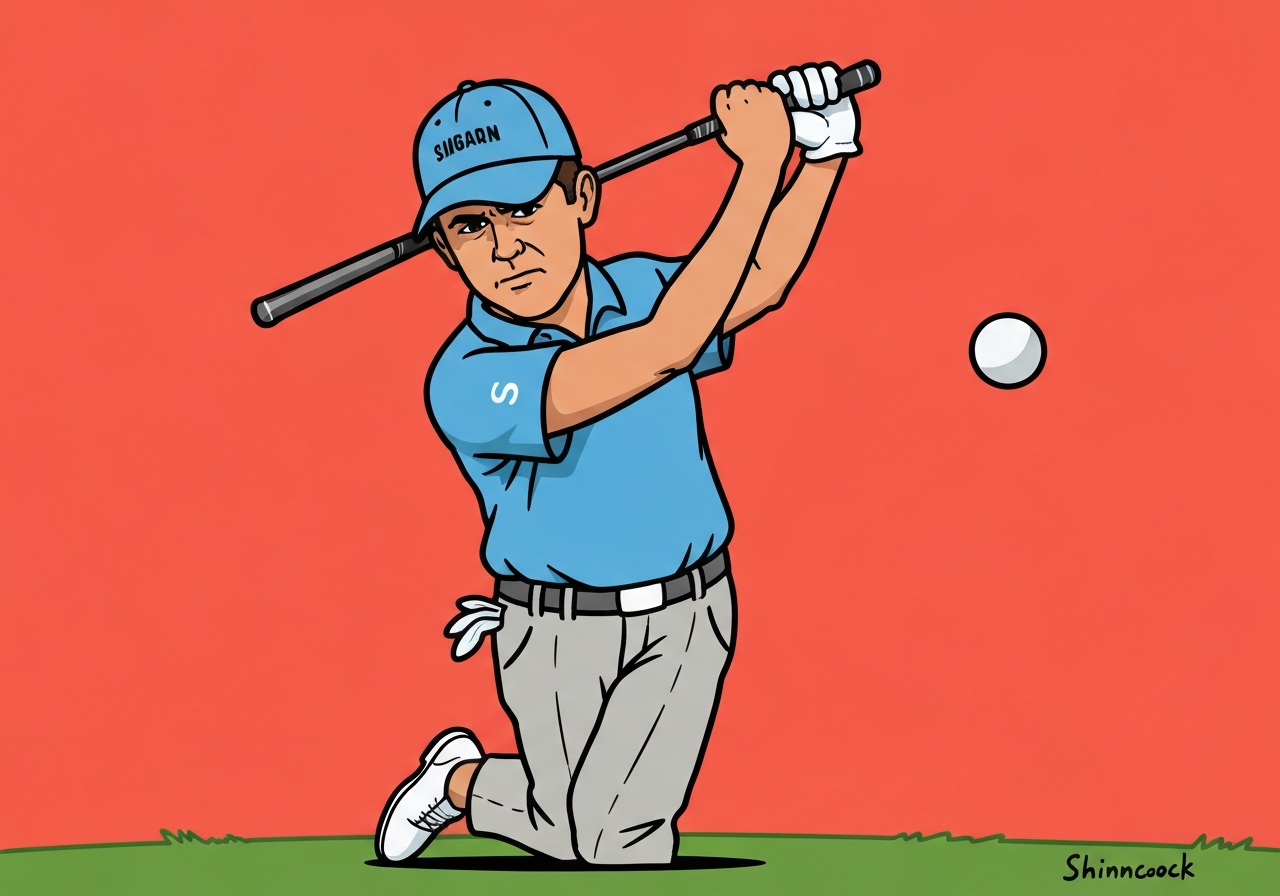
On Sunday, June 21, 2026, at Shinnecock Hills in Southampton, N.Y., Wyndham Clark held off a late charge and a partisan gallery to capture his second U.S. Open title. Clark, born in Colorado and living in Arizona, closed at 4‑under par to beat Sam Burns by one stroke after entering the final round with a 54‑hole lead of six shots. Despite persistent heckling from portions of the crowd and a tense back nine, Clark made the crucial par on the 18th to avoid a playoff. The win capped a week in which his short game and timely scrambling preserved a lead that repeatedly narrowed but never disappeared.
Key Takeaways
- Champion: Wyndham Clark finished the tournament at 4‑under, one stroke ahead of Sam Burns, who closed at 3‑under after a 67 on Sunday.
- Lead dynamics: Clark carried a 54‑hole advantage of six shots into the final round but saw that margin shrink to one at times on Sunday.
- Turning point: A 24‑foot downhill putt on the par‑5 16th stabilized Clark and effectively swung momentum back in his favor late in the round.
- Critical saves: Clark three‑putted for bogey at 17 but made the essential two‑putt from beyond 50 feet on 18, repeating the clutch finish that secured his 2023 U.S. Open win.
- Course test: Shinnecock Hills yielded very few under‑par weeks; only three players in the four previous Opens finished below par, underscoring the course difficulty.
- Crowd behavior: Portions of the gallery vocally opposed Clark throughout the round; a number of fans were ejected for unsportsmanlike conduct.
- Early rounds: Clark opened with a bogey‑free 6‑under on Thursday, held even on Friday, and extended his lead to six strokes after Saturday.
Background
Shinnecock Hills has long been considered one of the most exacting tests in the U.S. Open rotation, known for fast greens, fickle winds and searing pin placements. The USGA normally sets up the championship to punish small errors and reward patience; recent history at Shinnecock includes dramatic collapses and controversial moments, making mental resilience a premium for contenders. Coming into this week, conditions and prior results suggested under‑par weeks would be rare, and the setup contributed to conservative scoring strategies for most players.
Wyndham Clark arrived at the 2026 Open already established as a major champion, having won the 2023 U.S. Open. Over the last year he drew widespread attention for a series of off‑course incidents that generated criticism and required public apologies. Those episodes shaped fan reactions this week; many spectators turned out in an ABW, Anybody‑But‑Wyndham, mood. Clark spent the past season attempting to rebuild relationships on tour and with fans while refining the elements of his game that win major championships.
Main Event
Thursday brought unusually benign wind for Shinnecock, and Clark capitalized with an opening 6‑under round that put daylight between him and the field. He led by four after that first day. Friday tightened as the course began to assert itself; Clark carded an even‑par round and remained at 6‑under, while several high expectations, including Jon Rahm and Bryson DeChambeau, missed the cut.
Saturday saw the USGA and the natural elements find a firmer balance, and the leaderboard tightened for much of the field. Clark, however, kept making short, nerve‑settling par saves and extended his lead back to six strokes. His ability to repeatedly convert 5‑ to 12‑foot putts under pressure was a recurring theme across the third round.
The final round began with Clark carrying a sizable advantage, but a sequence of early mistakes — a bogey at 1, trouble at the 5th and a missed par putt at 7 — reduced his lead to one. Sam Burns, playing three groups ahead at times, roared back with birdies on the middle holes to apply pressure. By the time Clark teed off at the back nine, the leaderboard was volatile and the gallery loud and partisan.
The decisive stretch arrived on the par‑5 16th. Clark drove into deep fescue left and faced a difficult pitch from a poor lie that looked certain to produce a bogey and a tie with Burns. Instead, he pitched out, pitched on and holed a 24‑foot downhill putt to effectively re‑establish breathing room. A three‑putt on 17 trimmed his advantage to one, but he two‑putted from long range on 18 to seal the championship and avoid a playoff.
Analysis & Implications
Strategically, Clark won by doing the fundamental things right when the course demanded it: stroke‑saving approaches, short‑game recovery and clutch putting on the greens. Shinnecock rewards par preservation more than opportunistic aggression, and Clark’s week was defined by repeatedly escaping high‑risk situations with single‑strokes rather than racking up birdies. That style is emblematic of many recent U.S. Open winners, where resilience often trumps flair.
Psychologically, handling a hostile crowd was as significant as navigating the course. Clark absorbed sustained heckling and still executed under pressure, which may alter how fans, sponsors and fellow players perceive his temperament. Winning a second U.S. Open under those conditions strengthens his standing as a major performer and reframes the narrative that his off‑course missteps define his competitive identity.
For Sam Burns, the runner‑up finish at 3‑under confirms his ability to contend on golf’s biggest stages, but the narrow miss also highlights the fine margins in major championship play. Burns’ late birdie at the 16th and near‑misses at 17 and 18 illustrated that momentum can swing quickly at Shinnecock; converting one of those opportunities would have forced extra holes.
Broader consequences for the USGA and tournament management include renewed scrutiny of crowd control and spectator behavior protocols. The visible partisan hostility and a handful of ejections prompt questions about how venues balance fan passion with sportsmanship, particularly when a player carries a contentious public profile.
Comparison & Data
| Round | Clark | Burns |
|---|---|---|
| Thursday | -6 | EV |
| Friday | EV | +1 |
| Saturday | -? (extended lead to -? overall) | -? (closed to -?) |
| Sunday | Final 4‑under total | Final 3‑under total (67 on Sunday) |
Note: the table summarizes the trajectory rather than listing each round score in full detail; official round-by-round scores are available on tournament scoreboards. Clark opened with a low round that gave him immediate separation, maintained position with steady weekend play, and withstood Burns’ late surge Sunday to preserve a one‑stroke margin of victory.
Reactions & Quotes
The emotional aftermath featured a mix of contrition, acceptance and measured praise from peers and officials. Clark addressed the crowd and broadcasters after his win, acknowledging past mistakes and expressing hope for reconciliation.
New York didn’t really like me. I love you guys. I get it. Some of it’s self‑deserved. I did some unfortunate things last year that I really regret, and I’ve been sorry multiple times and I’m still sorry, so hopefully I can win you guys over eventually.
Wyndham Clark, post‑win interview on NBC
Rory McIlroy, speaking earlier in the week about Shinnecock’s setup, framed the course as a comprehensive test of all facets of the game.
If everything is going the way everyone wants in terms of weather and setup, I think it’s the best championship test in the country. It tests driving, iron play and your wits on the greens.
Rory McIlroy, pre‑tournament remarks
The USGA described its approach to course setup and fairness ahead of play, emphasizing balance over pure severity.
We could brutalize this place the next few days if we wanted to. That’s not what we’re about. We want it to be fair and to reflect what Shinnecock Hills has always been. It will be tough enough.
John Bodenhamer, USGA chief championships officer
Unconfirmed
- The exact number of spectators ejected for heckling during the final round has not been publicly released by the USGA.
- Any internal disciplinary actions or long‑term fan‑management changes at future USGA events related to this incident remain under consideration and unconfirmed.
Bottom Line
Wyndham Clark’s second U.S. Open crown at Shinnecock Hills is defined by resilience: a dominant opening, survival through the course’s weekend bite, and clutch putting under the most hostile of crowd conditions. The victory reinforces Clark’s status as a major‑stage performer and complicates the public narrative that reduced him to off‑course controversies.
For the USGA and tournament organizers, the week will likely prompt a fresh look at how spectator conduct is policed without diluting the atmosphere unique to links‑style challenges. For the rest of the touring professionals, Shinnecock once again underscored that majors reward steadiness and short‑game craft above all.