
Lead
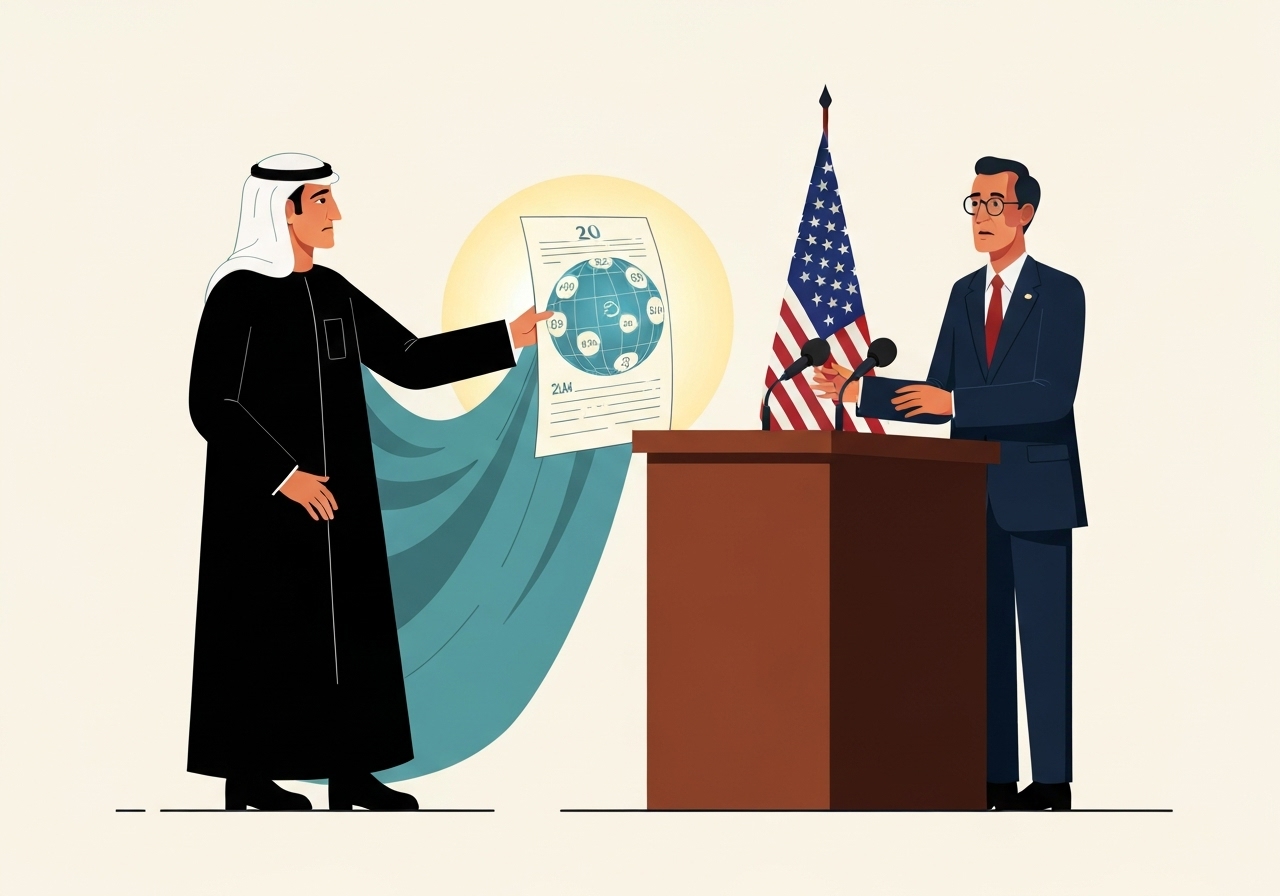
President Volodymyr Zelensky on Dec. 23 presented a jointly drafted 20-point peace-plan framework developed by Ukraine and the United States to end Russia’s full-scale invasion. The revised draft replaces an earlier 28-point text that Kyiv said risked capitulation and is accompanied by proposed three-party and bilateral security-gueline documents, plus an economic “roadmap.” The U.S. is expected to deliver the 20-point draft to Moscow on Dec. 24; if Moscow accepts, leaders from Ukraine, the U.S., Europe and Russia must sign for a ceasefire to begin. Several substantive issues — notably control of the Zaporizhzhia Nuclear Power Plant and arrangements for Donbas — remain unresolved in the draft.
Key takeaways
- The original 28-point plan was compressed to a 20-point framework presented by Zelensky on Dec. 23, with the U.S. listed as a co-author of key texts.
- The draft sets Ukraine’s peacetime armed forces size at 800,000 personnel and affirms Ukraine’s sovereignty in the opening article.
- Security guarantees akin to Article 5 are proposed from the U.S., NATO and European signatories, with activation clauses tied to Russian aggression; some provisions remain contested.
- An economic recovery package and recovery funds are proposed to mobilize roughly $800 billion to cover estimated war damage and reconstruction costs.
- Control of the Zaporizhzhia Nuclear Power Plant and the status of Donetsk/Luhansk/Zaporizhzhia/Kherson lines (points 12 and 14) are listed as outstanding negotiation items between Kyiv and Washington.
- The draft states the ceasefire would take effect immediately once all parties sign; in Ukraine the deal must be ratified by parliament and/or a referendum, potentially within 60 days.
- The draft includes a Peace Council monitoring implementation; the plan names the U.S. president as chair in the text submitted for discussion.
Background
The 20-point draft emerges after weeks of intensive consultations between Kyiv and Washington, following earlier multilateral efforts to negotiate an end to the fighting that began with Russia’s full-scale invasion in February 2022. Kyiv has publicly rejected versions of a previous 28-point plan that it said would have required unacceptable territorial concessions. Since 2014, fighting in the Donbas region and the 2022 invasion have produced repeated diplomatic attempts to stop hostilities, and those precedents shape both concessions and red lines in current talks.
Key stakeholders include Ukraine, the United States, European states, NATO, and Russia; the draft also references existing bilateral security pacts Ukraine has with around 30 countries. Energy and infrastructure issues, including the occupied Zaporizhzhia Nuclear Power Plant and the destroyed Kakhovka Hydroelectric Power Plant, have become central because they pose both humanitarian and cross-border security risks. Economic reconstruction and a proposed timeline for EU accession were incorporated to link security guarantees with long-term recovery and integration goals.
Main event
At a Dec. 23 press presentation, Zelensky read out and paraphrased the 20-point framework that Kyiv and Washington had jointly prepared. Alongside the primary draft, Kyiv and the U.S. developed a three-party security-guarantee text (Ukraine, the U.S., and Europe), a bilateral U.S.–Ukraine security pledge, and a separate economic cooperation roadmap described by officials as a “roadmap for Ukraine’s prosperity.” Zelensky told journalists that the parties had “made significant progress toward finalizing the documents.”
The United States was set to carry the 20-point text to Moscow on Dec. 24 for consideration. The draft foresees immediate activation of a ceasefire once all parties — including Russia — sign, but it conditions legal effect on domestic ratification in Ukraine via parliament or a referendum possibly held within 60 days. European signatories and the exact lineup of leaders required to sign the final deal were still to be determined at the time of the presentation.
Certain military and territorial arrangements are outlined in the text: the present front line on the date of signature would be recognized as the de facto line of control for Donetsk, Luhansk, Zaporizhzhia and Kherson oblasts, accompanied by plans for international monitoring and possible “free economic zones.” The plan also details an international monitoring mechanism using satellite-based unmanned surveillance and proposes demilitarization of certain sites, notably the Zaporizhzhia plant and Kinburn Spit.
Analysis & implications
The draft seeks to combine immediate security assurances with long-term economic and political integration incentives — for example, an express commitment to set a timetable for EU accession. Linking security guarantees to an economic package worth an estimated $800 billion aims to make peace attractive for Kyiv’s reconstruction needs, but raising those funds will require sustained international coordination and clear governance mechanisms to prevent misallocation and political friction.
Security guarantees described as “Article 5–like” are conditional and contain explicit triggers and exceptions; they are not automatic NATO membership. That distinction matters because the draft does not include Ukraine’s NATO accession aspirations, which Kyiv has emphasized as a central security objective. The absence of a NATO pathway increases reliance on bilateral and multilateral guarantees whose enforcement depends on political will and the capacity of signatories to respond to renewed aggression.
Comparison & data
| Feature | Earlier 28-point text | Revised 20-point draft |
|---|---|---|
| Clause count | 28 | 20 |
| Security guarantees | Critics said it inclined toward concessions | Article 5–like guarantees with conditional triggers |
| NATO mention | Absent or contested | Not included |
| Reconstruction funding | Not centralized | $800 billion mobilization target |
The reduced clause count reflects a political effort to produce a compact, negotiable text acceptable to Kyiv and Washington while retaining core elements: sovereignty, non-aggression, security guarantees, demilitarization at key infrastructure, and a major reconstruction financing plan. The $800 billion figure matches Kyiv’s estimate of material damage from the war and sets the scale for international aid and investment commitments if the plan advances.
Reactions & quotes
The draft prompted immediate domestic and international scrutiny. Zelensky framed the package as a comprehensive settlement that pairs security promises with a clear pathway for economic recovery and EU integration. Observers noted the political difficulty of securing Moscow’s agreement without major compromises on territory or control of critical infrastructure.
“We have made significant progress toward finalizing the documents,”
Volodymyr Zelensky
“The Zaporizhzhia plant, Enerhodar and the Kakhovka Hydroelectric Power Plant must be demilitarized to function safely,”
Volodymyr Zelensky
Independent analysts and regional experts cautioned that the draft’s enforceability will depend on the monitoring mechanism’s technical capacity, the willingness of signatories to impose and sustain sanctions in case of violations, and on whether the Ukrainian public accepts the ratification route proposed in the text.
Unconfirmed
- Whether Moscow will accept the 20-point text after the U.S. transmits it on Dec. 24 is not confirmed and remains the key open variable.
- The draft names a Peace Council chaired by the U.S. president; how that role would be filled, and whether it will be acceptable to all parties, is not independently verified.
- Final European signatories and the precise list of leaders required to sign the agreement have not been decided publicly.
- Details and final compromise language for points 12 (Zaporizhzhia control) and 14 (Donbas/front-line arrangements) remain under negotiation between Kyiv and Washington.
Bottom line
The 20-point draft represents a concentrated effort by Kyiv and Washington to translate battlefield dynamics into a political settlement that pairs security guarantees with a wide-ranging recovery plan. Its success hinges on Moscow’s willingness to accept a text that affirms Ukrainian sovereignty and on the ability of international partners to deliver both security responses and tens of billions in reconstruction finance.
Domestically, the draft forces difficult choices for Ukraine: parliament or a referendum must approve any binding deal within a short timeframe, and the draft also requires Ukraine to hold presidential elections soon after signing. Internationally, the plan shifts the focus from immediate ceasefire rhetoric to long-term verification, reconstruction and political guarantees — areas where practical implementation will determine whether the framework prevents a return to large-scale hostilities.
Sources
- Kyiv Independent (media report: original publication and publication of the draft)